Nature
 PUBLISHED
 1
1


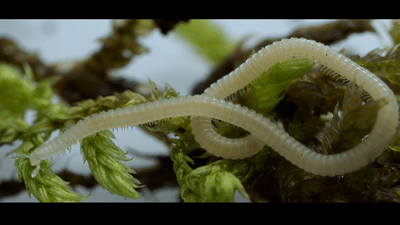


It’s a commonly held belief that the best place to discover new species is your own backyard. While this newly discovered species of millipede doesn’t quite cut it, being discovered in a park on the outskirts of Los Angeles is pretty impressive given the suburban surroundings.
It was first spotted in April 2018 by two naturalists in Whiting Ranch Wilderness Park, near Lake Forest in California. The pair immediately realized they were looking at something new and uploaded photographs of the many-legged critter to the website iNaturalist, which uses citizen science to identify species.
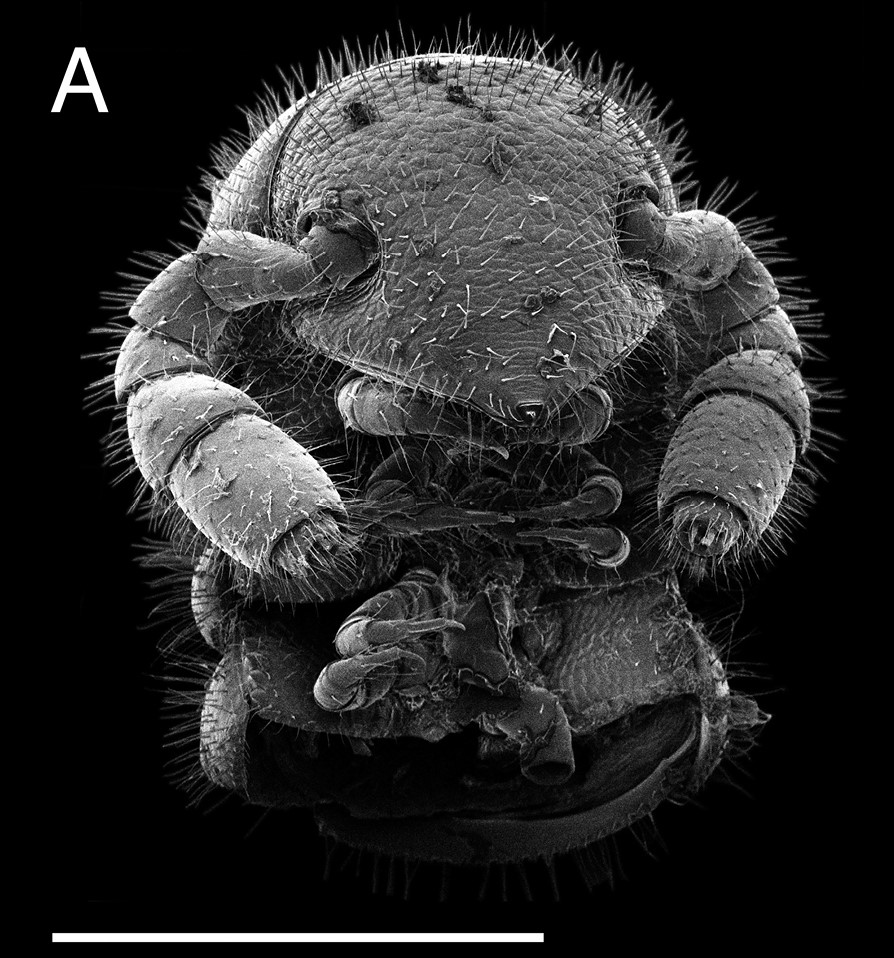
This caught the attention of Virginia Tech entomologist Paul E. Marek, who then drove out later in the year to see if he could find another specimen. Fortunately he was successful, and managed to transport the animals back to his lab in Virginia. DNA sequencing and analysis revealed that the tiny white millipede was a new-to-science species called the Los Angeles thread millipede (Illacme socal).
Illacme socal n. sp., female, MPE04624, from Paul Marek on Vimeo.
This makes the Los Angeles thread millipede the third species in the genus Illacme. Another species with four penises, Illacme tobini, was discovered in 2016. This discovery adds to the approximately 12,000 species of millipedes across the world. Contrary to popular belief, millipedes don't typically have 1,000 legs, though the leggy world record holder has 1,306 legs and the largest ever discovered was the size of a car.
These critters are not insects but instead are arthropod invertebrates, and have been crawling around on Earth for around 500 million years. They even hold the Guinness World Record for the first creature to live on land.
Today’s millipedes provide a vital role as detritivores, devouring leaf litter and keeping the soil healthy. "I kind of think about them as the little garbagemen of the forest," Marek told the Los Angeles Times. "They just kind of truck around, eat detritus, poop it out, and it's soil."
This discovery of a new species in an urbanized environment raises questions about whether there may be more undiscovered species out there, and the need to protect green spaces even in industrialized areas.
"It's a celebration of what's out there, and a reminder of what we could lose," added Brian Brown, curator of entomology at the Natural History Museum of Los Angeles County. "We need those small things. They're important."
The study is published in ZooKeys.