Humans
 PUBLISHED


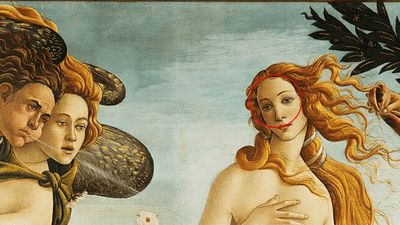


Researchers closely examining Sandro Botticelli's Venus say that the painting, along with other works depicting his muse Simonetta Vespucci, shows signs that she may have had a pituitary neuroendocrine tumor, leading to her untimely death.
You are likely quite familiar with the face of Simonetta Vespucci, even if you don't know her by name, or her nickname La Bella Simonetta (the fair Simonetta). Born in 1453 CE in Genoa, Italy, Simonetta married local nobleman Marco Vespucci at aged 16, and became renowned for her beauty and intellect amongst the Florence elite, eventually becoming the muse of Botticelli.
Simonetta's life was short. At 23, in April 1476, she died following a ball.
“Letters between Piero Vespucci and Lorenzo de'Medici about Simonetta’s final days discuss how she collapsed during a ball and was then resting in a darkened room where she suffered from terrible headaches, hallucinations, vomiting and high fever," Dr Domiziana Nardelli, Ear Nose and Throat (ENT) Resident at the Universita Campus Bio-Medico di Roma, explained in a statement following a study earlier this year.
Changes in the paintings over time
For some time, it was assumed that she died of tuberculosis. But in 2019, that team investigated portraits of Simonetta and associated descriptions, and looked for signs that her face may have changed over time in ways that may indicate the progression of an underlying illness.
"What we found was a gradual shift in her features across multiple paintings – subtle changes to the jaw, the brow, the soft tissue of the face. These are the kind of changes seen in patients with a pituitary adenoma, a tumour of the small gland at the base of the brain that controls hormone production," Paolo Pozzilli, Honorary Professor of Diabetes and Clinical Research at Queen Mary University of London explained in a piece for The Conversation.
"Specifically, we suspected a tumour secreting both growth hormone and prolactin. Excess of these hormones can alter facial contours over time and, in some cases, cause unexpected lactation – and one allegorical figure in Botticelli’s work appears to depict exactly that symptom."
Look at the eyes
Descriptions of Simonetta's final days and symptoms also fit well with a pituitary neuroendocrine tumor, or a growth in the anterior pituitary gland at the base of the brain. In Botticelli's Allegorical Portrait of a Woman they found other supporting evidence; despite having no children, she is depicted as lactating, which the team explained could be another symptom; the adenoma secreting prolactin.
_Allegorical-Portrait-of-a-Woman.jpg "Allegorical Portrait of a Woman attributed to Sandro Botticelli")
In the latest work, the team focused in on Botticelli's depiction of Vespucci’s eyes in the Birth of Venus and other works.
"[C]ompression within the cavernous sinus can affect multiple cranial nerves, resulting in persistent ocular misalignment and ptosis," the team explains in their paper.
"This mechanism could explain the mild but stable strabismus ["lazy eye"] repeatedly depicted in Simonetta’s gaze, suggesting a chronic ocular motor imbalance rather than a purely artistic device."
The team believes that Simonetta likely died of a pituitary apoplexy, or a sudden hemorrhage or infarction in the pituitary gland, rather than tuberculosis.
According to the team, dancing could have triggered "sudden fluctuations in systemic and intracranial pressure" leading to her death, though it could have also been triggered by a suspected violent rape perpetrated by Alfonso II D'Aragona, Duke of Calabria. Both scenarios have support in the historical records.
While certainly compelling, we will likely not get confirmation of a cause of death all these years later. Botticelli's works, though, are likely the best evidence we have to go on, and they do seem to indicate a potential pituitary neuroendocrine tumor.
“Sandro Botticelli was a brilliant artist who depicted his subjects with great realism. So it is not surprising that he’s left medical evidence in his paintings that we are able to read centuries later," Pozzilli said in a statement about the new work.
“The squint (‘strabismus’) of Venus in Simonetta Vespucci’s portraits embodies a poignant paradox: once exalted as the epitome of divine allure in Renaissance art and copied by artists like Bronzino, it now reveals itself as a subtle harbinger of her doom.”
The study is published in the journal Medical Humanities.