Humans
 PUBLISHED



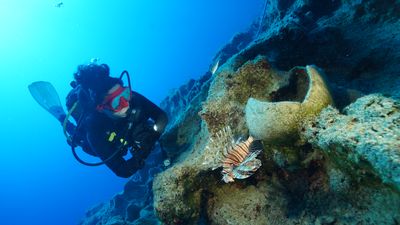


The world's oldest shipwreck has been discovered off the coast of Turkey, dating back to a time when the ancient Egyptians were building the pyramids on the other side of the Mediterranean.
“We were incredibly excited”
The Mediterranean Archaeology Association believes the submerged artifacts, located in waters off Kekova Island in Antalya, date to between 4,400 and 4,700 years ago, a period of vibrant civilizational change in the region known as the Early Bronze Age.
The wooden structure of the actual boat has completely disappeared over the millennia, but what remains are three anchors and at least 30 ceramic storage pots, suggesting that a 10-meter (32-foot) cargo vessel sank while attempting to cross the Mediterranean Sea.
When the divers first found the artifacts in 2022, they didn’t fully appreciate their significance. However, later revelations showed the sunken amphorae were much, much older than previously thought.
“When we first found the wreck four years ago, the shapes of the amphorae reminded us of types dating back only 100 or 200 years, so we didn't immediately grasp its true significance,” Professor Hakan Öniz, a marine archeologist from Akdeniz University in Turkey who led the expedition, said in a statement to IFLScience.

“However, we later became excited when we saw the same amphora forms in a publication on Egyptian archaeology and returned to the site. Indeed, they were similar to those found at the Giza pyramids in Egypt,” he added.
“We were incredibly excited.”
The team has only studied a few of the wreck’s contents so far, but they plan on analyzing the rest over the next few months.
Rush hour on the Mediterranean
During the Early Bronze Age the Mediterranean was buzzing with activity. The researchers believe the amphorae originated in the Jordan Valley, where they were likely filled with olive oil or wine and loaded on a ship destined to head west, possibly to Troy or to the Minoan civilization on Crete.
Along with food and wine, vast amounts of precious metals, volcanic glass, ivory, luxury goods, fine textiles, and pottery were being shipped to and fro across the Mediterranean at this time. These welcoming waters were a bustling hub of trade and travel, so this is far from the only shipwreck in the region.
“To date, we have discovered 434 archaeological shipwrecks with permits from the Turkish Ministry of Culture,” explained Professor Öniz.
Prior to this discovery, the oldest shipwreck was dated to 4,200 years old, once again discovered in the Mediterranean Sea off the coast of Greece.
Most of the shipwrecks in the region are found in shallow, coastal portions of the sea, but archeologists have even discovered a deep-sea shipwreck in the Eastern Mediterranean at a depth of 1,800 meters (6,000 feet) and dated to around 3,300 years old.
Many more shipwrecks are likely to be out there, destined for discovery, and perhaps some are even older than this latest bonanza.