Humans
 PUBLISHED



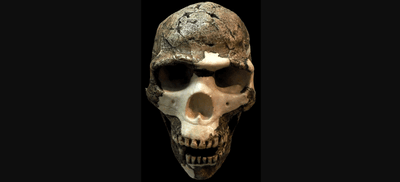


All non-Africans alive today carry a small percentage of Neanderthal DNA, which attests to how ancient Homo sapiens bred with Neanderthals as they spread across Eurasia. The earliest fruits of these unions would presumably have displayed a mix of human and Neanderthal traits, yet identifying these hybrids in the fossil record is proving rather tricky.
According to most models, the first major hybridization event between Homo sapiens and Neanderthals occurred in an area of the Middle East known as the Levant. It’s also here that the world’s oldest burials are found, with evidence of human skeletons being placed in funerary caves almost as far back as 150,000 years ago, far earlier than the date generally given for the wider dispersal of Homo sapiens into Eurasia.
Over the years, researchers have had the chance to analyze many of these prehistoric graves, noting that their occupants generally display a mixture of human and Neanderthal characteristics. However, scientists are divided over whether these skeletons should be placed in one camp or the other, or if they instead represent true hybrids.
A motley crew of possible hybrids
In a new study, researchers re-examine data from three of the most famous of these Levantine caves in an attempt to clear up the taxonomical ambiguity around their prehistoric inhabitants.
The authors begin with Qafzeh Cave, where the remains of 15 prehistoric individuals have been found. Dated to around 100,000 years ago, these specimens are generally regarded as Homo sapiens, and they seem to lack any of the hallmark Neanderthal traits.
Despite this, the skeletons show some signs that they could be the product of hybridization. For instance, research on other primate hybrids points towards high levels of developmental disorders in hybrids, and this is certainly true of the Qafzeh crew. Among the pathologies identified in this group are hydrocephalus – a buildup of fluid in the brain – and underdeveloped teeth, although whether or not these are the result of hybridization is impossible to say.
Moving on to Skhul Cave, the researchers assessed the remains of 10 individuals who are thought to have been buried between 100,000 and 130,000 years ago. Like the Qafzeh fossils, these skeletons are generally classed as Homo sapiens, but they occupy a slightly more ambiguous position on the continuum between modern humans and Neanderthals.
For instance, the braincase of one individual at Skhul appears rather low in height, which is potentially because it represent an intermediate morphology between the two species. This has led some researchers to label the Skhul fossils as human-Neanderthal hybrids, although the authors of the new study say this may be too speculative.
Then there’s Tabun Cave, where the earliest specimen may be over 170,000 years old. The identity of this individual remains a topic of debate, with some scholars arguing that it possesses the “true” chin of a Homo sapiens, while others suggest that it more closely matches the morphology of a Neanderthal.
It's simply too early to say for sure
Rather than settle the debate one way or the other, the study authors simply point out the difficulty in assigning hybrid status based on physical characteristics alone.
“Combined, these three assemblages show all the identified morphological signatures of hybridization: abnormal combinations of traits, developmental anomalies, and high variation,” they write. “And yet, due to the difficulties in identifying hybridization from morphology alone, we still cannot say whether this is truly the result of recent interbreeding until all other explanations have been ruled out, or until there is direct genetic evidence of hybridization.”
So far, no DNA has been recovered from any of the fossils in these Levantine caves, which makes it impossible to determine the precise taxonomy of these enigmatic hominins. “It seems, then, that genetic evidence may be the only sufficient evidence of hominin hybridization, despite hopes that morphology may provide an alternative,” conclude the researchers.
The study has been published in the Journal of the Royal Anthropological Institute.