


 Space and Physics
 PUBLISHED
 4
4


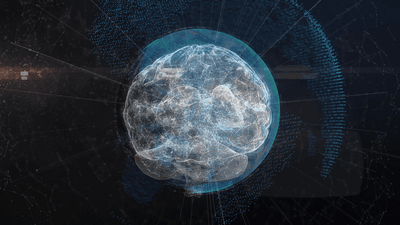


We're sure you have plenty of worries to be going on with, but have you considered the possibility you might be a brain floating around in space, at the end of all time? Scientists can't rule it out, and in fact that's been pretty irritating for them.
So, what the hell are we talking about, and what is a Boltzmann brain when it's at home?
The idea, though not in its current form, goes back to respected physicist Ludwig Boltzmann, writing in 1895. Back then, thermodynamics was the hot new topic (by laws established during that time, it could sadly only tend towards being a less hot topic) and Boltzmann was attempting to answer a particularly irritating question: If everything tends towards maximum entropy, why do we find ourselves in what looks like a pretty low entropy universe?
We have a great explainer on entropy, but the short version so that we're all on the same page is that entropy is a measure of the disorder of a system. When something is in a state of high entropy (or high disorder) you could could switch around the components of the system and it would pretty much be the same. In low entropy systems, like you for example, we can't really switch around a hand and a foot without drastically altering the system (creating a new character I'm calling Captain Foothands).
Boltzmann was responding to criticism of his statistical explanation of the second law of thermodynamics, in a short letter that would go on to spawn the "Boltzmann brain" idea.
Specifically, he was responding to Edward P. Culverwell, who had said that his ideas could not possibly be true, as if they were then the whole universe would constantly be in a state of equilibrium, or heat death. When asked why we are not in this state already, Boltzmann credited an idea from a previous assistant, Dr Schultz.
Essentially, the idea is that the universe at large is generally in a state of equilibrium. But if the universe is large enough and goes on for long enough, improbable occurrences, like pockets of it being in a low entropy state, are bound to occur.
"Assuming the universe great enough, the probability that such a small part of it as our world should be in its present state, is no longer small," Boltzmann wrote.
"If this assumption were correct, our world would return more and more to thermal equilibrium; but because the whole universe is so great, it might be probable that at some future time some other world might deviate as far from thermal as our world does at present. Then the afore-mentioned H-curve [a measure of disorder in Boltzmann's equations] would form a representation of what takes place in the universe. The summits of the curve would represent the worlds where visible motion and life exist."
In other words, Boltzmann was making an anthropic argument, in possibly it's first modern use: we find ourselves in a low-entropy part of the universe, because that's where life and worlds can exist.
So, the initial Boltzmann idea was more about the universe as we see it coming into existence, a highly-improbable fluctuation occurring on a long timeframe and a within a vast universe. The brain aspect came much later, and is a little different, and arguably a lot more annoying than Boltzmann's universes.
The Cliff Notes version is that in a universe that spends most of its time in equilibrium – say, for example, after the heat death of the universe – then unlikely fluctuations would still occur. They may not be as big as whole universes, but with enough time every possible structure could be created, including a Boltzmann brain (BB), or a brain that pops into existence with memories of a universe it doesn't actually inhabit.
The problem that Boltzmann brains pose for physicists comes if the universe lasts for a very long time in this state of equilibrium, and if these random fluctuations take place. If that happens, as physicist Sean Carroll explains, then we can end up with a very odd and counter-intuitive situation, where observers who are Boltzmann brains vastly outnumber observers of a universe like ours.
"If the rate of fluctuations times the lifetime of the universe is sufficiently large, we would expect a 'typical' observer to be such a fluctuation, rather than one of the ordinary observers (OOs) that arise through traditional thermodynamic evolution in the wake of a low-entropy Big Bang," Carroll writes in a paper.
"We humans here on Earth have a strong belief that we are OOs, not BBs, so there is apparently something fishy about a cosmological model that predicts that almost all observers are BBs."
Boltzmann brains are still a problem for cosmologists. In short, it isn't ideal when your version of how the universe works produces more brains blipping into existence in random fluctuations than during the part of the universe you are trying to explain with your idea.
But that does not mean that you yourself are a Boltzmann brain. Though it is a difficult argument to work your way out of, if you are going to worry about that, you'd may as well worry about being a brain in a vat, or having Descartes' demon feeding you all your sensory information. Relax and put on some music – Boltzmann or not, it is better for your brain.


