


 Technology
 PUBLISHED


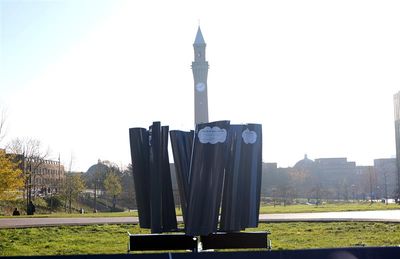


The world's first urban wind turbine designed to be tailored to the various wind conditions of specific geographic areas has been unveiled, created by a joint team of AI design specialists and precision metal fabricators.
The "Birmingham Blade" has been designed by EvoPhase and KwikFab to address a substantial problem for green energy production – how to create small-scale, affordable, generators that produce clean energy in urban environments.
Cities provide a set of challenges for wind turbines that differ from the rural counterparts we can see dotted around the landscape. Firstly, they are large and can be quite noisy, which can produce opposition to their use in densely populated areas – also, few cities have urban architecture that can support wind farms. But probably the most significant challenge relates to the wind conditions cities experience.
Buildings, streets, and other structures can impact how wind behaves in very unique ways that vary from city to city, reducing the reliability and efficiency of wind turbines that have not been designed for them specifically.
This is why the collaboration between EvoPhase and KwikFab is particularly interesting. The team used an AI-driven design process to create and test turbines that relied on the wind speeds found in Birmingham, England. These wind speeds operate at 3.6 meters per second (11.8 feet per second), which is significantly lower than the 10-meter-per-second (32.8-foot-per-second) ratings most turbines operate around.
“We needed a turbine that could capture Birmingham’s relatively low wind speeds while managing turbulence caused by surrounding buildings,” Leonard Nicusan, Chief Technology Officer of EvoPhase explained in a statement. “The design also had to be compact and lightweight to suit rooftop installations."
The team found that the most optimal design for curved blades spun around a vertical axis. They also confirmed that their design would be up to seven times more efficient than existing ones used in the city.
“Using AI was essential for breaking free from the long-standing biases that have influenced turbine designs for the past century”, Nicusan added. “AI allowed us to explore design possibilities beyond the scope of traditional human experimentation. We were able to generate, test, and refine over 2,000 wind turbine designs in just a few weeks, significantly accelerating our development process and achieving what would have taken years and millions of pounds through conventional methods.”
The process deployed by the team kind of mimicked natural selection, which allowed for the simultaneous optimization of various different parameters. This allowed the designs to avoid the usual trade-offs between performance factors.
The first iteration of the Birmingham Blade was created by KwikFab to test its feasibility. The next step will be to produce an aluminum version that can be set up on a roof space in Birmingham for further evaluation and testing. The final product is expected to be available in late 2025, while the team works on another design for very different conditions in Edinburgh, Scotland.
“We can take a complex design, and manufacture and ship a prototype for testing within weeks. We’d like to work with organisations that want to make the most of wind power, a source of sustainable energy that is free, and present in every country”, Paul Jarvis, KwikFab Ltd added.


 1
1