


 Technology
 PUBLISHED



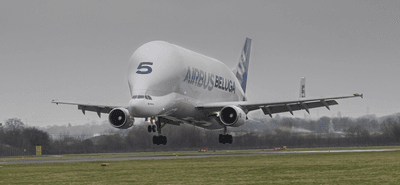


It’s the end of an era for the Airbus BelugaST 5, one of the most charmingly silly (and incredibly important) aircraft to take to the skies. On the morning of January 29, the bulbous giant touched down in Broughton, North Wales, completing its final operational flight from Bordeaux, France.
The Airbus BelugaST is a specialized airliner used to transport aircraft parts – basically a plane that carries bits of other planes.
Airbus, the European aerospace giant that makes commercial aircraft, built a fleet of five of these planes, primarily to transport plane wings from its factory in the UK to facilities around Europe. This week, one of the fleet, Airbus BelugaST 5, became the first of the gang to enter retirement.
“Flying the Beluga has always been a unique privilege, and bringing the ST5 home to Broughton for the last time was no different. As we made our final approach, we were all too aware of the history behind us," Didier Puxeddu, the BelugaST pilot who flew the last mission, said in a statement.
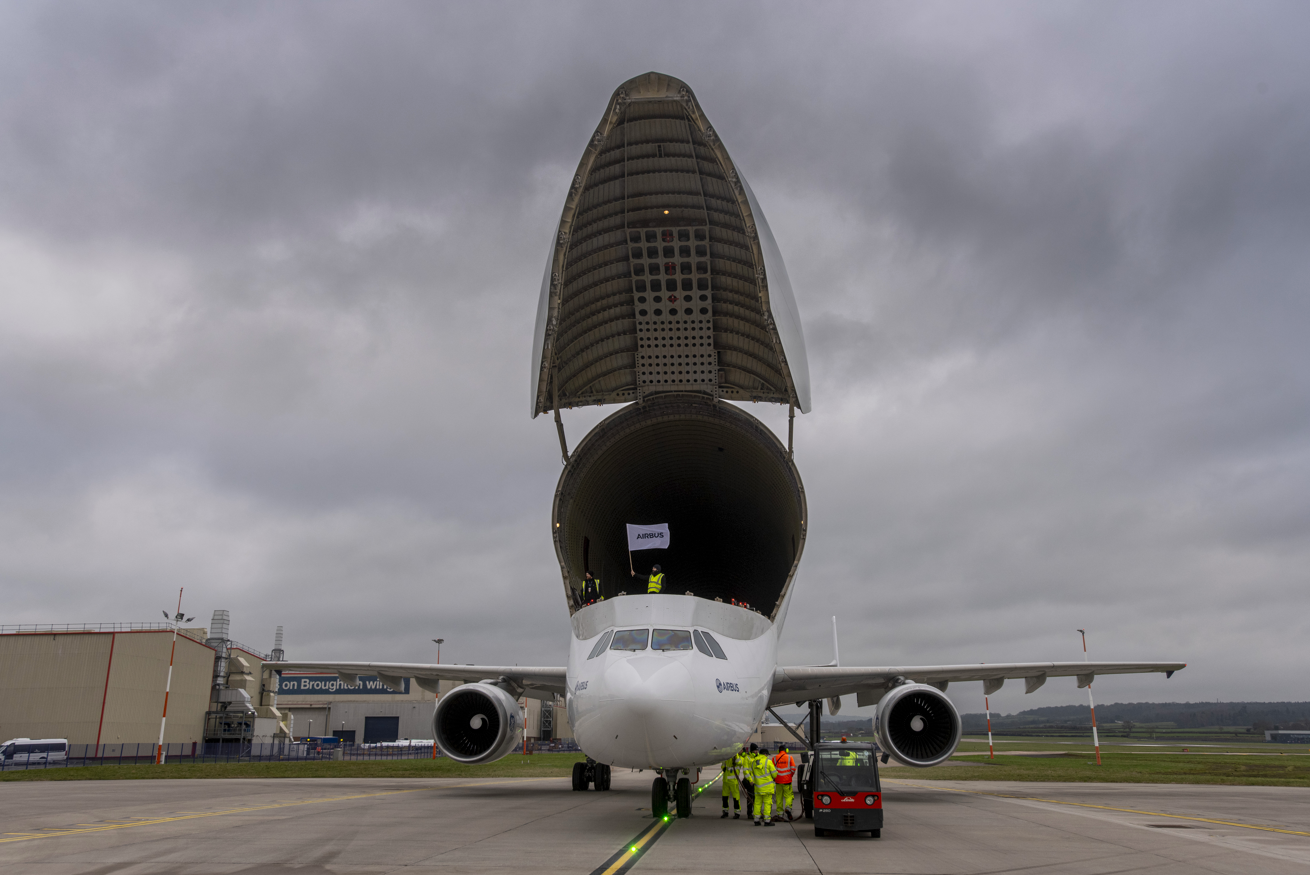
To accommodate large cargo, the plane has a massive bubble-shaped hold that resembles the melon of a beluga. It was originally named A300-600ST (Super Transporter), but its whale-inspired nickname stuck so well that Airbus officially changed its name to BelugaST.
The Beluga’s nose is able to flip up like a hatchback, opening wide to welcome its enormous cargo. Its payload is 40 tonnes, which, funnily enough, is equivalent to the weight of a humpback whale.
Since its debut in the mid-1990s, the fleet has carried some 1,700 wings and completed over 13,300 journeys between different Airbus sites. It’s also been used for a bunch of specialized, high-stakes missions, such as transporting satellites to NASA’s Kennedy Space Centre in Florida.
In one particularly unusual assignment, a BelugaST transported the famous Eugène Delacroix painting “Liberty Leading the People” from Paris to Tokyo. The enormous canvas, measuring 2.99 meters high and 3.62 meters long, was too large to be shipped by a standard carrier, so it was loaded onto a BelugaST with a special pressurized container and antivibration device.
In 1997, BelugaST claimed the world record for the heaviest payload carried by air by transporting a massive chemical tank for a merchant ship. It later broke the record for the longest charter flight, flying for over 25 hours (including stops) to deliver three helicopters from France to Melbourne, Australia, in 2003.
But all good things must come to an end. After 30+ years of service, the first of the fleet has entered retirement, with the others expected to be withdrawn next year. The retiree will remain in the UK, where it will be transformed into an educational facility aimed at inspiring kids to explore careers in science, technology, engineering, and mathematics (STEM).
"Knowing this aircraft will now stay here to inspire future pilots and engineers makes this touchdown one of the most rewarding of my career," added Puxeddu.
Beluga fans need not despair, however. The planes' even larger cousin, the BelugaXL fleet, will take on the responsibility for hauling large components for Airbus from mid-2027, ensuring that the legacy of these skybound giants lives on.




 1
1