Nature
 PUBLISHED


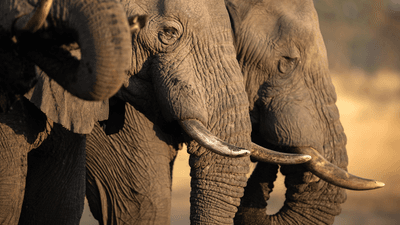


A world-first recording has revealed the harmonious way male African elephants signal when it's time to move on by vocalizing a bit like a barbershop quartet. One bull begins the call to action, and one by one, the others join in to create a sonorous, infrasonic chorus that rumbles across the landscape.
The “let’s go” rumble was first recorded in 2004 at the Mushara waterhole in Etosha National Park, Namibia. Study lead author Caitlin O’Connell-Rodwell, a research associate at Stanford University’s Center for Conservation Biology, was a member of the team that captured the first-ever recording.
“I was so excited when I managed to record it,” she said in a statement. “It was thrilling to realize that these males were using complex vocal coordination like the females were.”
One recording in the bag, they returned from 2005 to 2017 with buried microphones and night-vision cameras to get a better grasp of the vocalizations, which are too low frequency to be heard by human ears. Their investigations revealed that how male bull elephants say “let’s go” closely mirrors the behaviors seen among female elephants, indicating they may learn the social call when they’re young and carry it into adult life.
“They grew up in a family where all the female leaders were engaging in this ritual,” O’Connell-Rodwell said. “We think that as they mature and form their own groups, they adapt and use these learned behaviors to coordinate with other males.”
In both males and females, the call is initiated by a lead and then added to by more members of the group, with each elephant waiting for the last individual’s rumble to finish before adding their own voice to the mix.
“It’s very synchronized and ritualized. When one goes high, the other goes low, and they have this vocal space where they’re coordinating,” O’Connell-Rodwell added.
Beyond the delightful mental imagery of barbershop quartet elephants rumbling across the savanna, the insightful research joins a recent study that discovered elephants may have names for each other in adding to the ongoing investigation into whether or not language exists in animals.
“Our findings not only underscore the complexity and richness of the social lives of male elephants,” O’Connell-Rodwell said, “but also advance our understanding of how they use vocalizations in ritual and coordination and, really, move us closer to the idea of elephant language.”
The study is published in PeerJ.



 1
1