Humans
 PUBLISHED




When the Spanish conquistadores first reached the Aztec capital of Tenochtitlan in 1519, they reported the existence of a “vivarium”, which they dubbed the “House of the Beasts”. In more recent times, this animal enclosure has come to be known as “Moctezuma’s Zoo” – after the ruler who presided over the Aztec Empire at the time – although until now, no concrete evidence for the existence of this menagerie had ever been found.
However, In a new book entitled The Captive Animals of the Ancient City of Tenochtitlan, archaeologist Israel Elizalde Mendez provides what may be the most convincing proof yet that terrifying beasts really were kept in the heart of the metropolis. Among the large predators housed within this pre-Hispanic zoo were jaguars, pumas, and wolves, as well as various species of eagle and other birds of prey.
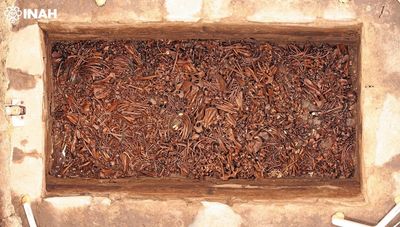
To be clear, Elizalde Mendez doesn’t claim to have found the remains of the compound itself. However, by analyzing 28 animal skeletons found in sacrificial pits at Tenochtitlan, he provides osteological evidence that these creatures were kept in captivity prior to their execution.
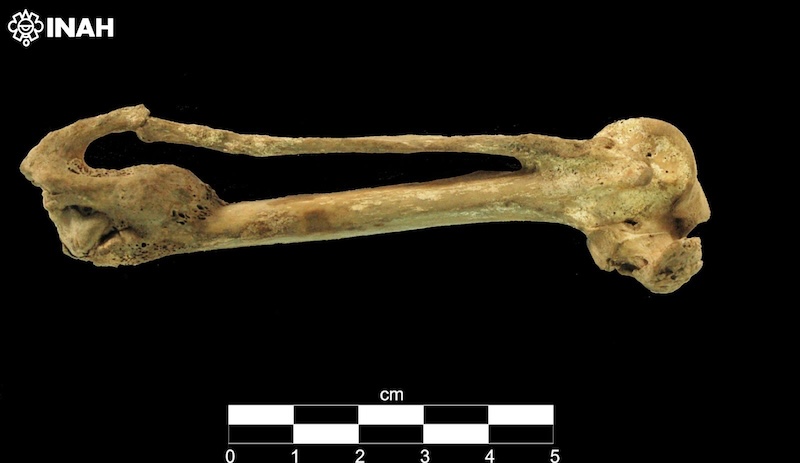
For instance, bones belonging to golden eagles, quails, wolves, and jaguars all showed signs of healed trauma, joint conditions, and infectious diseases. Based on the severity of these ailments, he writes that “it would have been impossible for many of these animals to survive in the wild,” and concludes that they must therefore have been kept in captivity and cared for by humans.
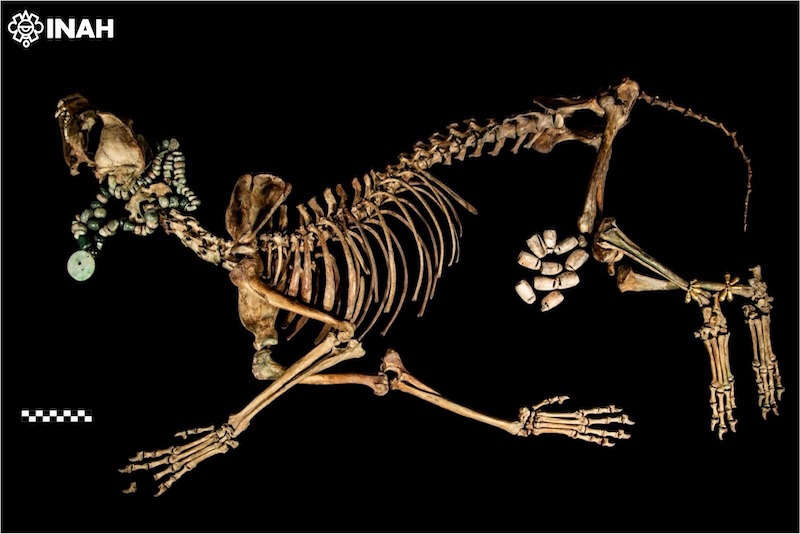
According to the Mexican National Institute of Anthropology (INAH), the author goes on to assess the diets of the birds of prey found at the site, and even presents evidence to suggest that the wolves may have been captively bred.
In a separate article in Arqueología Mexicana, Elizalde Mendez explains that the so-called zoo actually consisted of two separate enclosures, one of which was an aviary that housed aquatic birds. Collectively, these structures were known locally as the Totocalli, meaning “House of the Birds”, although Spanish missionary Bernardino de Sahagún altered the name to “House of the Beasts” in his famous ethnography, the Florentine Codex.
In this account, Sahagún mentions foxes and pumas, as well as reptiles such as snakes, and amphibians including frogs and toads. He also suggests that the Totocalli housed bears and bison, although Elizalde Mendez says that no remains belonging to these animals have been found at Tenochtitlan.
A map of Tenochtitlan produced by the Conquistador Hernán Cortés, meanwhile, indicates that Moctezuma’s Zoo was located near the royal palace, just behind the “sacred enclosure”. And while archaeologists are yet to discover any trace of this structure, Elizalde Mendez says that animals were likely kept here in order to supply priests with sacrificial victims.
Noting that animals were seen by the Aztecs as “food for the gods”, he explains that the Totocalli was no ordinary zoo, and that the creatures it housed provided the ritual lifeblood that enabled the religious elites of Tenochtitlan to continually appease the various deities with carnal offerings.