Humans
 PUBLISHED
 2
2


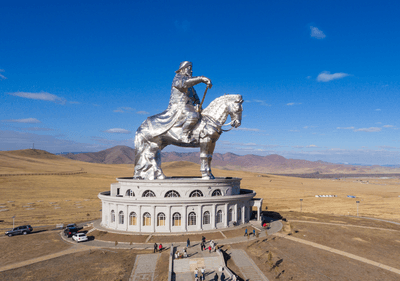


It’s an often-cited factoid that 1 in 200 men (0.5 percent of the world’s male population) can directly trace their ancestry back to Genghis Khan; he's basically their 25th-great-grandfather. But is that really true or just fear-soaked propaganda about a long-gone empire? A new study analyzing ancient DNA from archaeological graves suggests that the story of Genghis Khan’s genetic legacy may be more complicated than previously thought.
Born in 1162 CE, Genghis Khan was the founder of the Mongol Empire, the largest contiguous land empire in history. It stretched 24 million square kilometers (9.27 million square miles) at its height, reaching from the Sea of Japan to Eastern Europe, engulfing a thick band of land across the middle of Eurasia.
This monumental and bloody achievement left an everlasting mark on human history. While his campaigns resulted in a staggering loss of life, the resulting Pax Mongolica (Mongol Peace) ushered in an age of interconnectedness and trans-continental trade. By stabilizing the Silk Road, he enabled a massive exchange of goods, technologies, and ideas between the East and West.
The empire may also have left a profound genetic legacy. Genghis Khan and his male descendants made a lot of babies across an enormous territory, making it plausible that their Y-chromosome lineage (which passes from father to son, almost unchanged) spread far and wide.
In a 2003 study, researchers found that around 8 percent of men in Central Asia shared a particular Y-chromosome lineage known as the C3* cluster. This lineage is also found in notable concentrations in East and Southeast Asia, as well as parts of Eastern and Western Asia, Eastern Europe, Indigenous Siberian populations, and even some Native American groups.
This lineage appears to have originated around what is modern-day Mongolia roughly 1,000 years ago and then expanded rapidly across the world. Surely then, one would assume, the far-reaching Mongol Empire was behind its proliferation. The 2003 study reads: “The lineage is carried by likely male-line descendants of Genghis Khan, and we therefore propose that it has spread by a novel form of social selection resulting from their behavior.”
The new research digs a little deeper into that idea and unearths a slightly more complex story.
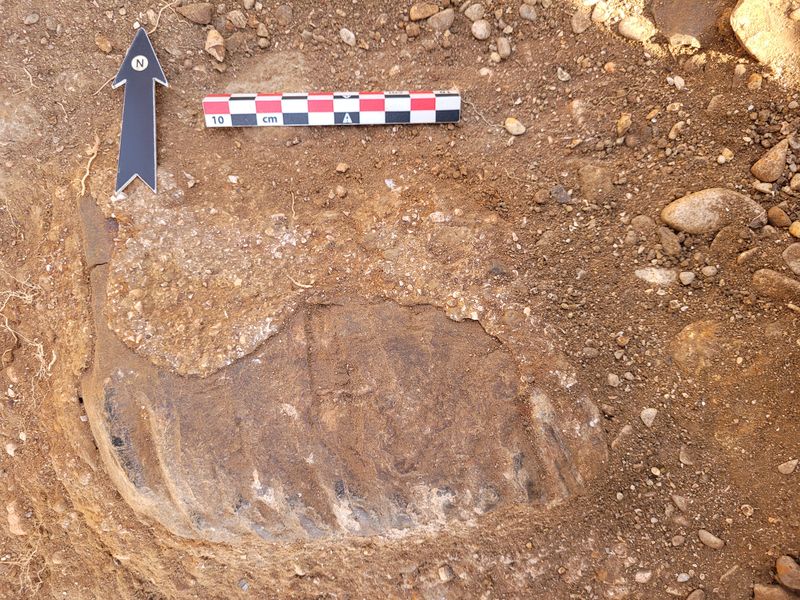
An international team of scientists analyzed the DNA of ruling elites from the Golden Horde, the northwestern extension of the Mongol Empire founded by descendants of Genghis Khan’s eldest son, Jochi. Genetic material was obtained from four individuals buried in elite tombs, including one skeleton from a tomb traditionally attributed to Jochi himself. The other three individuals, one female and two males, were also members of the Golden Horde’s ruling class.
Just as you'd expect, the analysis revealed that the three male individuals were paternally related and belonged to the Y-chromosome haplogroup C3*.
“It’s kind of like forensics,” Ayken Askapuli, lead author of the study and PhD candidate at the University of Wisconsin–Madison, said in a statement. “By analyzing their genome, we determined these four Golden Horde individuals trace their ancestry back to the Mongolian plateau. We saw evidence that their Y-chromosomes are part of a branch of the C3* cluster.”
However, the findings complicate the popular narrative. While these elites did belong to the broader C3* family, they carried a specific sub-branch that is much rarer today than the dominant modern version.
“With ancient DNA results, we can distinguish different branches of the genome that are close to each other but are not identical. The one that Askapuli has found in the Golden Horde ruling elites is a branch of the C3* cluster, but it’s not as common as the larger branch," explained John Hawks, UW–Madison professor and paper co-author.
In other words, the most common C3* lineage found in living men today may not be directly linked to Genghis Khan after all. Instead, it could represent a different, though related, paternal line that also expanded during the Mongol era or even earlier. Without DNA confirmed to belong to Genghis Khan, it is impossible to know which specific branch, if any, traces back to him.
One way to solve this problem would be to study the genetics of Genghis Khan himself, but his burial place has never been identified. Many traditions place his tomb at Burkhan Khaldun in the Khentii Mountains of Mongolia, although this remains unverified and steeped in legend.
Until those remains are found – if they ever are – the true scale and nature of Genghis Khan’s genetic legacy may never be fully understood.
The study is published in the Proceedings of the National Academy of Sciences.