Health and Medicine
 PUBLISHED





The Food and Drug Administration (FDA) has approved the first treatment for Zaire ebolavirus (Ebola virus). The antibody medicine, called Inmazeb, is a cocktail of anti-viral antibodies made by Regeneron Pharmaceuticals to tackle the deadly disease, which continues to ravage the Democratic Republic of Congo (DRC).
The novel treatment helps stave off the Zaire ebolavirus infection in both adult and young patients, and has been approved for widespread use after a large 2019 trial deemed it safe and effective at reducing mortality in infected patients. The medication, called REGN-EB3 (commercially Inmazeb), is most effective when administered early on during Ebola infection.
It will now be used alongside Merck’s Ervebo, the first FDA-approved vaccine for Ebola, as a two-pronged defense against the outbreaks seen across Africa.
“We are incredibly proud that the FDA has approved Inmazeb, which is also known as REGN-EB3. This is the first time the FDA has approved a treatment specifically for Ebola, which has caused a number of deadly outbreaks,” said George D. Yancopoulos, president and chief scientific officer of Regeneron, in a statement.
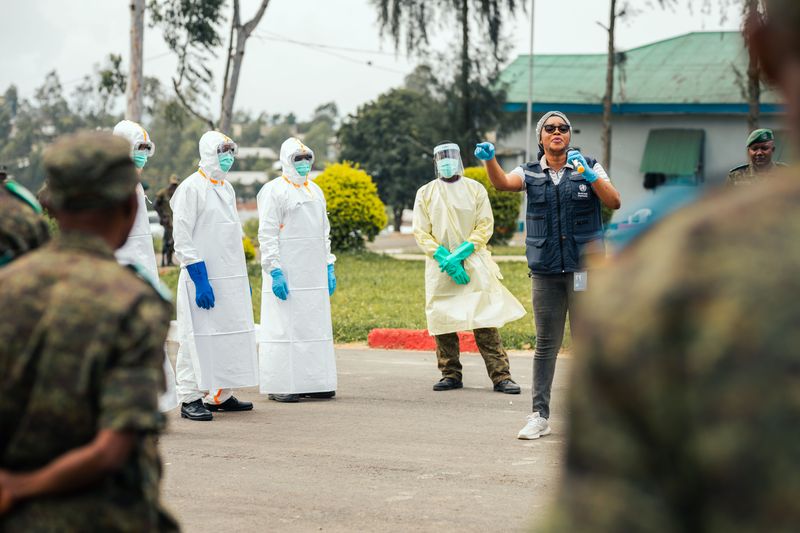
On June 1, 2020, the DRC announced its 11th outbreak of Ebola virus, which is still ongoing. As of September 2, the outbreak had taken the lives of 47 people. The 10th outbreak was the second largest on record and took the lives of 2,299 people within the DRC.
Inmazeb contains antibodies that bind directly to the Zaire ebolavirus and blocks the molecules that allow the virus particles to attach to the human cells. These molecules, called glycoproteins, bind to human cell receptors and provide a pathway for the virus to enter the cell, where it replicates and wages war on the immune system. Instead, the cocktail of antibodies contained in Inmazeb attach to the virus glycoprotein, blocking the binding site (epitope). By blocking this method of entry, the antibodies can prevent the virus from spreading and doing damage to host cells.
The medicine does have notable side effects, including fever, chills, tachycardia (fast heart rate), tachypnea (fast breathing), and vomiting. While these symptoms were related to Inmazeb, they are also symptoms of the Ebola virus and could have been directly related to the infection instead of the medicine.
Now, Regeneron hopes to provide the life-saving medication for free to people living under the current Ebola outbreak in the DRC, as part of the Monitored Emergency Use of Unregistered and Investigational Interventions (MEURI) protocol for compassionate use. The USA has also ordered Inmazeb in preparation for any potential public health emergencies in the future.
However, Inmazeb is not the only project Regeneron has been working on. You may recognize the name from a different antibody medicine (REGN-COV2) taken by US President Donald Trump during his battle with Covid-19. The company is still actively working toward a safe and effective Covid-19 treatment, and whilst the REGN-COV2 looks promising, it is still in the experimental phase.