Nature
 PUBLISHED



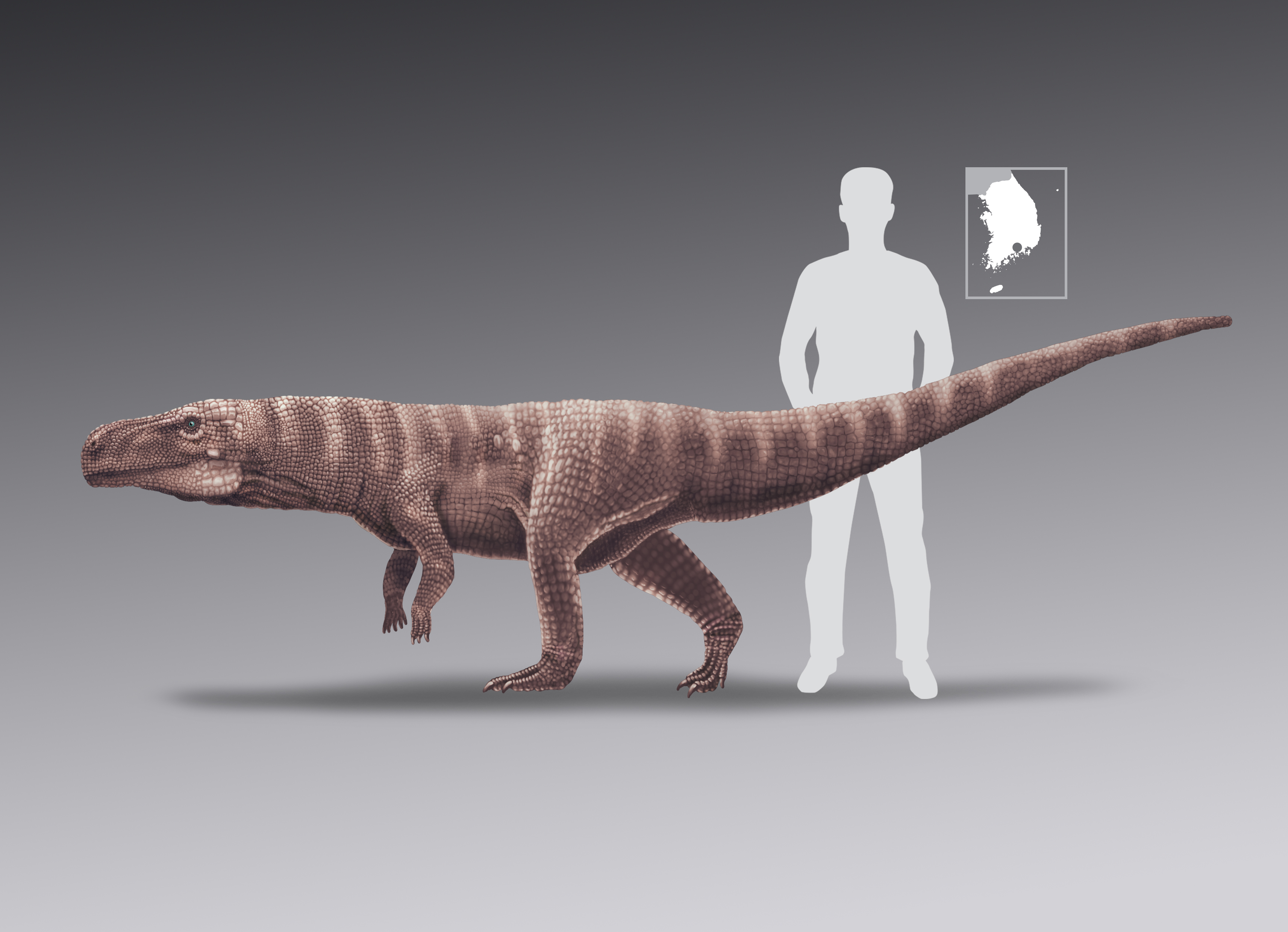
Large, well-preserved footprints found in a fossil-rich area of South Korea likely belonged to a two-legged ancestor of modern-day crocodiles that thrived 100-145 million years ago, and not giant pterosaurs as previously thought, according to new research published in Scientific Reports.
The Lower Cretaceous Jinju Formation in South Korea is a fossil-rich outcrop measuring 800 square meters with up to 5 meters of stratigraphic sections. Multiple sets of footprints are abundant at all levels of the outcrop and were previously thought to have been made by giant pterosaurs walking on two legs. However, palaeontologists at the Chinju National University of Education and the University of Queensland, Brisbane argue that they were likely left by two-legged predecessors of what we know today as crocodiles.
"Surprisingly, the consistent absence of manus [hand] tracks in the trackways, with well-preserved digital pad and skin traces, argues for bipedal trackmakers," the authors write. "No definitive evidence, either from pes-on-manus [foot on hand] overprinting or poor track preservation, suggests the trackways were made by quadrupeds that only appear bipedal."
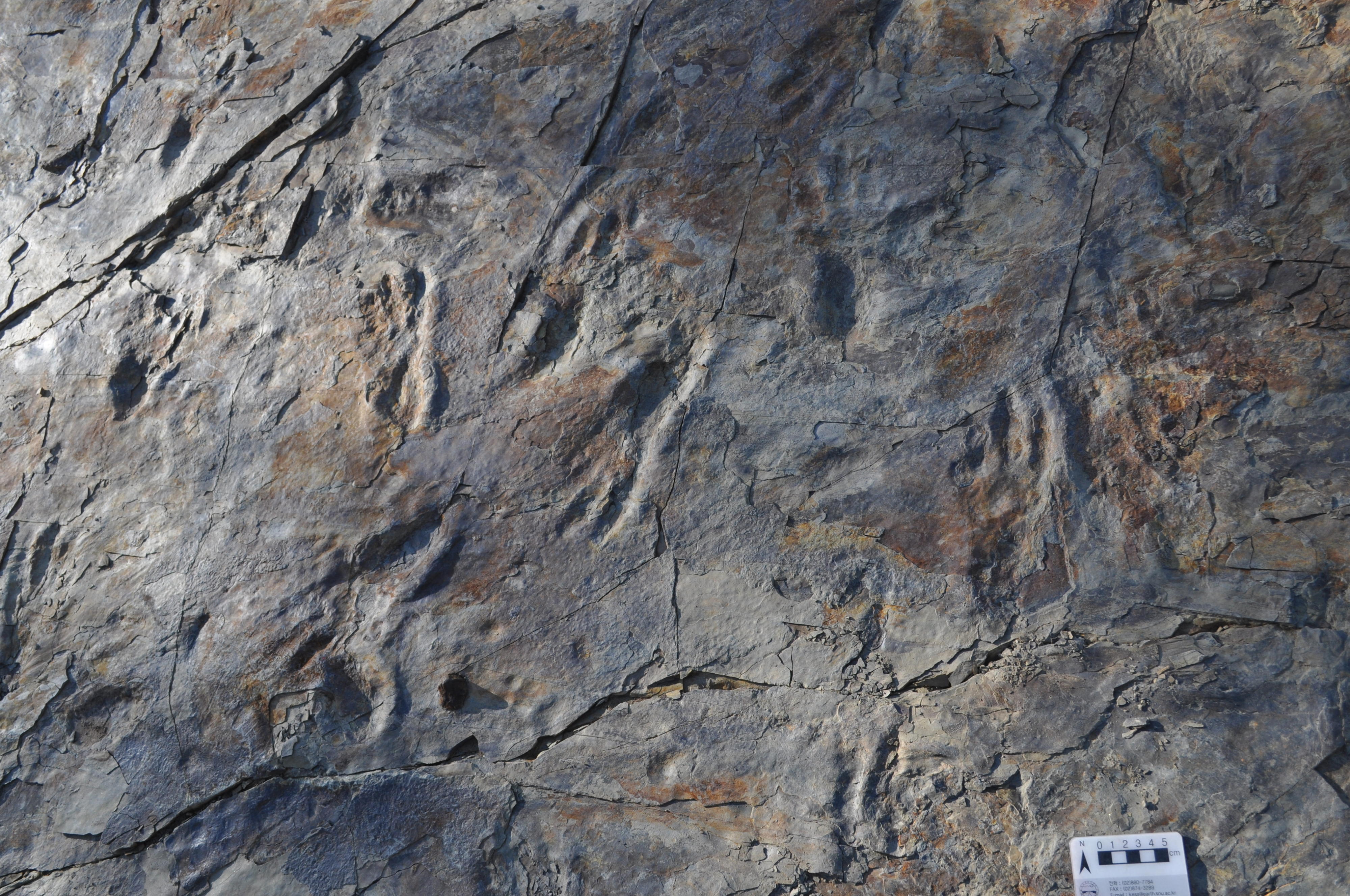
At the time of their discovery, the tracks were named Batrachopus grandis and measured about twice as long as they are wide – between 18 and 24 centimeters (7 and 9.5 inches), which indicates a body length of up to 3 meters (roughly 10 feet).
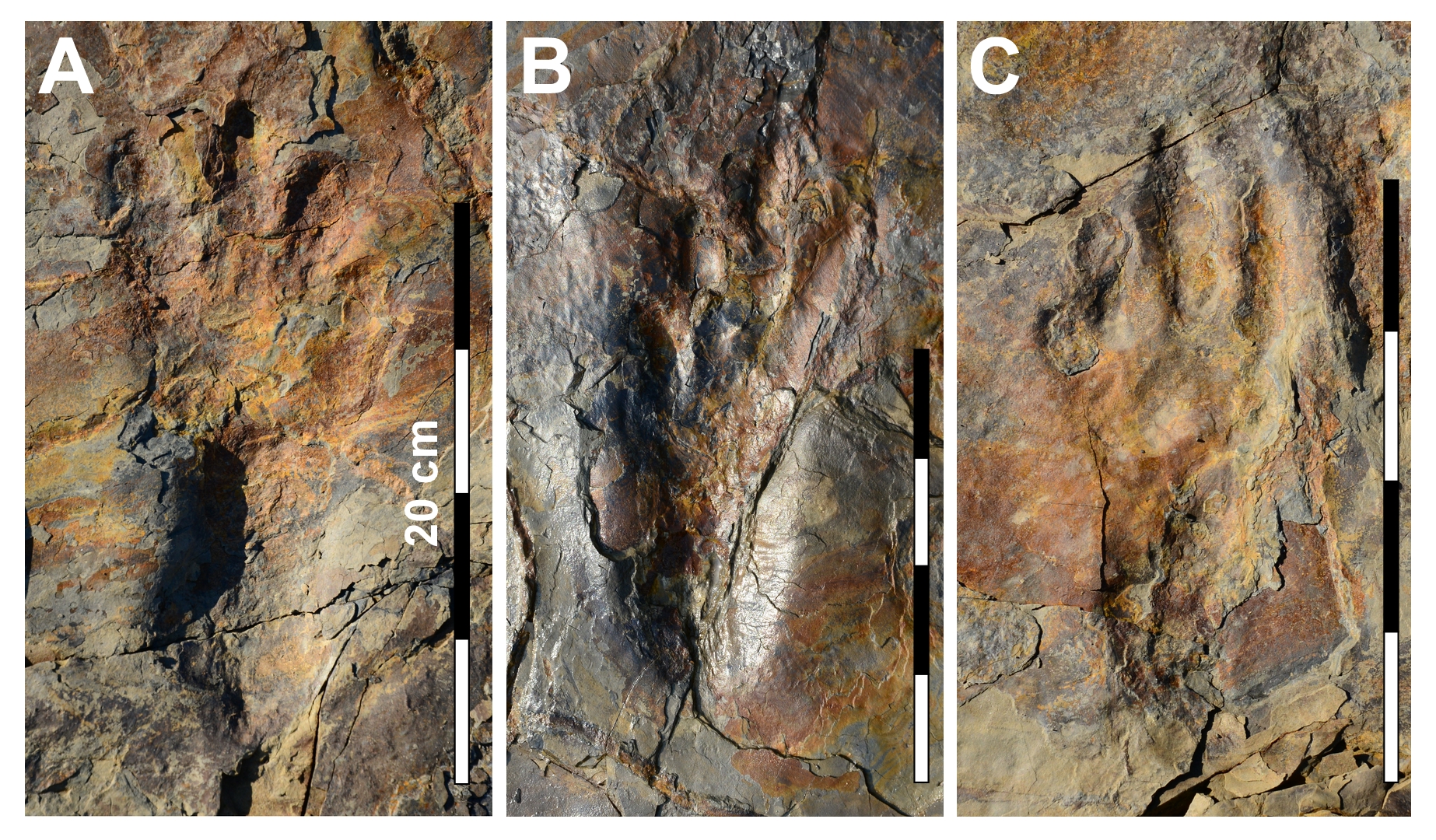
Researchers removed large casts of the natural impressions and documented them with photos and three-dimensional photogrammetry, tracing the track outlines and measuring their parameters.
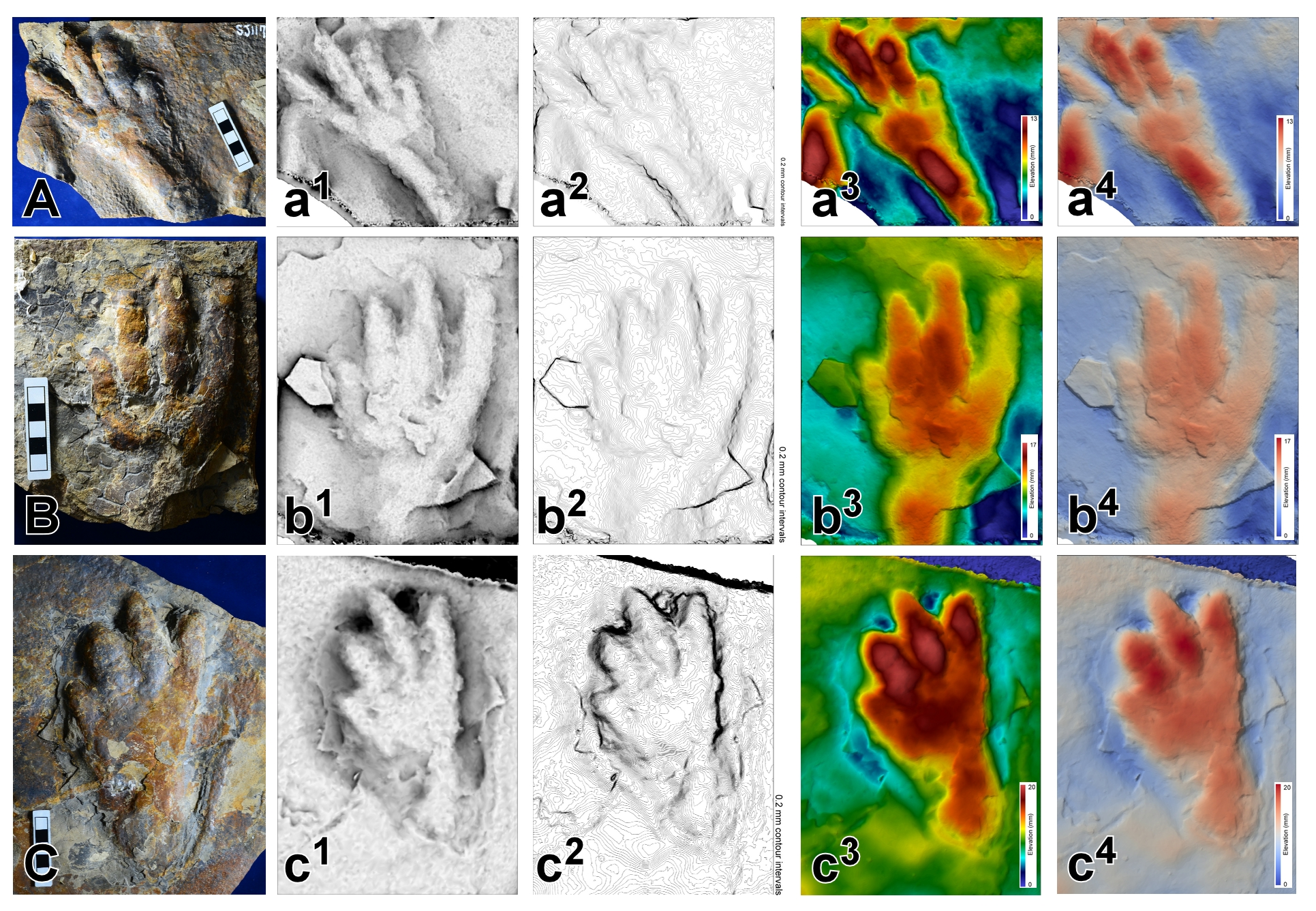
A thorough analysis concludes that the tracks belong to a new species of crocodylomorph, an early group of reptiles that are ancestors to modern-day crocodiles, fish-eating crocodiles, and alligators that were more terrestrially adapted than other species at the time. The B. grandis tracks are the first to indicate bipedal, or two-legged, progression – a previously unknown characteristic for this family. The findings could mean that tracks found at younger sites may belong to crocodylomorphs, which were previously thought to have been left by giant pterosaurs that walked on two legs to protect their wings when on land.
“The discovery of B. grandis was made soon after the discovery and description of Korean Crocodylopodus and significantly enhances our understanding of the morphology, size range, abundance and preservation factors affecting Korean crocodylomorph tracks,” write the authors, adding that the findings call for a re-examination of other specimens that were morphologically similar at this time period.