Humans
 PUBLISHED


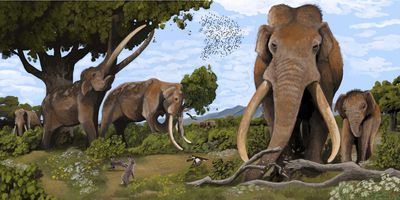


Long ago, when elephants roamed Europe, Neanderthals were running a deeply complex, bone-crushing operation. To get their hands on much-needed fats and protein, they carefully followed the movements of nature and established a remarkable "fat factory" where some of the largest animals on the continent were systematically hunted, processed, and consumed.
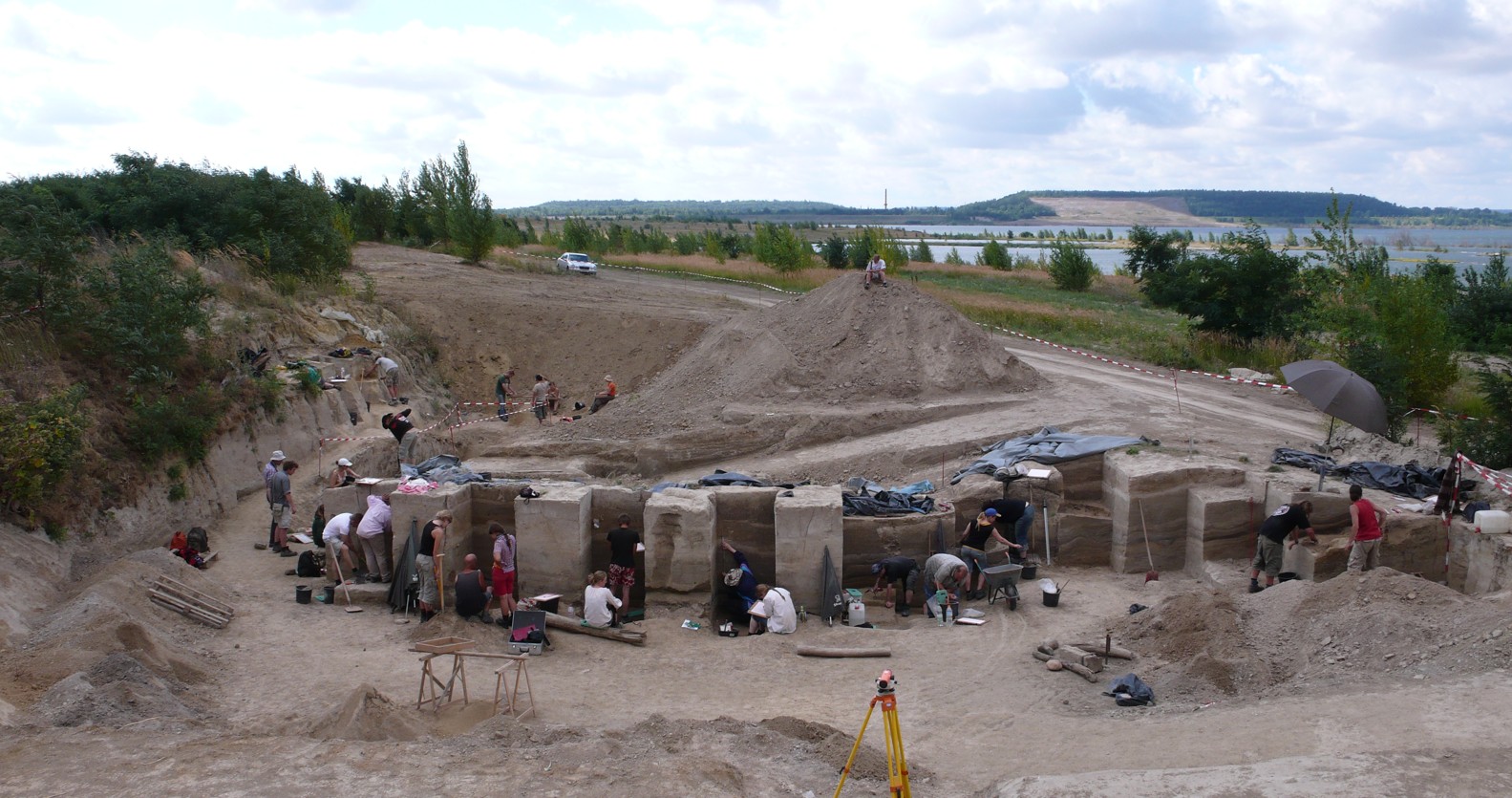
Back in the 1980s, archaeologists unearthed a large trove of prehistoric animal bones around 35 kilometers (22 miles) east of Leipzig in Germany. Among the remains of at least 172 large mammals were deer, horses, aurochs, and rhinos, as well as over 70 straight-tusked elephants, an extinct species of elephant that inhabited Europe and Western Asia until ~21,000 years ago. Researchers later described the site as a giant "fat factory", a prehistoric processing site where animals were rendered down for their much-needed nutrients.
Known as Neumark-Nord, the site dates to around 125,000 years ago, long before Homo sapiens had established itself beyond Africa, placing it firmly in Neanderthal territory. While much of the previous research has focused on the Neanderthals themselves, a new study has turned its attention to the surprising lives of the elephants found here.
Archaeologists have been studying the teeth of four straight-tusked elephants (three males, one likely female) excavated from the site. By examining the ratios of chemical isotopes preserved within the teeth, the team was able to reconstruct a "travel diary" of where the elephants had roamed across the region.
Two of the males show isotope signatures that differ significantly from those expected for local bedrock in Neumark-Nord, indicating they had travelled up to 300 kilometers (186 miles) away from the butchering site.
Intriguingly, this mirrors what we know about modern African elephants. When males leave their herds in early adulthood, they can cover enormous distances in search of water, food, and mates, typically alone or in loose "bachelor groups." Females, by contrast, tend to remain with their natal herd, usually led by an old and large matriarch.
This new study suggests that Neanderthals may have had an acute understanding of the elephant’s movements and their surrounding geography. Far from being opportunistic hunters, the sheer number of bones at the site suggests they had a well-established pattern of finding elephants around Neumark-Nord, and perhaps even knew it was a reliable hotspot to set up camp.
"The concentration of remains and the isotope profile of the animals suggest that Neanderthals did not kill the elephants merely when a favorable opportunity arose. Everything points to organized hunting in which even such enormous prey animals could be deliberately targeted. For this, Neanderthals must have known the landscape well, cooperated, and planned," Elena Armaroli, now a postdoctoral researcher at the University of Modena and Reggio Emilia in Italy and the study’s first author, said in a statement.
"What we see at Neumark-Nord is not a picture of mere survival, but of a population that understood its environment and interacted with it actively and in complex ways over a period of at least 2,500 years," added Sabine Gaudzinski-Windheuser, study author and professor of prehistoric archaeology at Johannes Gutenberg University Mainz.
Through DNA analysis and further archaeological digs, the team hopes to learn more about the inner workings between Neanderthals and elephants in this corner of Europe.
"At least some of [the] male elephants uncovered at Neumark spent some of their adolescence and young adulthood away from the Neumark lake land. If Neumark was a point of attraction for elephants from different regions aggregating here or the Neumark area was the homeland of an elephant population, with individuals leaving the area for a certain time span, we can't extract from isotopes alone," explained co-author Professor Thomas Tütken from the Applied and Analytical Paleontology Group at Johannes Gutenberg University Mainz.
"To understand the population dynamics of the Neumark elephants and with that Neanderthal hunting at Neumark, we have started a genetic study of the Neumark elephants," added Lutz Kindler, member of the Neumark-Nord team and researcher at MONREPOS and Johannes Gutenberg University Mainz.
The study is published in the journal Science Advances.