Technology
 PUBLISHED
 2
2


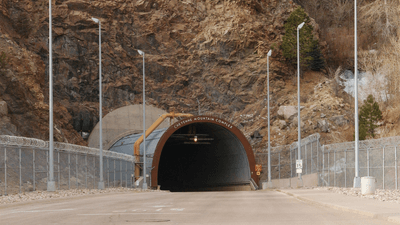


Beneath the rocky surface of Cheyenne Mountain in Colorado, US, lurks a settlement primed for Armageddon. The Cheyenne Mountain Complex was built at the height of the Cold War, and, when it pulls out all the stops, can withstand nuclear, electromagnetic, and biological attacks.
What is the Cheyenne Mountain Complex?
The bunker-on-steroids is one of America’s most secure military installations, shielded beneath 760 meters (2,500 feet) of granite. Having been blasted into the mountain, the entrance arch is dwarfed by Cheyenne, feeding a tunnel whose curved design would redirect any offending materials right out the other end.
What kind of impact can the Cheyenne Mountain Complex survive?
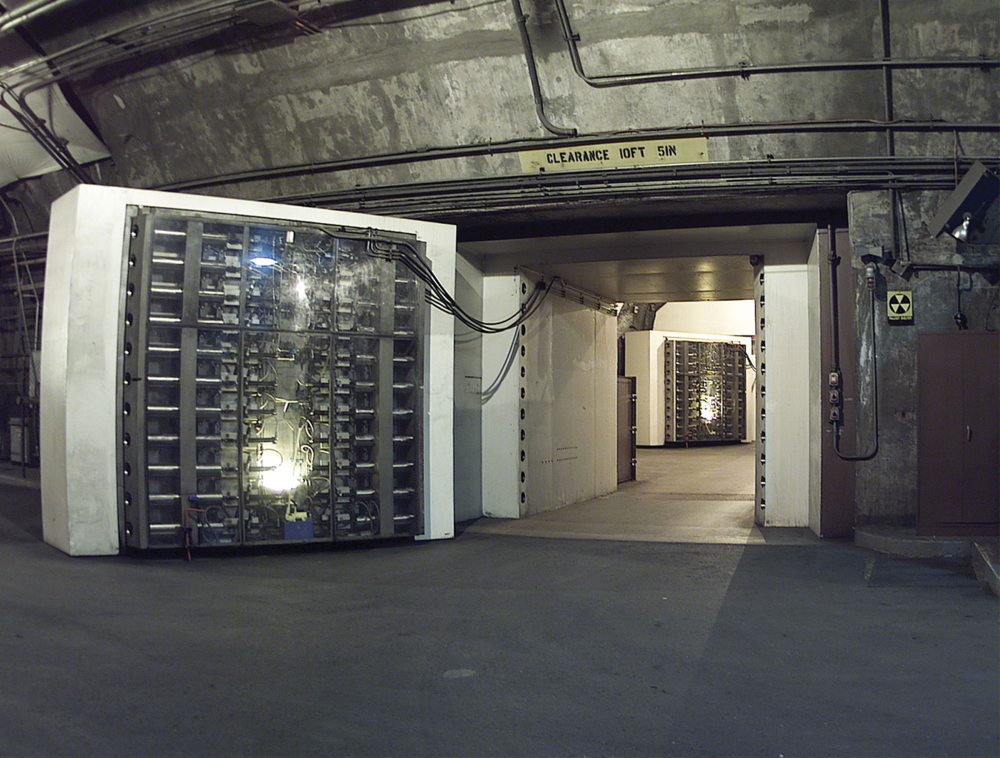
Since the 23-ton blast doors won’t be on the receiving end of any blast impact, the setup is estimated to keep the Cheyenne Mountain Complex secure even in the face of a 30-megaton nuclear bomb. That means it would fare well against a nuclear bomb like the B41, also known as the Mk-41, which was made by the US during the Cold War era.
But against the 50-megaton Tsar Bomb, the most powerful nuclear weapon ever created and tested? Well, it doesn’t bear thinking about.
When does the Cheyenne Mountain Complex close?
The doors on the ultra-secure military facility were slammed shut on 9/11, and will do so again in the event of a serious threat, such as an identified missile launch, or “button-up scenario” drill. Worthy threats for such a lockdown may be electromagnetic – from weapons or the Sun – chemical, biological, or nuclear, and any lingering material from these attacks is kept out thanks to a pressurized air system that protects the 300-or-so people walled up inside the Cheyenne Mountain Complex.
How did they build the Cheyenne Mountain Complex?
A staggering 693,000 tons of granite had to be shifted to make way for the Cheyenne Mountain Complex whose 15 spring-mounted buildings span 5.1 acres (2.1 hectares) at a height of 2,915 meters (9,565 feet). Since it first became operational on April 20, 1966, it’s remained active, occupied, and prepared for emergencies of the apocalypse kind.
The stronghold houses a variety of military and civilian operations, including air and space surveillance, ballistic missile defense, emergency operations, and intelligence analysis. As such, if the shit hits the proverbial fan, it must remain functional to coordinate and communicate military intervention.
Curious about what nuclear war would mean today? Mark May 31, 2024, in your diaries, as we’ll be talking to journalist and Pulitzer-Prize finalist Annie Jacobsen about what happens when a nuclear bomb goes off for CURIOUS Live, IFLScience’s virtual event in collaboration with our e-magazine, CURIOUS. Subscribe to our newsletter to receive the monthly issues, and for further information on this year’s line-up of speakers.