


 Health and Medicine
 PUBLISHED


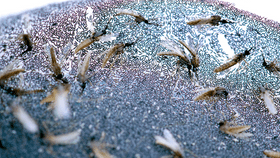


The Horn of Africa has got a new mosquito species in town — and it has the potential to become a major problem if it’s not dealt with.
Scientists have recently noticed that an Asian species of mosquito is becoming increasingly common in certain urban environments across East Africa. Unfortunately, new research released this week has shown that the invasive Asian mosquito species are especially susceptible to local strains of malaria, further highlighting the fear that this unwanted visitor could soon spark a rise in urban malaria cases in East Africa.
Most malaria cases in Africa are caused by the mosquito species Anopheles gambiae and Anopheles funestus, which act as highly effective vectors, carrying the parasites from one person to another. In recent years, however, a new mosquito species of mosquito has invaded parts of East Africa. Anopheles stephensi is the main malaria vector in urban India and parts of Asia, but is becoming increasingly abundant in towns and cities across Ethiopia, Sudan, and Djibouti. This species is not as effective at spreading malaria, but it is well-adapted to urban conditions as it can easily breed in water-storage containers, not just natural bodies of water.
The new research, recently published in the Centers for Disease Control and Prevention journal Emerging Infectious Diseases, has found another worrying facet to this invasive species cropping up in Africa: it is surprisingly capable of picking up local malaria parasites.
The researchers collected a colony of An. stephensi from local water sources in Ethiopia and a colony of An. arabiensis mosquitoes then fed them in the dark with fresh blood from patients with malaria. To their surprise, they found a significantly higher proportion of invasive An. stephensi mosquitoes became infected with the malaria parasite compared to the native An. arabiensis mosquitoes.
"That is why we performed mosquito feeding experiments with the blood of Ethiopian malaria patients. This allowed us to determine whether the local malaria parasite can develop in the new mosquito," Teun Bousema, study author and Professor of Epidemiology of Tropical Infectious Diseases at Radboud University Medical Center in the Netherlands, said in a statement.
"To our surprise, the Asian mosquito turned out to be even more susceptible to local malaria parasites than our Ethiopian mosquito colony. This mosquito appears to be an extremely efficient spreader of the two main species of malaria."
The risk of this new invasive mosquito is not yet clear, but the World Health Organization has sounded the alarm bell. In 2019, it released a report looking at the potential risk of this invasive Asian species appearing in the Horn of Africa and urged “immediate action” with the aim of total elimination of the species from the invaded areas.
“An aggressive approach to target this mosquito is now a top priority," concluded Dr Fitsam Tadesse, lead study author from the Radboud Institute for Health Sciences.
"Only if we act quickly can we prevent the spread to other urban areas on the continent. We must target the mosquito larvae in places where they now occur and prevent mosquitoes from spreading over long distances, for example via airports and seaports. If that fails, the risk of urban malaria will rise in large parts of Africa."




 1
1