Humans
 PUBLISHED


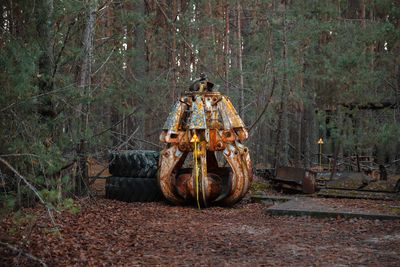


Forty years ago, the Chornobyl nuclear power plant exploded in a catastrophic release of radioactive material and debris. The surrounding region was swiftly abandoned, but the site remains littered with the relics of that fateful night, many of which still hum with radiation to this day. Among the most iconic is the infamous "Claw of Death," though it's safe to say its reputation has been somewhat exaggerated.
The Claw of Death is a crane grab, an industrial picker-upper that is designed to hang from a cable and pluck, lift, and move heavy materials. Think of it as a giant version of the claw machine game that grabs the aliens in Toy Story, except weighing several tons and built for serious work. In its former life, the Claw of Chornobyl was most likely used to shift mining debris, but when disaster struck on April 26, 1986, it was repurposed for something far more serious.
The incident unfolded when reactor no. 4 of the Chornobyl Nuclear Power Plant lost control during a nighttime safety test. Many factors were at play – inadequately trained staff, a dodgy reactor design, and the decaying institutional fabric of the Soviet Union – but regardless of the specifics, the error triggered a rapid rise in temperature within the reactor. The water surrounding the nuclear rods boiled violently like a kettle, culminating in a steam explosion that blew the roof clean off.
In the chaotic months that followed, workers and engineers scrambled to contain the damage in and around the ravaged reactor. With the ceiling of the reactor hall blown open, crane grabs were lowered through the gaping hole and used to scoop up chunks of radioactive material scattered across the structure.
There’s not a wealth of information on the specific role of the "Claw of Death” in the clear-up mission, although there are some black-and-white photographs of the claw in action.
Today, it sits in a graveyard of abandoned machinery in the nearby town of Pripyat. Some sources have claimed it is the “most dangerous” object in the region, and it “could kill you with a single touch.” There’s no doubt the crane grab is riddled with radioactive levels much higher than background levels, but many of these claims are overstated.
The Claw is a popular destination for (illegal) urban explorers. In recent years, it has been repeatedly spray-painted in vivid colors – including a dashing hot pink – by vandals, and photographs even show people sitting directly on it.
While this is undeniably foolish, it isn't an instant death sentence. A 2012 YouTube video (above) shows someone scanning the Claw with a Geiger counter, which clicks and beeps with increasing urgency as she approaches the rusting object.
In the most contaminated spots, the reading reaches up to 500 microsieverts per hour. That’s way higher public safety limits, although not strong enough to cause immediate acute radiation sickness. Spend a few hours beside it, however, and your body would certainly begin to feel the strain.
If you're looking for an even more irradiated relic of the Chornobyl disaster, there is always the Elephant's Foot, a slump of melted metal, sand, and uranium that cooled into a hardened crust on the floor of the reactor hall's basement. It’s quietly sat there for 40 years, but it’s not giving up the ghost any time soon.