Humans
 PUBLISHED
 2
2


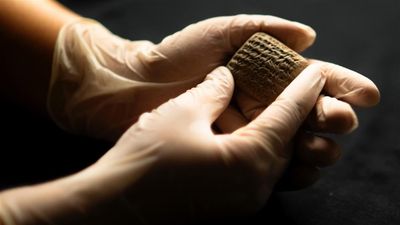


A clay tablet engraved with what appears to be one of the world's oldest known sales receipts has been discovered by archaeologists in southern Türkiye. Written in cuneiform, the ancient document dates back to the 15th century BCE and records the purchase of large quantities of wooden furniture.
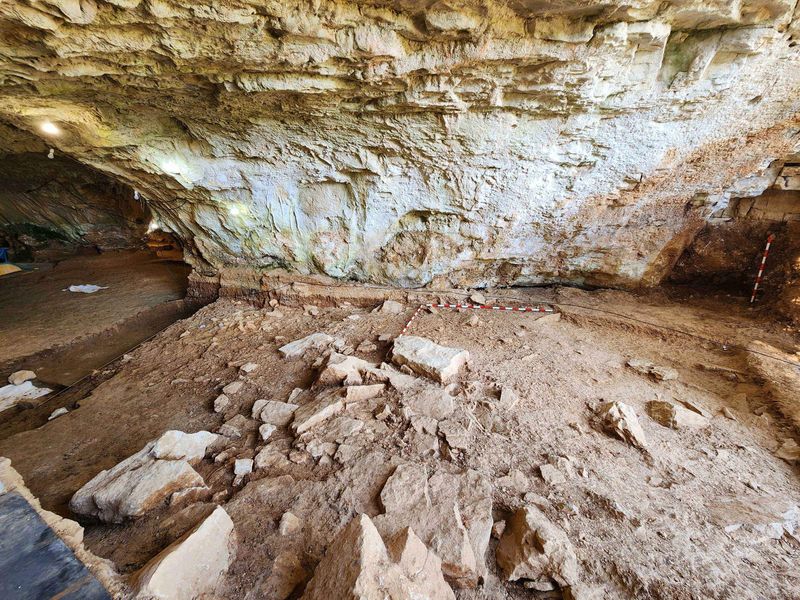
Announcing the discovery, Turkish Minister of Culture and Tourism Mehmet Ersoy explained that researchers had come across the remarkable relic at Eski Alalah, in the southern province of Hatay. Also known as the Aççana Mound, the ancient site is located in the old city of Alalah, where workers stumbled upon the tablet during restoration works following an earthquake.
The oldest known writing system in the world, cuneiform was developed around 5,500 years ago and was used across ancient Mesopotamia for about three millennia. Formed by impressing reed styluses into clay, the text was adopted by cultures such as the Babylonians, Assyrians, and Sumerians, each of which had its own language.
According to Ersoy, the newly discovered sales slip appears to be written in Akkadian, which was the lingua franca of the world’s oldest Empire. Existing for a little more than a century, the Akkadian Empire had its capital at an unknown location along the banks of the Euphrates River, and its now-extinct dialect was the most ancient of the Semitic languages – which include Hebrew and Arabic.
Linguists are currently working on deciphering the text, the first few lines of which document the sale and purchase of a large number of chairs, tables, and stools, along with information about the identities of the buyers and sellers. “We believe that this tablet, weighing 28 grams [1 ounce], will provide a new perspective in terms of understanding the economic structure and state system of the Late Bronze Age,” said Ersoy in a statement.
Curiously, this is far from the first mundane report to have been found in the Akkadian language. In 2018, researchers came across a similar clay tablet scribbled with a complaint from a disgruntled customer who was apparently unhappy with the quality of copper that he had purchased.
And while scholars often struggle to decipher the messages imprinted onto these ancient tablets, the task of interpreting cuneiform may be about to get a whole lot easier thanks to the development of an artificial intelligence system that can translate Akkadian and other related languages with 97 percent accuracy. Reading between the lines, however, is an altogether different matter.