Humans
 PUBLISHED




Archaeologists have found the first direct evidence of what may have been a war elephant deployed by Hannibal during the Second Punic War (218-201 BCE). To date, evidence of these war animals has largely come from historical texts or circumstantial evidence such as tracks, so this discovery represents an exciting moment for archaeology.
There’s a lot we don't know about the use of elephants in ancient wars. The earliest evidence of use dates back to the Harappan Civilization, a Bronze Age urban culture that flourished between 2600-1900 BCE. However, we do not have concrete proof of their taming during this period. The first literary accounts describing their capture date to the first half of the 1st millennium BCE. By this point, the massive mammals were already being used for warfare in the Magadha Kingdom, an influential ancient state located in northern India.
Then, in 331 BCE, the armies of Alexander the Great encountered war elephants during the battles of Gaugamela and then at Hydaspes, where they served as a stock force against both cavalry and infantry. After this, Hellenistic rulers became increasingly interested in using the animals in warfare. Then, Pyrrhus of Epirus, a Greek king, became the first to deploy elephants in wars on the Italian Peninsula and Sicily.
It was during one of these conflicts in Sicily (278 BCE) that the Carthaginians took stock of the tactical potential elephants represented. During the First Punic War (264-241 BCE), General Hanno used 50 to 60 African elephants against Roman forces at the Battle of Agrigentum. The animals then became a staple of Carthaginian warfare and were used throughout the Punic Wars, especially during the second war that took place across the Iberian Peninsula, southern Gaul (modern southern France), and parts of North Africa.
It was this war where General Hannibal Barca famously took elephants across the Alps to fight the Romans at the Battle of Trebbia River, in 218 BCE, and others. This historical moment has had profound impacts on Western art, literature, and culture. It left a legacy that was passed down through classical accounts and then by subsequent authorities.
However, despite becoming a historical icon, physical evidence of elephants in Western Europe during antiquity has remained scarce. Pretty much everything we know comes from written accounts. But now researchers believe they have found the first direct piece of evidence to support it.
[T]his is the first time an elephant bone remnant linked to that chronology has been found in Iberia and, to our knowledge, in Europe.
Rafael Martínez Sánchez
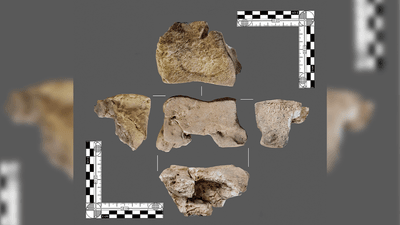
In 2020, ahead of the construction and enlargement of a medical consulting room of the Cordoba Provincial Hospital in Spain, archaeologists found a carpal bone (ankle) from the right forefoot of an elephant that did not match any known local species. A subsequent carbon dating of the surrounding soil placed the find at around 2,250 years of age, which predates the Roman conquest of the region that took place in the mid-2nd century BCE.
The excavation site is located where an Iberian fortification – called the Oppidum of Cordoba by the Romans – used to be. Typically, these settlements were built on hillsides, but this one was placed along a bend in the river.
Although the elephant clearly did not make it across the Alps with Hannibal’s army, it remains a significant find.
“[T]his is the first time an elephant bone remnant linked to that chronology has been found in Iberia and, to our knowledge, in Europe,” Rafael Martínez Sánchez, Associate Professor at the University of Córdoba, told IFLScience. “This stands in contrast to the interest shown by scholars and antiquarians in the 18th and 19th centuries in finding bones of these famous elephants.”
Martínez Sánchez specializes in prehistoric archaeology, especially the Neolithic period, though he also has expertise in zooarchaeology. At first, he was not involved in the excavation work at the site, but a chance encounter changed all that.
“I arrived there simply as a visitor, on my way to visit the excavation of a colleague and good friend, Agustín López Jiménez, when my attention was drawn to a very large bone that had just been discovered. The contextual analysis came later, partly thanks to the expertise in the archaeology of warfare held by Dr. Fernando Quesada Sanz, co-author of the study,” he added.
The bone itself is not definitive proof […] but it is the closest thing to definitive evidence of the presence of these animals.
Rafael Martínez Sánchez
At present, the researchers are not sure which species of elephant the bone belongs to.
“We are currently endeavouring to extract ancient DNA from this specimen to determine the taxonomy of these animals. There is ongoing debate regarding the species of the North African elephants, from which the Carthaginians sourced their armies,” Martínez Sánchez explained.
“Their presumed identification with one of the two modern species of African elephants (Loxodonta africana vs. Loxodonta cyclotis) remains to be determined. Another possibility is the existence of a related species or subspecies, which would have inhabited North Africa in antiquity – a hypothesis that has yet to be substantiated.”
The rest of the elephant’s remains may have decayed over the centuries. It is possible these remaining carpel bones have only survived because they were trapped under a collapsed wall. However, Martínez Sánchez warns that we cannot rule out the possibility that the bone may have arrived in the Iberian settlement by other means.
“The bone itself is not definitive proof – we do not rule out the possibility that the bone could have arrived in Córdoba as a curiosity or something similar – but it is the closest thing to definitive evidence of the presence of these animals, beyond literary or iconographic sources,” he said.
“Personally, I find it thrilling to see the veracity of the classical sources confirmed and how, though not always, historical events find their reflection in the archaeological record.”
The study is published in the Journal of Archaeological Science: Reports.


 3
3