Technology
 PUBLISHED
 8
8


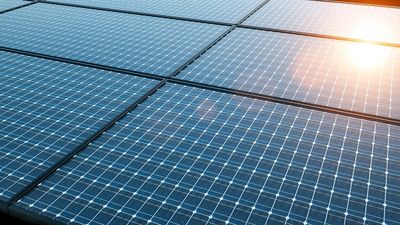


Researchers have developed a method to enhance the lifespan and working efficiency of perovskite solar cells, achieving record outputs following grueling, long-term tests. With a superb power conversion efficiency (PCE) of 20.1 percent after more than 1,500 hours of use, the high-performing cells created during the study may open the door to more widespread use of this much hyped renewable energy solution.
Perovskite solar cells have garnered a huge buzz over the past decade due to their superior performance when compared to the more common silicon-based alternative. However, at present the technology is not seen as commercially viable due to its instability and limited lifespan.
Seeking to overcome this hurdle, the study authors set out to develop a means of chemically altering the surface of perovskite cells in order to eliminate defects and increase both durability and efficiency - a process known as passivation. Commenting on the team’s motivation in a statement, study author Yen-Hung Lin explained that "passivation in many forms has been very important in improving the efficiency of perovskite solar cells over the last decade.”
“However, passivation routes that lead to the highest efficiencies often do not substantially improve long-term operational stability.”
Bucking this trend, the researchers found that treating perovskite cell surfaces with specific combinations of chemicals called amino-silanes massively improved their performance and longevity. Overall, they were able to enhance the cells’ photoluminescence quantum yield - which refers to a material’s ability to convert absorbed light into emitted energy - a whopping 60-fold.
Moreover, operational stability remained high after more than 1,500 hours of standard testing under full-spectrum sunlight, with PCE remaining at 95 percent of its original value at the end of this extended examination. In absolute terms, the best-performing cells clocked up a PCE of 20.1 percent for the duration of these tests - the best figures ever reported for perovskite cells.
Put simply, this means the cells were able to convert an exceptionally high percentage of the sunlight they received into electricity, capturing and processing wavelengths from a wide range of the electromagnetic spectrum. “The design maximizes the use of the solar spectrum by absorbing different parts of sunlight in each layer, leading to higher overall efficiency," said Lin.
These exceptional results were achieved using two different cells, measuring 0.25 and one centimeter squared (0.04 and 0.16 square inches). According to the researchers, this breakthrough could now facilitate the large-scale production of stable, durable, and efficient perovskite solar cells.
The study has been published in the journal Science.