Technology
 PUBLISHED




In the emerging world of electric vehicles, renewable energy infrastructure, and robotics, high-quality magnets are the soup of the day, and that menu is unlikely to change for some time. This is welcome news for China, which produces the lion’s share of the world's rare earth permanent magnets, but it’s less desirable for their economic rival, the United States.
Breaking ground
Against the backdrop of a simmering trade war between the two superpowers, a US company is building a $1.2 billion rare earth metal and magnet manufacturing facility in Cherokee County, South Carolina.
Construction broke ground last week on the 74,322-square-meter (800,000-square-foot) facility at Bailey Industrial Park in the town of Blacksburg.
The plant aims to be up and running by 2028, by which time it will be able to produce 6,400 metric tons per annum of sintered neodymium-iron-boron (NdFeB) permanent magnets – the strongest type of permanent magnet on the market.
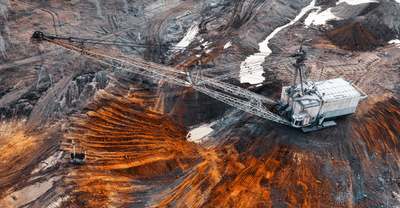
The company will achieve this by taking care of every part of the value chain. Rare earth ore will be mined from the Pela Ema mine in Brazil and the Round Top deposit in Texas, then processed and separated. From there, it will be converted into metal and alloy before being manufactured into finished magnets at the new Blacksburg facility and the existing operation in Stillwater, Oklahoma.
The race for rare earth metals
The whole system is run by USA Rare Earth, a public company in which the Trump administration reportedly bought a 10 percent stake as part of a $1.6 billion deal earlier this year.
That investment reflects the US government's growing anxiety to secure a domestic supply of rare earth magnets, vital materials used in defense, aerospace engineering, and high-tech manufacturing.
“Breaking ground in Blacksburg is an important moment because it moves our vision from plans on paper to infrastructure taking shape,” Barbara Humpton, Chief Executive Officer of USA Rare Earth, said in a statement.
“We’re building the capabilities America needs to make critical rare earth materials and magnets at home, while making a long-term investment in the people and communities that will help us do it," she said.
Rare-earth magnets – namely NdFeB – are the strongest permanent magnets available for their size and weight, used in a broad variety of technological applications, including motors, actuators, generators, and sensors.
Magnets have been a staple of modern engineering for several decades, but recent demand for high-quality ones has skyrocketed due to emerging technologies like electric vehicle motors, wind turbine generators, missile actuators, and robotics.
China vs USA trade war
For the US and other powers vying for a secure supply, the situation is especially fraught because China dominates the market, currently controlling about 94 percent of the world's sintered permanent magnet production, according to the International Energy Agency.
To make matters even more pressing, China has restricted the flow of these metals as part of its response to the tariffs of US President Donald Trump.
While there's still a long way to go before the US reaches total self-sufficiency, USA Rare Earth suggests that the Blacksburg site will be a step in that direction.
“A secure rare earth supply chain isn’t built with a single mine or a single factory. It requires rebuilding every link,” said Gregory Bowman, Chief Global Policy Officer of USA Rare Earth.
“Blacksburg adds critical manufacturing capacity to that broader platform and brings the United States closer to producing more of the materials and magnets our industries depend on outside of Chinese control. What starts with a groundbreaking here in South Carolina ultimately strengthens America’s industrial and national security,” Bowman added.

 3
3