Space and Physics
 PUBLISHED
 1
1




The winners of the Astronomy Photographer of the Year 2023 have been announced, and the images are as stunning as ever. An unexpected plasma arc, galactic neighbors, and a unique view of Venus are all among the winning photographs.
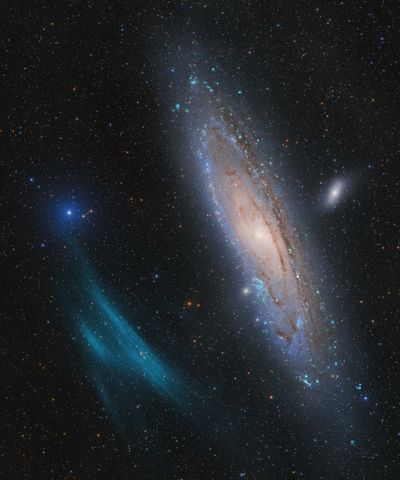
This year’s competition had over 4,000 entries from 64 countries, but Marcel Drechsler, Xavier Strottner, and Yann Sainty took home the top prize for their photograph “Andromeda, Unexpected”.
The image features something quite unexpected next to the Andromeda galaxy – a massive plasma arc. This surprising discovery has since led to a transnational collaboration investigating the arc structure.
“This astrophoto is as spectacular as [it is] valuable. It not only presents Andromeda in a new way, but also raises the quality of astrophotography to a higher level,” said judge László Francsics in a statement sent to IFLScience.
The competition also runs an award for Young Astronomy Photographer of the Year, which was won by 14-year-olds Runwei Xu and Binyu Wang.

In what judge and professional astronomer Yuri Beletsky described as a “strikingly beautiful picture”, the two teens captured the colorful Running Chicken Nebula, located over 6,000 light-years away from Earth in the Centaurus constellation.
Other categories for the competition include images of aurorae, distant stars and planets, and of course, our Sun and Moon. Check out some of the winning photographs below.


Dr Ed Bloomer, astronomer at Royal Observatory Greenwich said, “Once again, entrants to the Astronomy Photographer of the Year competition have conspired to make things difficult for the judges, with a flood of high-quality images covering an amazing range of targets.”
“The highlight of this year is perhaps a number of genuine discoveries being imaged, but we've had wonderful efforts in every category and I'm particularly pleased to see the continued strength of our young entrants and those eligible for The Sir Patrick Moore Prize for Best Newcomer. It has led to some intense debate amongst the judges as we try to choose the very best of the best, but we don’t mind!”


The winning images will be on display at the National Maritime Museum, London, from September 16.
Check out our video if you want to learn how to take amazing space photos of your own!