Space and Physics
 PUBLISHED



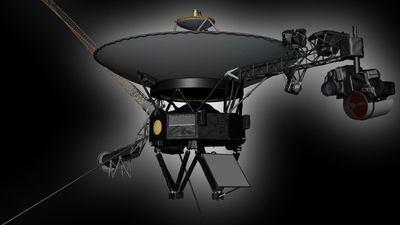


At almost 49 years in space, the Voyager missions are nothing short of iconic. The farthest human-made objects are now traveling in interstellar space and still doing science. They weren't designed to study what lies beyond the influence of the Sun; they were planetary probes, and yet, thanks to brilliant mission teams, they have risen to new heights.
So why did NASA stop at 2? Why not a Voyager 3? Well, if things had gone differently, we would have Voyager 3 and 4, though maybe not with those names.
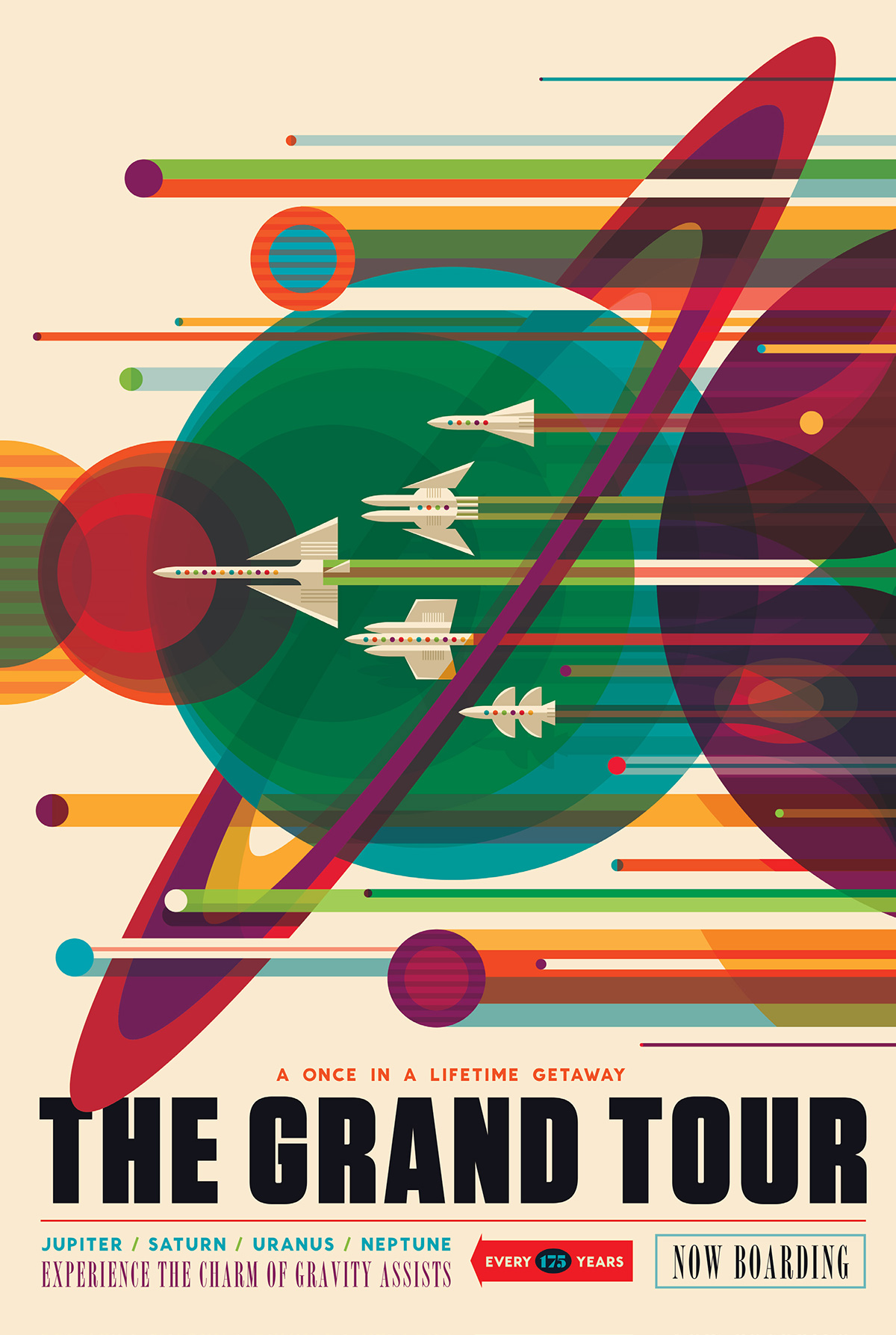
It all started with aerospace engineer Gary Flandro at the Jet Propulsion Laboratory (JPL) back in 1964. He realized that in the late '70s, the outer planets of the Solar System would be aligned in such a way that, using gravitational assist maneuvers, you could visit them all in a single go. It was named "The Grand Tour," after the European travel program of the era.
The celestial Grand Tour could see you fly to Jupiter, Saturn, Uranus, and Neptune in a matter of years. The mission proposal was even bolder, though. Two sets of identical spacecraft. The first pair would visit Jupiter, Saturn, and Pluto, which was still considered a planet at the time. The other pair would go to Jupiter, Uranus, and Neptune. The particular alignment happens only once in every 175 years or so; it was a chance not to be missed.
Four spacecraft was an expensive proposition, however, and combined with internal competition from the Space Shuttle program (NASA is always fighting for funding), the project was canceled. It then became the Mariner Jupiter-Saturn project – which would use the successful Mariner design to deliver spacecraft (Mariner 11 and Mariner 12) that could go towards the outer Solar System. The focus was kept to only two planets to keep prospective costs low, but the option for more was always there.
Eventually, the final Mariners became Voyager 1 and Voyager 2. The first one still had the option to visit Pluto, but the mission team opted for a close encounter with Titan instead. Titan is the only moon in the Solar System with a substantial atmosphere and a target for the search for life beyond Earth. Voyager 1 couldn’t see much, as Titan’s atmosphere is opaque, but the choice eventually led to New Horizons, which studied Pluto, and Cassini, which studied Titan and the Saturn system like never before.
And knowing that Titan was not that exciting to look at with Voyager instruments, Voyager 2 had the chance to go on and look at Uranus and Neptune, the only time we had a close-up view of these two giant planets.
The next Grand Tour is expected to happen in the early 2150s, but let’s hope for many iconic missions to the outer planets and the outer Solar System before then, whether we call them Voyager, V’ger, or something else entirely.


 1
1