


 Space and Physics
 PUBLISHED
 1
1


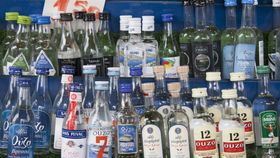


Ouzo, the anise-flavored Greek and Cypriot spirit, has a very strange effect, other than creating a particularly strong holiday hangover.
If you pour some water into this transparent liquid, it will turn a mysteriously cloudy white. A new study published in the Proceedings of the National Academy of Sciences has now explored the physics behind this strange “ouzo effect,” satisfying the curiosity of drunkards around the world.
It all has to do with anise oil. This oil is used in many liquors, apéritifs, and spirits to give it that aniseed or licorice-like taste. That’s also why the “ouzo effect” can be seen in other drinks such as absinthe, sambuca, and pastis. The solubility of the oil in the ouzo varies depending on the alcohol-water ratio. If you add more water to the mix, this oil solubility decreases. This causes the oil to form nano-sized droplets within the liquid, which fuse together to create larger droplets and hence scatter the light entering the liquid, giving it that cloudy appearance.
Researchers from the University of Twente in the Netherlands studied this by placing a drop of ouzo onto a hydrophobic surface. The drop initially remains clear and transparent, but eventually the alcohol starts to evaporate, changing the alcohol-water ratio. Most of this alcohol evaporates at the outer edge of the drop, meaning the rim starts to turn cloudy first.
A storm is then kicked up in the drop and a process of “rapid movement” begins. Differences in surface tension cause a relatively high level of convection – simply put, movement in the drop – through a process known as the “Marangoni effect.” The “ouzo effect” on the rim therefore starts to move inwards to the rest of the drop as the evaporation and movement carries on. Eventually, all alcohol evaporates and the liquid returns to its transparent state.
This whole process takes less than 15 minutes at room temperature in a single drop of ouzo. However, it is all sped up in the video below.
So next time you're knocking back a few ouzos, spare a thought for the complex physics going into your tipple.


