Humans
 PUBLISHED


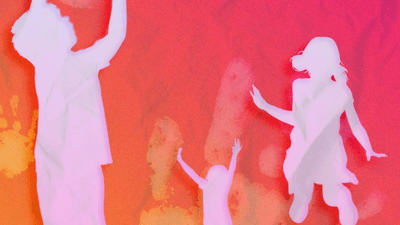


For a species that has managed to take over an entire planet, humans spend a remarkable amount of time unable to tie their own shoelaces.
It’s not a joke: each of us will live for maybe a hundred years if we’re lucky, but a quarter of that time is spent in childhood – essentially, a practice run for the rest of our time on Earth. While clearly we’re not the only species that goes through a juvenile stage, it has to be said that nobody else does it quite like we do.
Humans are “very unusual – in terms of time spent growing up as a proportion of total lifespan, we really are exceptional,” says Brenna Hassett, a biological anthropologist and archaeologist at the University of Central Lancashire, UK, and author of Growing Up Human: the Evolution of Childhood.
“You can think about something like a bowhead whale, which might have a lifespan of say 200, 300 years,” she tells IFLScience; “their offspring spend the same amount of time growing up that we do (about 25 years) and grow much, much bigger.”
But human childhoods aren’t just long compared to other species – they’re weirdly spaced out and filled with siblings and extended families. It’s the time when we’re at our most helpless and naïve, but also a period marked by the greatest levels of brain development and learning throughout our lives.
And, as it turns out, it’s what makes us human on a pretty fundamental level.
The paradox of childhood
Let’s be honest: spending upwards of two decades in a state of extended helplessness doesn’t seem like it should be an advantage for a species. Children “need high energy foods for their high rates of growth,” points out Siân Halcrow, Professor of Biological Anthropology at the University of Otago, New Zealand; they also require intense, round-the-clock protection from the adults around them. They are, evolutionarily speaking, a high-risk investment.
And yet, not only have humans survived, we’ve prospered. “Normally in animals with a long developmental period, this would mean relatively low fertility,” Halcrow tells IFLScience. “However, very interestingly, we do not find this in humans. Rather, for humans it is argued that their longer childhood leads to increased reproductive fitness.”
It seems counterintuitive – but a closer inspection of our developmental milestones reveals why it works. See, human childhood isn’t just a longer version of other animals’ – over the years, we’ve stretched and squeezed it into something unique to our own species, tailor-made for our needs.
How long our childhood is seems to be a really important factor in making us the social, long-learning species that we are.
Brenna Hassett
“If you look at childhood as a proportion of life, primates are all very keen on having long childhoods,” Hassett explains, but in humans, the very first bit – the bit in between being born and weaning – is much shorter than other apes’. Compare our species to orangutans, for example, and our strange developmental process is thrown into sharp relief: the orangs will breastfeed their young for up to six to eight years – two to three times as long as even the most enthusiastic human mothers – but send them off into the world of adulthood as little as two years after that.
In contrast, humans can spend as little as 4 percent of their childhood breastfeeding – and that’s a change that has had a profound effect on how our species reproduces. “By reducing the length of the infancy stage […] this translates into greater fertility,” Halcrow tells IFLScience, “with the earlier lifting of high energy expenditure the physiological demands of breastfeeding interfere with ovulation and pregnancy.”
It’s part of what has made humans so successful – if you’re not constantly feeding a baby, it frees up a lot of time for things like hunting and gathering – and it’s also why, unlike most other animals, we’re able to raise multiple children at the same time, rather than having to wait until each kid matures and leaves the nest.
And it’s only possible at all thanks to that other most human of characteristics: our extreme sociability.
To raise a child
Outside of humans, orangutans are the primate outlier when it comes to long childhoods, reaching adulthood at eight to 10 years old. With the noticeable exception of the families living inside the world of Pokémon, that’s roughly half the age that human societies tend to consider their offspring ready to venture into the world alone.
But that’s precisely the point, Hassett explains: humans do live in societies – and that’s one major reason why we spend so long growing up. “How long our childhood is seems to be a really important factor in making us the social, long-learning species that we are,” she tells IFLScience.
“Actually all social species tend to have long childhoods – crows take a long time growing up, and they are hardly in our evolutionary line,” she says. “The fact that social species take so long growing up tells you one of the things that a species that is so social needs is time – time to learn how to get along in society.”
But in a beautiful example of evolutionary symmetry, the opposite is also true. Our social nature isn’t just why we have such long childhoods – it’s also key to how we do it.
“The reduction of the infancy period [is] made possible with the development of social structures of shared parenting within societies,” Halcrow explains. “Traditional societies solve the problem of childcare by spreading the responsibility among many individuals, including juveniles, adolescents, or adults.”
Becoming human
Nevertheless, this all raises some interesting questions. We’re hardly the only social species out there – so why do human childhoods last so much longer than any others? When, on the evolutionary tree, did we wander out quite so far along this particular branch?
“People have spent a lot of time looking at the biological markers of growth in our species, and the hominids that came before us, to ask just this question,” Hassett tells IFLScience. “Since there seems to be so much evolutionary pressure on us to extend our childhood from the much shorter childhoods of ancestors like Homo erectus or australopithicenes or more ape-like primates, we are really interested in using fossil skeletons and teeth to see at what speed we and the species that came before us grew.”
And the answer, it seems, requires us to delve deep into what exactly makes us “human” at all. Our extended childhoods likely appeared somewhere along the Homo line, Halcrow explains – “potentially Homo habilis, with the increase in brain size and growth requirements for the brain.”
It can (and often does) look like chaos – but the bundle of hyperactivity and imagination that characterizes so much of childhood is merely a cover for what is, essentially, a mental superpower.
Living more than 1.4 million years ago, H. habilis exists right on the edge of where “ape” meets “human”. Indeed, so murky was its status when it was first discovered in the 1960s that even giving it the prefix Homo was controversial, forcing scientists to redefine the limits of the genus to allow for its inclusion. And yet, it had several very human-like qualities. It walked on two legs, used stone tools, and likely had some language capabilities. Most importantly, it had a surprisingly large brain – a feature that still defines our species today.
And the best way to use that big brain? Spend a lot of time practicing. “It is believed that humans have such long childhoods to increase [the] time for brain development and social learning,” Halcrow says. “That needs to occur to be fully competent within our socially complex world.”
All fun and games
Now, figuring out how to exist in human society is – well, it’s a life-long endeavor. So why is childhood so special? What makes this period, more than any other in our lives, so important to the process of learning that evolution has seen fit to extend it beyond that of any other species out there?
“We spend a lot of time in childhood, like many of our primate relatives,” Hassett tells IFLScience. “We use the time to learn. Part of this is playing, and there are lots of interesting things you can say about play.”
Humans are far from the only animals to play as children, she points out – but the way we do so “can tell us a lot about the type of species and society we are trying to be,” she explains. “Depending on the adult skills that a young animal needs, they will undertake different types of play. Human children as well will play in ways that will fit their eventual adult roles in society.”
It can (and often does) look like chaos – but the bundle of hyperactivity and imagination that characterizes so much of childhood is merely a cover for what is, essentially, a mental superpower. Children’s brains have a lot of developmental plasticity, Halcrow explains – they are far more able than adults to adapt and reorganize neural pathways in response to new information.
Psychological research shows that these bodily proportions (larger head and smaller bodies) look ‘cute’ to humans and thereby elicit a nurturing or caring response.
Siân Halcrow
A longer childhood is therefore “an adaptive advantage,” she says. “This is especially so for children as their brain is still developing a lot.”
Of course, there are trade-offs for such an intense training period. Kids screw up: they fall over, scrape their knees and elbows; they try to eat just about anything they see without even asking whether it’s poisonous; heck, when they first come out, they can’t even talk or wipe their own butts. But it’s here that the extended childhood pulls out its final ace: children, it turns out, are also kinda cute.
“It is […] interesting that the growth pattern of humans means that children still retain a relatively infantile appearance,” Halcrow tells IFLScience. “During childhood there is relatively rapid brain growth and comparatively slower body growth, and this is argued to contribute to nurturing behavior in older individuals.”
“Psychological research shows that these bodily proportions (larger head and smaller bodies) look ‘cute’ to humans and thereby elicit a nurturing or caring response,” she explains.
The children are our future
It may seem dishonest – maybe even manipulative – but you can’t deny that it works. Human children are cute, and so we forgive them for being basically useless for a frankly ridiculous length of time; we care for them in society-wide networks, and they use that time to learn how to exist in that society, furthering the species in turn by caring for the tiny, wide-eyed idiots that come after them.
“We have a social system that allows and encourages us to invest heavily in our children, backed by evolutionary changes over millions of years that have preferred to trade off expensive investments in brain size and long periods of growth against the speed at which we can reproduce ourselves,” Hassett tells IFLScience.
And while childhood certainly has its drawbacks – just ask any new parent when the last time they got a good night’s sleep was – the advantages are, undeniably, worth it for the species. After all, as Hassett points out, “they must be sufficient. [They] made us the most successful primate on the planet!”
This article first appeared in Issue 25 of our digital magazine CURIOUS. Older issues of CURIOUS are free for all users. To access new issues, become an All Access Member.