Humans
 PUBLISHED


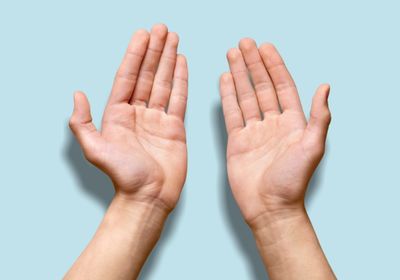


A study has uncovered an unusual link between drinking habits and finger length. Researchers found that people whose ring finger is longer than their index finger were more likely to report higher levels of alcohol consumption.
The ratio of our finger lengths is something that’s set before birth, in part influenced by the hormones we are exposed to in the womb. People exposed to more estrogen tend to have second digits longer than their ring fingers, while those exposed to more testosterone can have ring fingers longer than their second digits. There are also people whose ring finger and second digits are the same length.
This latest study looked at 258 student participants – 169 of them female – to see what their finger ratios were and how much alcohol they consumed. The results showed there was a correlation between higher alcohol consumption and longer ring fingers relative to second digits, pointing towards the potential influence of hormones as a contributor to the likelihood of imbibing as a student.
“A pattern like this suggests an involvement of sex hormones, such as testosterone and oestrogen,” said Professor John Manning, of Swansea University’s Applied Sports, Technology, Exercise and Medicine (A-STEM) research team, in a statement. “Digit ratio (2D:4D: the relative lengths of the 2nd [index] and 4th [ring] fingers) is thought to be an index of early testosterone (long 4th digit) and oestrogen (long 2nd digit).”
“It is known that alcohol-dependent patients have very long 4th digits relative to their 2nd digits, suggesting high testosterone relative to oestrogen exposure before birth. As expected, the associations were stronger for men than women.”
It’s worth pointing out that the association can’t establish cause and effect, so having a certain finger ratio doesn’t dictate a person’s outcome – but it’s hoped that identifying the connection could shine a light on factors underlying alcohol use.
"Alcohol consumption is a major social and economic problem,” said Manning. “Therefore, it is important to understand why alcohol use shows considerable differences across individuals.”
The study was published in the American Journal Of Human Biology.
A previous version of this article first appeared in 2024.