Technology
 PUBLISHED
 2
2


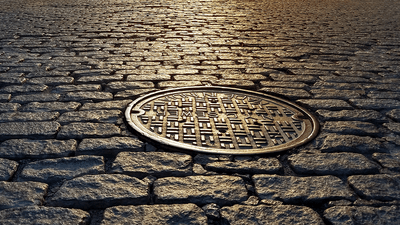


At some point in your life, you may have wondered why manhole covers are round, and what the markings all over them mean.
Why are manhole covers round?
This question has been used as an interview question by Microsoft. While it doesn't have a definitive answer, there are a number of reasons why round manholes are preferred around the world.
One reason is geometric. Circular manhole covers – designed to be slightly bigger than the lip that holds them in place – cannot fall down the manhole, no matter which way you turn them. Squares and rectangles, meanwhile, can be rotated and dropped inside diagonally.
Being circular also makes them easier to transport, as you can roll them along their edge, and square manhole covers have a larger surface area when made to the same width as a circular manhole cover, making them less cost-effective. There are other practical concerns, too.
"Manholes are in essence man-made holes," Josh Nelson, an associate professor in the Department of Design at San Jose State University in California, told Live Science, "and these are typically made from rotational tools, which tend to make circular shapes. So, a circular shape covering the manhole would be the best fit in terms of functionality. Anything else would be more complicated and less economical."
What do the markings on manhole covers mean?
Some manhole covers can be surprisingly decorative or useful, with Seattle's containing – among other creations – city maps.
Japan, meanwhile, has taken them to a whole other level.
Less decorative manhole covers vary from country to country, but generally display some sort of information about what they are for. In some places, such as Nashua, New Hampshire, triangular manhole covers are used to point in the direction of the subsurface water flow.
The cross-hatch pattern, or other bumps, are there to reduce noise as vehicles drive over them, as well as slippage. Though it varies by country, they will usually indicate what utility lies beneath, and sometimes the word “adjustable” or “auto-adjustable” to let workers know how the manhole cover can be removed and replaced when necessary.
All “explainer” articles are confirmed by fact checkers to be correct at time of publishing. Text, images, and links may be edited, removed, or added to at a later date to keep information current.