Space and Physics
 PUBLISHED
 2
2



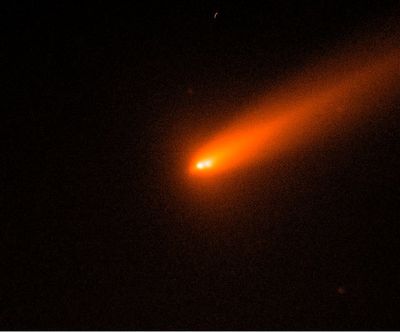


On October 8, golden comet C/2025 K1 (ATLAS) had its closest pass to the Sun. It was just 49 million kilometers (31 million miles) away, closer than Mercury, a distance that very few comets manage to escape intact. Many of us celebrated the successful survival of this chunk of interplanetary ice when it became visible again a few weeks later. But it seems that we have jinxed it. The comet has now broken apart.
While 2025 hasn’t had a "Great Comet" like 1997's Hale-Bopp, it will certainly be remembered as a great year for comets. K1 (ATLAS), together with C/2025 R2 (SWAN) and C/2025 A6 (Lemmon), were at one point a magical trio of green comets in the sky. Comet C/2025 A6 (Lemmon) has been the brightest of the year, and of course, we have our interstellar visitor 3I/ATLAS, the third known interstellar object caught crossing the Solar System.
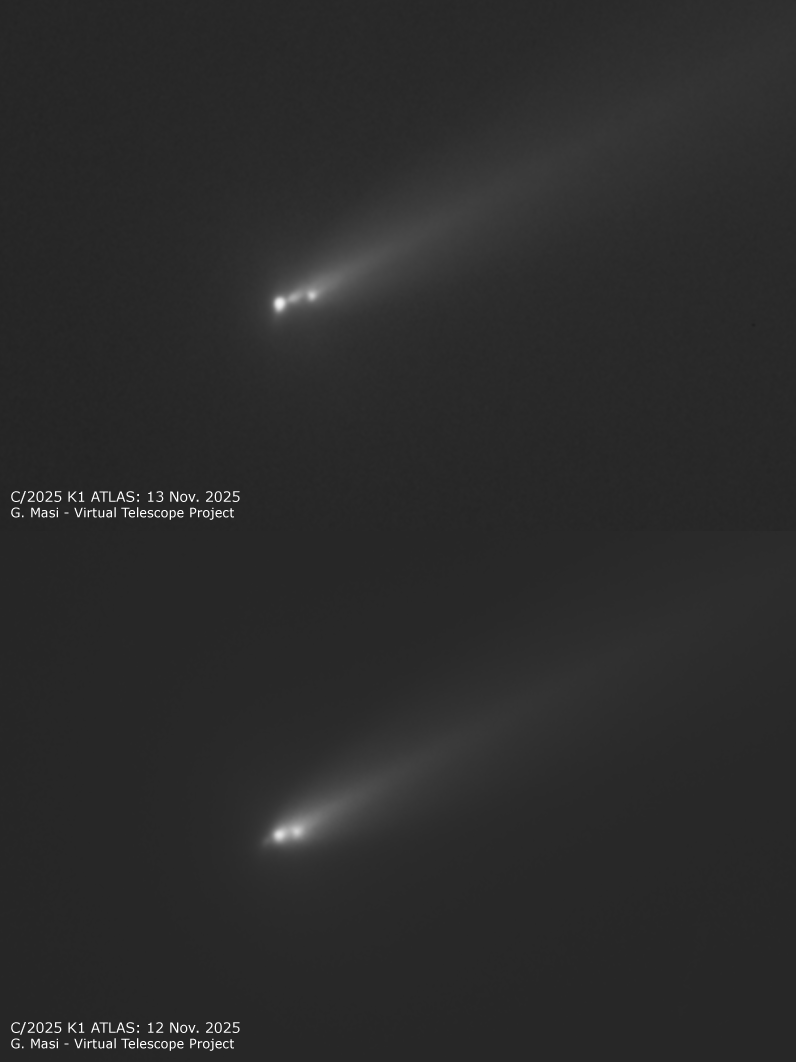
As reported by the Italian National Institute of Astrophysics (INAF), during the night of November 11-12, the comet broke apart into at least two large pieces and a lot of smaller debris. The two pieces are roughly the same size, and their centers are about 2 kilometers (1.24 miles) apart in images from that night. A potential third piece is located to the left of the two pieces.
An incredible GIF showing the comet's evolution between the night of November 12 and 13 from the Virtual Telescope Project shows that the fragments are spreading out, and potentially, the third fragment is now in the middle of the group.
Comet K1 (ATLAS) is expected to make its closest passage to Earth on November 24, 2025, just 60 million kilometers (37.3 million miles) away. It should be visible for most of the night from the Northern Hemisphere, near Ursa Major, though the fragmentation might significantly affect its overall brightness.
“The breaking of a comet nucleus is not only a spectacular event, they are a high scientific value, especially – like in this case – when the comet is ‘new’ and primordial,” Dr Elena Mazzotta Epifani, researcher with INAF, said in a statement translated by IFLScience.
Comet K1 (ATLAS) is new in the sense that it is the first time it has come close to the Sun. It formed in the outskirts of the Solar System, in the Oort Cloud, and this is the first time it has traveled inwards. Observations suggest that it might have moved on an open trajectory, so it will never travel towards the Sun again, and instead will become an interstellar object.
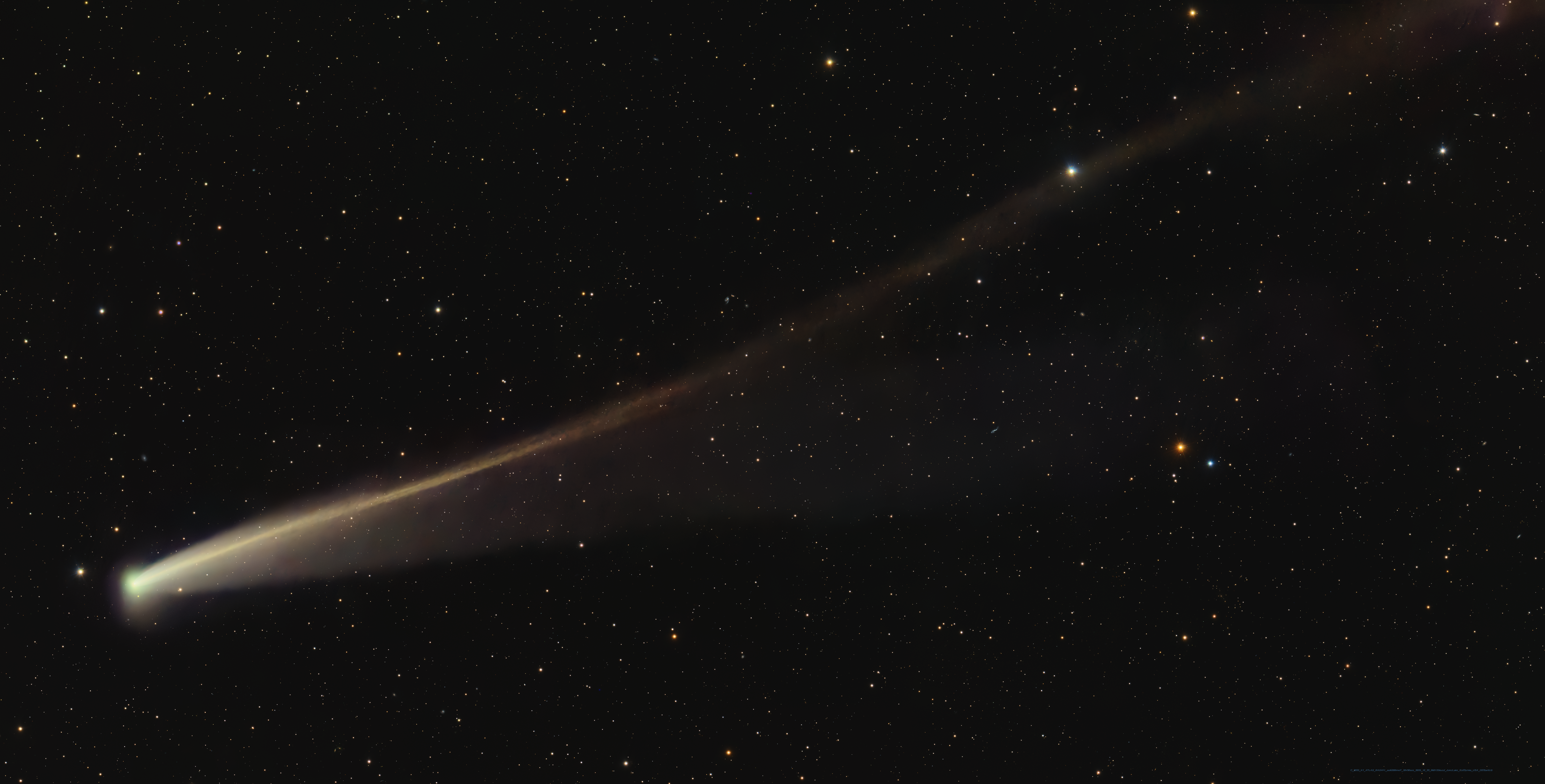
Interest in the comet stems from the fact that it has a weird composition. It is surprisingly carbon-poor, with only two known comets being similar to this one. It has recently been back in the news thanks to its color change, from green to golden brown, recently captured in a beautiful composition by astrophotographer Dan Bartlett, already the winner of the Astronomy Photographer of the Year 2025 competition in the category Planets, Comets, and Asteroids.
The colors of a comet depend on the composition of molecules, as well as its dust output, since one of the tails is made of dust. The close passage might have led to a substantial release of dust, creating the golden spectacle as well as weakening the nucleus, leading to the recent break-up.
More observation of this object will be coming as the Nov 24 closest pass to Earth approaches. It might be less spectacular now, but it just got a lot more interesting.