


 Humans
 PUBLISHED


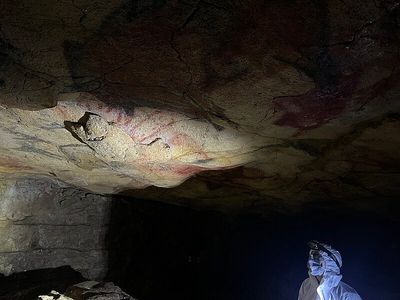


Throughout the caves of Europe, in flickering torchlight, ancient people painted the most extraordinary scenes of cave lions, mammoths, and bison. We might finally be able to know the artists.
The last few years have seen a revolution in ancient DNA. Scientists have managed to extract human DNA from the dirt of cave floors, resin chewing gum, and even from the surface of a 20,000-year-old pendant. Now, they’ve managed to get ancient human DNA from a cave painting.
What happened was a very happy but also weird surprise, you know how it happens in science.
Alba Bossoms Mesa
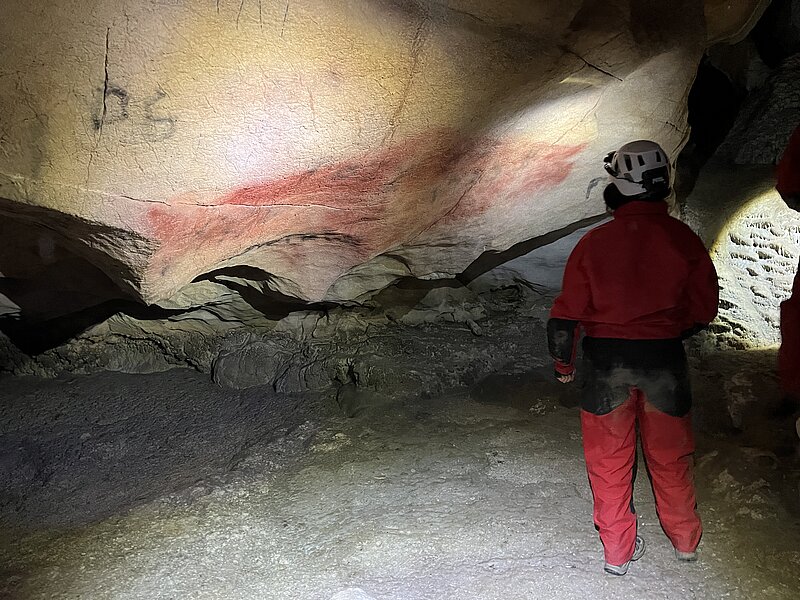
By sampling the pigment of paintings and surrounding walls in 11 caves across Portugal and Spain, they have detected ancient DNA from our own species.
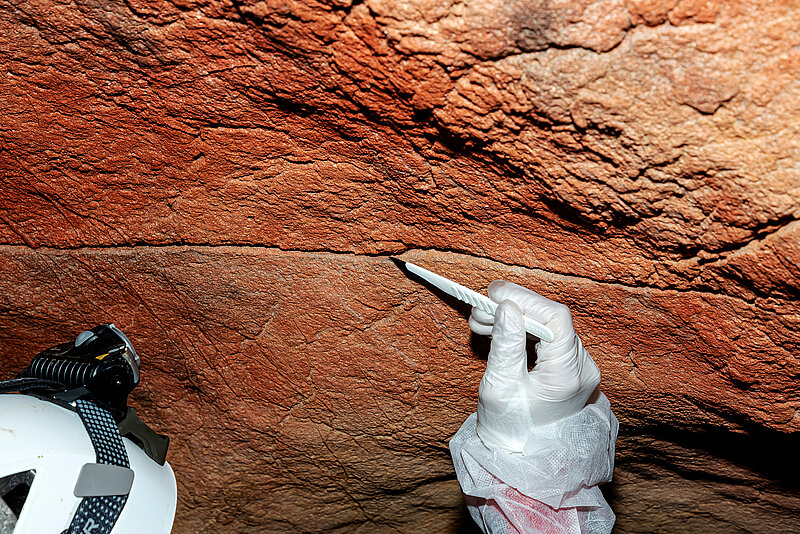
The study came about as the team had a rare opportunity to sample the pigments used to create some of these artworks by piggybacking on another project that was aiming to date the paintings and decipher the exact chemical composition of the pigments used.
“The genetics would be a bonus,” Alba Bossoms Mesa, a PhD student at the Max Planck Institute for Evolutionary Anthropology and first author, told IFLScience. “So if it didn't work out, it's fine. And for a long time, we were not lucky and everything was coming back negative.”
“But then just before one of the last trips, we got one pigment sample that was positive with ancient human DNA. And we got very excited.”
They had a chance to return to the caves so they decided to try again, but this time with the added knowledge of what could be achieved.
Rather than just sampling the paintings, they also collected samples from the surrounding cave walls as a control. This would mean they could compare the results from the art to the bare walls to make sure that if they detected more human DNA it was actually associated with the paintings.
They didn’t predict what happened next.
“What happened was a very happy but also weird surprise, you know how it happens in science,” says Bossoms Mesa. “We didn't get any more positives from pigments, but we got positives from the controls. So from the cave walls without painting."
Dating DNA
In total, they were able to get ancient DNA from five samples. They are confident that it was left behind directly by people rather than, for example, through the movement of sediment or flow of water over the surface, as they didn’t detect the DNA from any other animals.
What is interesting, however, is that the best samples are not from the paintings themselves but from the rock walls.
“We cannot discard that it came from the artist who was reclining while they were painting,” says Bossoms Mesa. “But it could also be anyone else that was passing and who slipped and touched it.”
“But also, it doesn't need to be touch. DNA from touch would come from the sweat, but all of our bodily fluids have DNA. So it could be saliva. Someone sneezes and now we have their DNA.”
The elephant in the room, or maybe bison in the cave, is just how old this DNA is. Was it left behind by the people who actually painted the walls, or was it from a more modern source?
This is where things get a bit tricky.
Scientists can date DNA by looking at something called mitochondrial DNA. This acts a little like a biological clock. Unfortunately, none of the samples had enough mitochondrial DNA preserved to allow for this. But the team had other methods.
For example, for some of the caves they know that all the entrances were sealed by rock falls at least 4,000 years ago. This means that the people who had left their traces had to have done so before that point in time.
The next line of evidence came from the DNA itself. They were able to compare one sample to other known samples of ancient human DNA extracted from more precisely dated bones. The results showed that the people who were touching the walls of the cave belonged to the same genetic population of western hunter-gatherers who lived in Iberia between 5,000 and 12,000 years ago.
Whether these were the people who actually made the art or came along afterwards is still not possible to figure out, but that is not all they can tell of these individuals.
“For the two that are from the same cave, Escoural Cave [in Portugal], we can tell the genetic sex, always in biological terms,” says Bossoms Mesa. “So looking at the chromosomes, one sample is predominantly male, and one is predominantly female. And in the other cave the two samples are predominantly female.”
Could Neanderthals make art?
While the amount they can tell about these ancient people is limited, it is a proof of concept that has the potential to radically shake up the study of ancient cave paintings.
Imagine that we improve the techniques and we can then start to ask more about how humans were interacting with the caves?
Alba Bossoms Mesa
One of the biggest outstanding questions in this field is whether it was only our own species making this art, or if other ancient human species were also doing it. We have the full genomes of Neanderthals and Denisovans so, theoretically at least, it should be possible to now test this.
These are the extraordinary answers now within grasp.
“Imagine that we improve the techniques and we can then start to ask more about how humans were interacting with the caves?” muses Bossoms Mesa. “Like, were there some areas more used than others? Do we see women more in one part, men in the other? I don't know.”
“Then there’s also Neanderthals. I’ve talked with a few scientists that are a bit sceptical that Neanderthals were going as deep into the caves as humans. To be able to say if we were the only ones making art or if Neanderthals were also able to, that's my dream.”
The study is published in the journal Nature Communications.




 8
8