Space and Physics
 PUBLISHED
 3
3


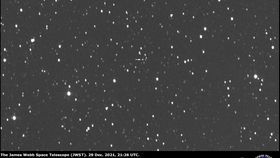


The James Webb Space Telescope (JWST) is currently on its nerve-wracking voyage to orbit the Sun and you can catch a glimpse of its journey through the stars thanks to the Virtual Telescope Project.
The JWST – the largest, most expensive, and most powerful space telescope ever created – was launched on the morning of December 25 after countless delays and setbacks. Four days after its launch, astrophysicist Gianluca Masi from the Virtual Telescope Project spotted the instrument cruising through space using a robotic telescope.
At this point, the JWST was approximately 550,000 kilometers (341,754 miles) from Earth, around 1.5 times the average lunar distance.
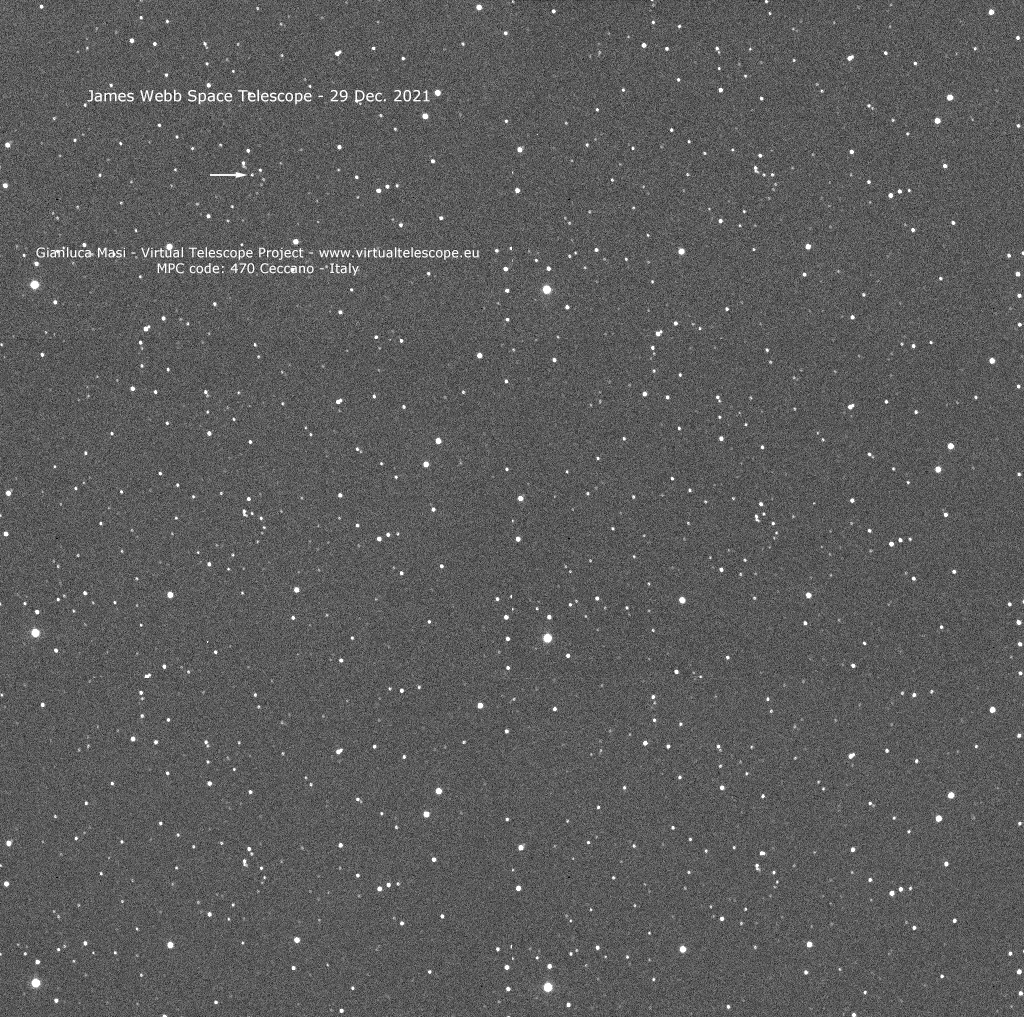
It won’t reach its final destination – L2, the second Lagrangian Point, some 1.5 million kilometers (932,056 miles) directly “behind” the Earth as viewed from the Sun – until late January 2021. This journey, however, is no easy feat.
"Getting Webb to its orbit around L2 is like reaching the top of a hill by pedaling a bicycle vigorously only at the very beginning of the climb, generating enough energy and speed to spend most of the way coasting up the hill so as to slow to a stop and barely arrive at the top," said NASA.
Once it reaches its final destination, it will have an awesome view of the universe and will embark on learning about the formation of the first galaxies and potentially habitable exoplanets.
Stay tuned. On January 7, 2022, at 9:30 pm UTC, the Virtual Telescope Project will observe the JWST from the ground and will stream it live. You can catch that broadcast here.