Technology
 PUBLISHED
 21
21


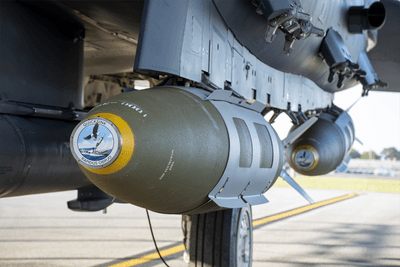


The US Air Force possesses a novel technology that can rapidly sink a ship before your eyes. Their research lab has even released footage of the cutting-edge weapon, aptly named QUICKSINK, showing it obliterate a vessel in the Gulf of Mexico.
The Air Force Research Laboratory and Eglin’s Integrated Test Team first carried out the QUICKSINK test on April 28, 2022.
Using an F-15E Strike Eagle fighter jet, a single bomb was dropped on the empty shipping vessel and – bang! – just like that, the ship is sunk in under 30 seconds. In a second video, the ship is shown on the seabed effectively ripped into two halves.
The Air Force was understandably vague on details about the technology and how it works so effectively. However, they do reveal that QUICKSINK involves a modified 907-kilogram (2,000-pound) Joint Direct Attack Munition (JDAM), a piece of technology that converts unguided bombs, or "dumb bombs", into precision-guided “smart” munitions capable of hitting targets with accuracy.
JDAM systems can allow free-falling bombs to hit a target with an accuracy of 5 meters (16.4 feet) or less if GPS data is available. Even if GPS data isn’t there, it can hit a target within a 30-meter (98-foot) margin of error.
Torpedoes, underwater missiles fired from ships or submarines, are the most common means of sinking enemy vessels. This new technology, however, offers the military a more effective way to destroy ships from the skies. Furthermore, it is significantly cheaper than a torpedo and can be deployed over a much larger area of sea.
“Heavy-weight torpedoes are effective [at sinking large ships] but are expensive and employed by a small portion of naval assets. With QUICKSINK, we have demonstrated a low-cost and more agile solution that has the potential to be employed by the majority of Air Force combat aircraft, providing combatant commanders and warfighters with more options,” Major Andrew Swanson, 85th TES division chief of Advanced Programs, said in a statement.
“A Navy submarine has the ability to launch and destroy a ship with a single torpedo at any time, but the QUICKSINK JCTD aims to develop a low-cost method of achieving torpedo-like kills from the air at a much higher rate and over a much larger area,” explained Kirk Herzog, AFRL program manager.