Culture and Society
 PUBLISHED


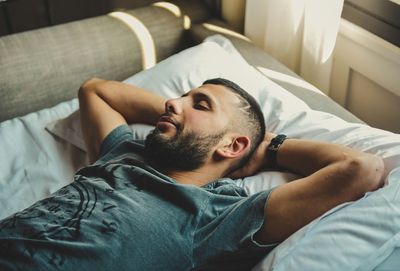


We’ve heard it all before: getting more sleep is good for us in all sorts of ways. It’s not always easy to hit the magic eight hours that everyone seems to be striving for – but what if we told you that just 46 extra minutes could be enough to make a difference? A new study suggests that snoozing just a little more per night can have positive psychological outcomes.
Lots of research has been devoted to the negative impacts of sleep deprivation, from effects on memory and cognition to DNA damage, and even poor sexual performance. Fearful of these outcomes, many of us spend a lot of time chasing those Zs, and the field has spawned a huge number of life hacks, supplements, and other products claiming to offer a solution to sleeplessness.
But what if we looked at the question from the other side of the coin? A team led by Alexander Do of Baylor University – who conducted the research for his Honors thesis – and supervised by Drs Michael K. Scullin and Sarah Schnitker decided to focus not on things that are made worse by sleep deprivation, but rather on the positive traits that can be enhanced by good sleep.
“Alex did an excellent job coming up with a novel thesis idea, which built a bridge between the work that he had been doing in my sleep lab for two years prior and a new area that would expand the sleep field in a meaningful way,” said Scullin in a statement.
“This study is exciting because it expands what we know about the health effects of sleep restriction and extension to include variables related to forming flourishing moral communities,” Schnitker added.
A group of 90 young adults aged between 18 and 24 were recruited and assigned randomly to three groups: late bedtimes, early bedtimes, or their usual sleep routine during the working week. The late group had to go to bed at 2.00 am and get up at 7.30 am, decreasing their snooze time by an average of 37 minutes compared to the usual sleep group's average; while the early group was allowed much more sleep, going to bed at 10.30 pm to get up at 7.30 am, gaining an average of 46 minutes compared to the normal sleepers.
The subjects were asked to keep a diary of their sleep habits during the week and were also monitored via actigraphy using a smartwatch. At the start and end of the week, they completed questionnaires to assess sleepiness and underwent some cognitive testing.
“Because there has been minimal sleep research on positive psychology outcomes, we included a range of common measures of resilience, flourishing and gratitude,” the authors explain in their paper. These tests were also conducted at the beginning and end of the study period, and there were additional tests at the end too, such as asking the participants to write about things they were grateful for.
It turned out that very subtle changes in sleep patterns were enough to have a marked impact.
“We saw that people who increased their sleep by 46 minutes a night ended up feeling more resilience, gratitude, life satisfaction, and purpose in life,” said Scullin. By contrast, “When people were cut back on sleep by a mild average of 37 minutes a night, they experienced drops in mood, resilience, flourishing and gratitude.”
It wasn’t only the participants’ individual well-being that was affected either. Sleep was found to induce prosocial behaviors – things like giving to charity and taking part in community initiatives – which could have much wider societal impacts.
“It turns out that getting more sleep has a broader influence than just feeling more alert during the day,” said Scullin. But thankfully, if the results of this study are anything to go by, you could tap into those benefits by getting less than an hour’s extra shuteye – and if you ask us, that’s at least starting to sound like a realistic goal.
The study is published in The Journal of Positive Psychology.