Culture and Society
 PUBLISHED



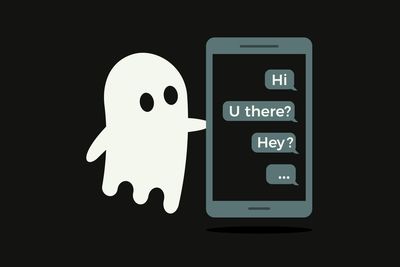


It really doesn’t feel good to be ghosted. Sending a message and getting absolutely nothing back can be more painful than outright rejection, science has shown. It leaves us racking our brains as to what we did wrong, wondering why the other person couldn’t even bring themselves to send a quick reply.
But recent research suggests it’s not quite as simple as that. Ghosting may not always be the result of the other person being so uncaring or unfeeling that they can’t be bothered to give the closure of a response, and they may actually feel a lot worse about the situation than you would assume.
Ghosting is often discussed in the context of dating apps – a chat that appears to be heading in the right direction is suddenly cut short when the other person abruptly stops replying.
It’s usually defined “as a breakup strategy in the romantic context,” PhD candidate Coral Zheng told PsyPost. Zheng is part of a team of researchers who conducted a recent study that tried to broaden this definition.
What if the other person actually forgot to reply, for example? One person feels they’ve been ghosted, but it was completely unintentional. Or what if you had a good reason for delaying your response to a message for a while, something the team refers to as “temporary ghosting”?
To find out more, the research team recruited participants for three different experiments.
The first involved 195 people who recalled a real experience of either ghosting someone (the “ghosters”) or being ghosted themselves (the “ghostees”).
The results showed that the ghosters generally felt worse about these interactions than the ghostees predicted they would. “In particular, ghosters reported feeling guiltier and sadder – but also feeling more relieved – than ghostees predicted,” the authors write.
The ghosters did report high levels of intentionality in leaving conversations, which matches how ghostees often feel.
In the second experiment, 601 people completed a survey that tested the difference between ghosting and giving a short, noncommittal response (“Sorry, but I can’t talk right now”) in an imaginary scenario.
The results showed that sending even such a brief response has the potential to alleviate a lot of the guilt that ghosters feel and led to greater feelings of relief. Predictably, recipients also reported that they would feel better getting this reply than being ignored.
What is ghosting, and what is not?
Finally, the authors recruited 229 pairs of people for a live ghosting experiment through a chat interface. Once the pairs were matched, they were given eight minutes to chat and get to know each other, kind of like speed dating. The questions were somewhat deeper than the usual “how’s the weather there?” to give them a chance of learning more about the other person.
Afterwards, participants were given the option of having a second five-minute conversation and writing a summary of it, or skipping to the end of the experiment. Skipping ahead was positioned as more appealing: the participants would be paid for their time regardless, but they’d have to do less work.
Crucially, those who chose to skip were informed that they would not be able to say goodbye to their partner or tell them why they had left. The upshot was that some people carried on their conversations while others felt they had been ghosted by their new buddies.
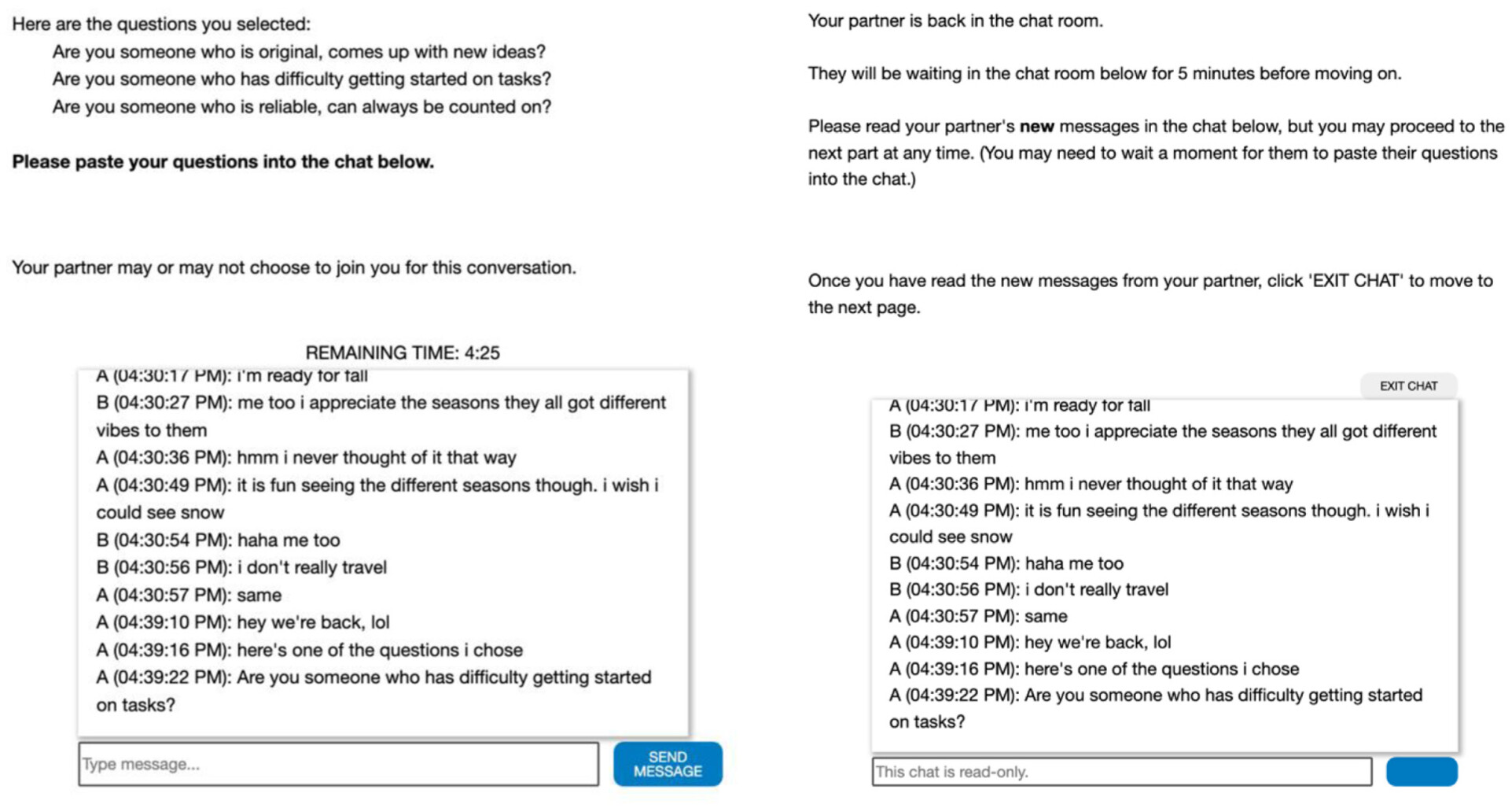
This experiment opened up an interesting question for the authors: how do people judge what is ghosting and what is not? Even though it was positioned as such, many of the ghosters didn't report their choice to leave the chat as ghosting. The ghostees, on the flip side, often did feel they had been legitimately ghosted.
The authors acknowledge that this scenario can’t fully capture the complexity of forming a real-world relationship. But taking all their experiments together, they say the results do reveal new aspects of ghosting interactions that merit further study.
As bad as being ghosted feels, it may be a mistake to assume – at least, without evidence to the contrary – that the person ghosting you is completely comfortable with how the relationship ended. And for potential ghosters, the study suggests sending even a very brief response can help to alleviate a lot of the bad feeling on both sides.
“Mistakenly underestimating ghosters’ bad feelings could reduce the potential for reconciliation. We find that a simple intervention that improves emotion recognition is sending a short response, for example, confirming receipt of a message,” the authors conclude.
Ending a relationship, romantic or otherwise, is a painful thing. No one likes feeling ignored or being left with unanswered questions. But as this study suggests, it may be worth re-examining your past experiences of ghosting. It’s possible the person on the other end felt just as bad about it all – they just didn’t know what to say.
The study is published in the journal Personality and Social Psychology Bulletin.



 3
3