Culture and Society
 PUBLISHED



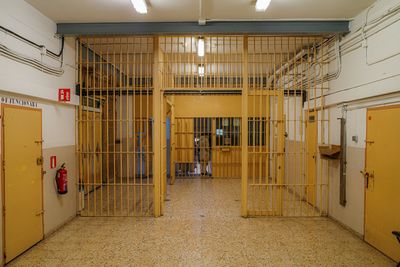


When gasoline prices fell for a few months in 2018, so did violence in California prisons, and a new study shows this wasn’t a coincidence. Since prisoners, pretty much by definition, don’t pay for petrol, the link may seem obscure, but the researchers point out that their family and friends do, and cheaper prices meant more visits, which stopped when prices rose again. The lessons could extend far outside the prison walls.
Debates about the best ways to treat prisoners go back centuries. The urge to make convicted offenders’ lives miserable as payback for their crimes is widespread, but reformers have argued that rehabilitation requires treating prisoners with respect and reducing their isolation. Family visits are an obvious way to make prisoners believe there is a life for them waiting outside, creating an incentive towards good behavior and early release.
However, proving the effectiveness of family visitation programs is not easy; a randomized controlled trial in which family time is withdrawn from some prisoners would be unlikely to get through even the laxest ethics approval panel. Professor Kristin Turney of the University of California, Irvine, and colleagues realized that sometimes economics can mimic the conditions criminologists want to test.
Prisons are frequently built far from big cities, and public transport is seldom an option, particularly in the United States. Therefore, the number of visits often depends more on a family’s capacity to afford gas than any maximum authorities may permit.
Individual families’ circumstances will vary, but the cost of fuel affects almost everyone, leading the researchers to test how visitation rates relate to gasoline/petrol prices and compare this with prisoner misconduct statistics.
All forms of prisoner misconduct rose and fell in line with gas prices during the 2017-2019 period the authors studied, but battery (usually against other prisoners) showed the strongest relationship. Moreover, the authors noted that the effect was most powerful for prisoners whose families lived far away. Not only were these families more likely to be affected by the cost of driving, but their trips were rarer, so a single extra visit meant more to a prisoner.
“These results indicate that increased visitation can lead to substantive reductions in violent and high-risk incidents – particularly use-of-force events and interpersonal battery – that pose the greatest threats to institutional safety for both incarcerated individuals and correctional staff,” the authors write.
The authors acknowledge that not all family visits are equal – a prisoner might be more affected by seeing their children than their parents or siblings, for example – and their work doesn’t address this.
A reduction in prisoner misconduct – particularly violence towards guards and other inmates – is obviously good, but it can feel abstract to those who haven’t been imprisoned themselves. However, the authors point to evidence that might feel more relevant: “Misconduct in prison also increases the likelihood of future recidivism,” making conditions less safe for everyone.
Governments are already highly motivated to make gasoline cheaper, but there are plenty of other ways to increase familial visits. Scandinavian nations have made this approach central to the way they run their prison systems, touting their low rates of reoffending as a result.
However, Turney and co-authors note the implications of their work could be a lot broader. “Social isolation is a major public health crisis,” they write. If a fraction of the resources that are put into policing and dealing with the consequences of crime went into making people feel more connected, we might all be a great deal better off.
The study is open access in Science Advances.