Technology
 PUBLISHED


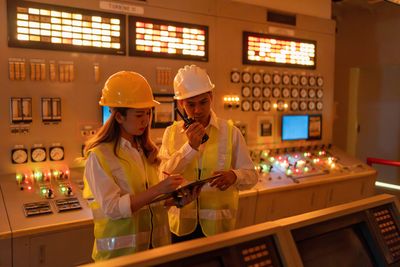


The US Nuclear Regulatory Commission (NRC) has approved the construction permit for a new commercial nuclear reactor in western Wyoming. This is the first permit of its kind to be approved in eight years and will allow TerraPower, an American nuclear reactor engineering company, to produce a next-generation sodium-cooled reactor.
For decades, the nuclear industry has been in decline across the country. Despite the US being one of the first nations to generate nuclear energy for commercial use, there has been little development since the 1970s. The reasons for this stagnation are complex, relating to economics, regulatory dynamics and technological challenges, as well as a shifting level of trust within the public sphere.
In 2024, TerraPower, a start-up that was founded by Bill Gates in 2008, applied for a permit to construct a new commercial 345-megawatt sodium-cooled reactor to be built in Kemmerer, in western Wyoming. The reactor, known as Natrium, is run off low-enriched uranium (this is fuel that has around 5 to 20 percent fissile uranium in it) and is connected to a 1-gigawatt-hour molten salt storage system.
At present, the US’s existing nuclear power plants are all pressurized water reactors, which are pretty old technology at this point. They are expensive to both build and maintain and they produce nuclear waste that is stored in tanks at special sites across the country.
These old reactors use water as a coolant and neutron moderator. In essence, water is kept at a high pressure so that it doesn’t boil – even when it reaches temperatures exceeding 300°C (572°F). This water flows through the reactor core, absorbing heat from its nuclear fission reactions, which is then transferred to a secondary water loop where it boils into steam. This steam drives a turbine that generates power.
Due to the high-temperature and pressure, the system is prone to accelerated corrosion and deterioration. Replacing the high-strength pressure vessels and pipes is expensive and can pose a number of safety risks.
In contrast, Natrium will rely on liquid metal to absorb heat while also keeping the pressure at a consistent level. Liquid metal has a much higher boiling point than water (over eight times higher in fact), so Natrium reactors are capable of absorbing more heat than their older counterparts. At the same time, the sodium cools as it rises, so it doesn’t need to be pumped away from the core like it does in a pressurized water reactor.
These developments make this type of reactor much safer, even if there is a loss of power to the plant. This is because sodium continued to absorb heat and so can prevent a meltdown.
The new Natrium power plant, which will cost up to $4 billion, is due to be built by 2030.
“We are beyond proud to receive a positive vote from the Nuclear Regulatory Commissioners to grant us our construction permit for Kemmerer Unit One. This is the first commercial-scale, advanced nuclear plant to receive this permit,” TerraPower’s president and CEO, Chris Levesque, explained in a statement.
“Our team has worked relentlessly for over 4 years with the NRC staff to get to this moment. We had extensive pre-application engagement with the NRC, and we submitted a robust and thorough construction permit application almost 2 years ago. We have spent thousands of manpower hours working to achieve this momentous accomplishment.”
In May last year, President Trump signed an executive order to speed up NRC permitting, in an effort to fast-track nuclear power production in the country. He aims to boost its output to 400 gigawatts by 2050.
The new sodium reactors could well signify a reinvigorated step for American nuclear energy. Although they are cheaper and safer to build and run than their historical counterparts, they still face one large challenge common to all nuclear reactors: what to do with the spent fuel?
This remains an enduring issue facing the nuclear industry across the world. Although new methods for recycling parts of the spent fuel from existing reactors have been proposed, the infrastructure does not yet exist. This means the spent fuel from Natrium will be added to the storage repositories on site, perhaps to be buried deep within geological repositories in perpetuity, at least until alternative solutions can be developed.



 2
2