Health and Medicine
 PUBLISHED
 3
3


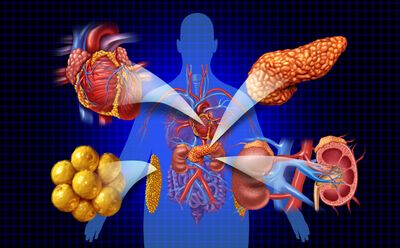


Almost 90 percent of US adults have at least one risk factor for a newly defined medical condition – but just as many, nine in 10, have never heard of it before. The American Heart Association hopes to change that by raising awareness of the condition, called cardiovascular-kidney-metabolic (CKM) syndrome.
“We want people to know that it’s really common to have heart, kidney and metabolic risk factors at the same time,” said Dr Eduardo Sanchez, chief medical officer for prevention at the American Heart Association, in a statement following a recent survey.
Of the respondents, only 12 percent had heard of CKM syndrome prior, but 72 percent said they were interested to learn more.
CKM syndrome “is a term to describe the interconnection between cardiovascular disease, type 2 diabetes, and chronic kidney disease,” explains Tulane School of Medicine professor Keith C. Ferdinand in a paper in the American Journal of Managed Care.
Millions of people around the world are living with one of these conditions, but as scientists have learned more about them, they’ve realised just how closely linked they are. Comorbidities, such as having type 2 diabetes as well as cardiovascular disease, are common, and there are a number of overlapping risk factors.
Research published last year in JAMA concluded that almost 90 percent of US adults met the criteria for CKM syndrome (stage 1 or higher), and that this situation had not improved between 2011 and 2020. Older adults, men, and Black people were at increased risk. The study called for urgent action to promote equity in access to CKM health care.
Risk factors include high blood pressure, high blood sugar, and abnormal cholesterol. The good news, however, is that much of the risk for CKM is reversible with lifestyle changes and medical intervention.
“It is reassuring that once the CKM connection was defined nearly three-quarters of those responding understood that it was important and wanted to learn more,” said Sanchez.
Some have questioned whether defining the condition “CKM syndrome” will ultimately prove to be useful in improving patient care and earlier detection of health issues. It’s also been suggested that liver disease could be brought under the same umbrella with the growing understanding of the risk factors underlying fatty liver disease, which include type 2 diabetes.
Whether any more tweaks will be made to the name or not, the key point seems to be to increase awareness of the interrelatedness of different aspects of health.
“The heart, kidney and metabolic systems are connected and, as such, should be treated in a coordinated way,” Sanchez said.
One thing that emerged from the survey was that 68 percent of respondents incorrectly believed that it is better to manage heart, kidney, and metabolic conditions separately. Forty-two percent either did not believe or were unsure whether a healthy heart could be damaged by other organ systems in the body.
The American Heart Association is planning to issue its first-ever guidelines on the CKM syndrome in early 2026. For now, they’ve published a video outlining “two truths” about heart health and how it is interwoven with kidney and metabolic health.
Sanchez concluded, “CKM health is about your overall health. It’s a full circle. You can take care of your overall health with regular checks of your blood pressure, cholesterol, weight, blood sugar and kidney function.”