


 Health and Medicine
 PUBLISHED


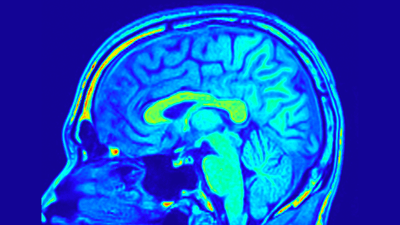


A man who had stress-induced amnesia for years recovered his memories after finding an easier job, a medical case report outlines.
The amnesia we are most familiar with from TV shows usually occurs after a solid bonk to the noggin, resulting in dramatic tension as the protagonist (usually, a sexy doctor) forgets how many affairs they are having.
While head trauma is certainly one cause of amnesia, a broad term that encompasses a number of different types of memory loss, it is not the only instigator. Amnesia can be brought on by traumatic or stressful life events, as well as physical injury.
"Generalised dissociative amnesia is characterised by the sudden loss of a person’s whole autobiographical episodic memory in the absence of accompanying organic brain damage," the 2019 BMJ case report explains.
"Typically triggered by psychological stress or trauma, this severe condition was previously called psychogenic amnesia."
The team documents the case of a man who, aged 40, came to their attention at the psychiatry department of Hokkaido University Hospital. The male patient, who is not named in the case report, was raised in Sapporo, Hokkaido Japan, and was described as a gentle and introverted person.
A few years prior to hospitalization, he had been running a bookstore, but unfortunately it went bankrupt. In an attempt to find new work, he began attending vocational training school. But near the end of that school, he was still unable to find employment.
On the last day of vocational training, the man lost his autobiographical and episodic memory. Without even knowing his name, it was sheer good fortune that he was found roaming the streets by a friend, who returned him back home to his family.
At the hospital, scans revealed no significant brain damage, though they noted decreased blood flow to the right ventral area of the temporal lobe. Meanwhile other tests showed that the man may have had a slight decline in cognitive function, while his general working memory remained functional.
The man was diagnosed with dissociative amnesia comorbid with a mild depressive episode, and treated with SSRI drugs. After four months, he was released from the hospital.
Unfortunately, at this point he still had amnesia. Worse, due to a fractured relationship with his father (that only his father knew about at that point), he was unable to return home, instead moving out into a group home. There, he got a job in a small office, where he worked for six years and 10 months, still in his state of dissociative amnesia.
At this point, he decided to switch jobs to something a little lighter, involving easy work for a few hours a day.
"Two weeks after starting this new job, he recalled every detail of his life," the team explained in their report.
"He remembered that he had wanted to die when vocational training school finished and had taken an overdose on the last day of school," they added. "He stated that when he had woken up, he had lost his whole autographical and episodic memory."
Further tests revealed that the blood flow issue had resolved, though they could not pinpoint when exactly this had happened. Meanwhile, they note that it is difficult to distinguish genuine memory from a learned or imagined memory obtained after the onset of amnesia. Nevertheless, they believed that the man's amnesia had indeed been reversed.
While the man recovered after switching to an easier job, there is little to extrapolate from his case alone, with the team adding to the literature and calling for more focused study of the condition.
"Longitudinal naturalistic reports for generalised dissociative amnesia are exceedingly rare," they note.
"It is important to confirm if dissociative amnesia and cerebral blood flow recover in parallel, even when dissociative amnesia is long-lasting."



 1
1