Space and Physics
 PUBLISHED


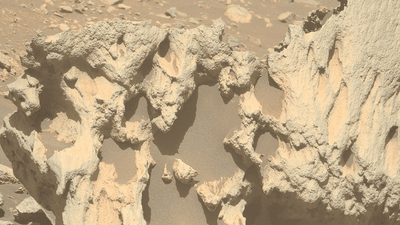


Fresh from finding potential biosignatures on the Bright Angel formation in Cheyava Falls, announced in September, NASA's Perseverance rover has discovered a highly unusual and out of place rock on Mars.
Every now and then, the rovers exploring the Red Planet send back an image of an unusual rock on our neighbor planet. These can range from the interesting, for example, this coral-shaped rock, to the interesting to conspiracy theorists, such as this "crab shark" formation. The latest discovery, found while studying bedrocks in the Vernodden area along the Jezero crater's rim, firmly fits into the former category.
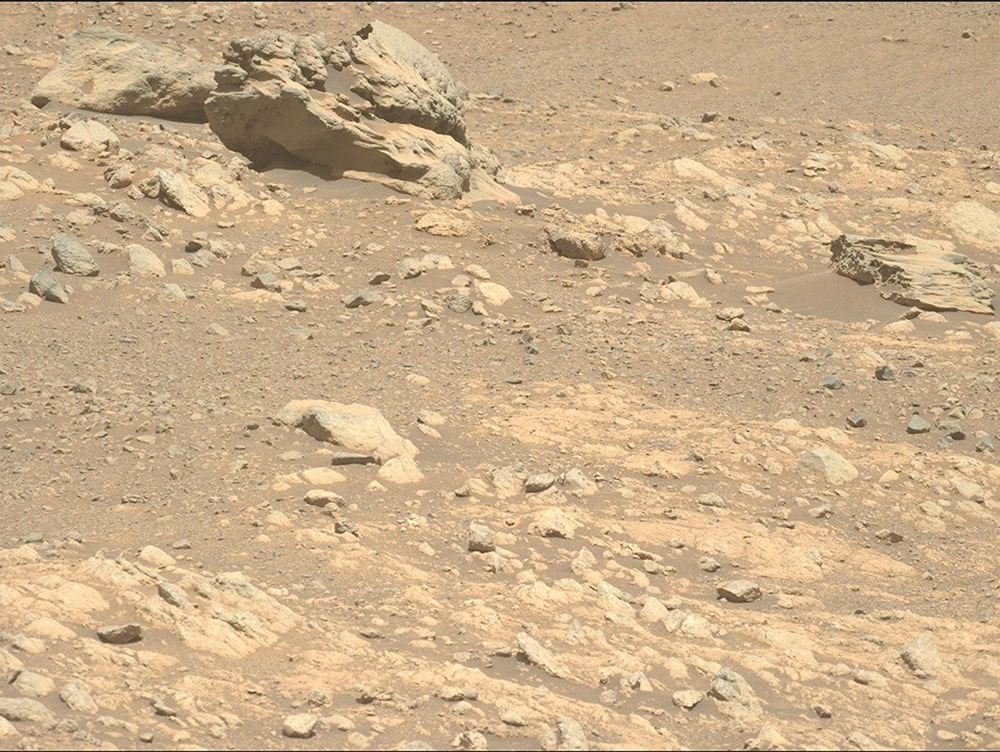
The 80-centimeter (31-inch) wide rock, named “Phippsaksla", stands out from its environment. It was found back on September 2, 2025, using Perseverance's Left Mastcam-Z camera, on Sol 1612, the 1,612th day of the rover's mission. According to analysis from NASA, the rock likely did not originate on Mars.
"This rock was identified as a target of interest based on its sculpted, high-standing appearance that differed from that of the low-lying, flat and fragmented surrounding rocks," Candice Bedford, Research Scientist at Purdue University, explained in a NASA blog post.
"Last week, Perseverance targeted Phippsaksla with the SuperCam instrument revealing that it is high in iron and nickel. This element combination is usually associated with iron-nickel meteorites formed in the core of large asteroids, suggesting that this rock formed elsewhere in the solar system."
The team will have to investigate the rock further to determine if it is a meteorite. If it is, it would be the first found by the Perseverance rover, which in itself is a little surprising. The other Mars rovers, including both Mars Exploration Rovers, Opportunity and Spirit, and Curiosity, have all found their own iron and nickel-rich meteorites during their time exploring the Red Planet.
"As such, it has been somewhat unexpected that Perseverance had not seen iron-nickel meteorites within Jezero crater, particularly given its similar age to Gale crater and number of smaller impact craters suggesting that meteorites did fall on the crater floor, delta, and crater rim throughout time," Bedford added.
It's not unexpected that the rovers should find plenty of meteorites on the planet, given its thin atmosphere and position within the Solar System. Estimates, looking at NASA's InSight seismometer data, suggest that the planet gets hit by around 280 to 360 meteorite impacts every year, which are large enough to produce craters larger than 8 meters (26 feet) wide. In fact, it's a little intriguing why we haven't spotted more of them, given the robots and orbiters we have exploring the planet.
"Researchers have puzzled over why they haven’t detected more meteoroid impacts on Mars," NASA explains in a separate blog post. "The Red Planet is next to the solar system’s main asteroid belt, which provides an ample supply of space rocks to scar the planet’s surface. Because Mars’ atmosphere is just 1% as thick as Earth’s, more meteoroids pass through it without disintegrating."
Nevertheless, Perseverance appears to have found its first meteorite on the planet, though we will have to wait for confirmation.