Humans
 PUBLISHED



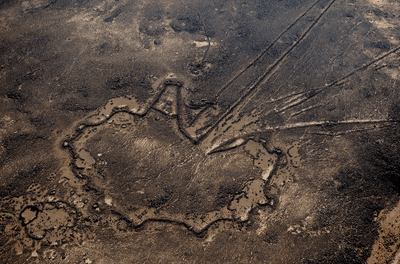


Fly over the deserts of West Asia and you might not see much beyond the jagged mountainous rocks and endless dunes, fluctuating in tone from pale grey and earthy brown to vivid orange. Look more closely, however, and you might spot something peculiar poking out of the barren landscape: ancient stone structures, larger than a city block, crafted by human hands millennia ago.
Thousands of wheel-shaped formations were spotted just after the end of the First World War, when British pilots began flying over the Arabian desert between Cairo and Baghdad to deliver airmail. Even the local Bedouin tribes, who had lived alongside these structures for generations, could offer little explanation – they simply called them "the works of the old men."
They are known as wheels and jellyfish, though some archaeologists prefer the more sober – if less catchy – term “circular stone-built structures with internal divisions.”
Remarkably, many of these wheel-like sites have yet to be excavated by archaeologists on the ground. Much of what we do know has been pieced together from above, through decades of airborne surveys by the Aerial Archaeology in Jordan project.
“Thousands have been recorded. To my knowledge, I don't even know if one has been excavated,” Robert Bewley, a founding director of the Aerial Archaeology in Jordan project, told IFLScience.
“We don't know: were they settlements? Were they processing areas for processing stuff? Were they storage areas? Were they a combination of all three?” he added.
The giant "kites" of Jordan
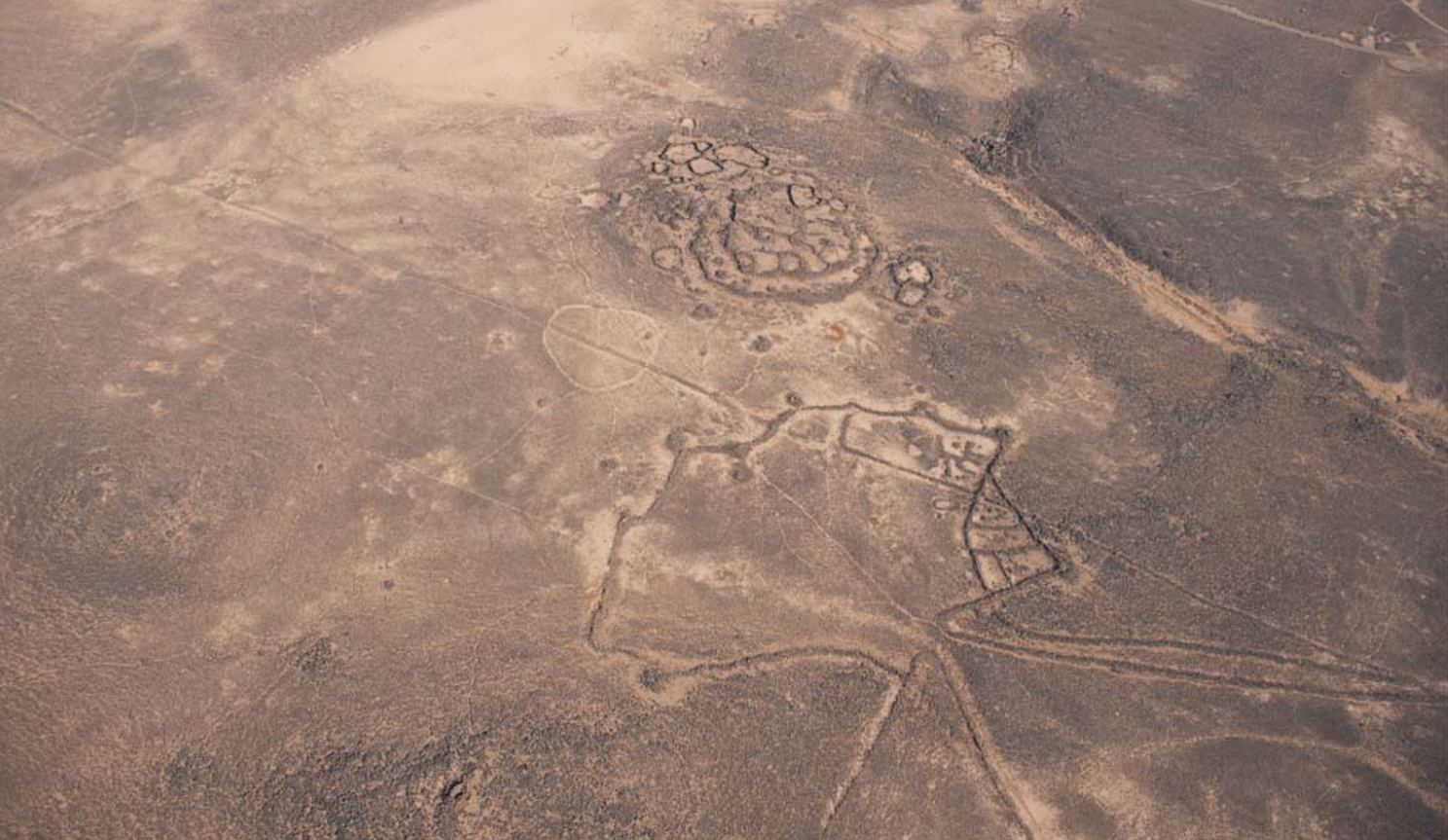
The wheel structures aren't the only mystery etched into these landscapes. Another repeating occurrence is the sprawling stone walls that seemingly lead to nowhere, some measuring 500 meters (1,640 feet) across. These structures are known as "kites," ancient hunting traps that get their name from their appearance from the air, where long stone walls trail out like the strings of a child's kite before opening into a broad, angular enclosure.
One theory is that hunters would herd gazelles and beasts of the desert along the walls, funneling them into an enclosure studded with pits around six feet deep. Once enough animals had been driven into the confined space, they would be startled into a panic, causing some to fall into the pits and become trapped. Defenseless and ensnared, they could be easily killed for their much-revered meat.
"I like this interpretation because basically human beings are lazy," Bewley said. "What's the easiest way of killing 10 gazelle? You build this structure, and you can use it over and over again. Year after year, you get your meat for the next three months in one hunt."
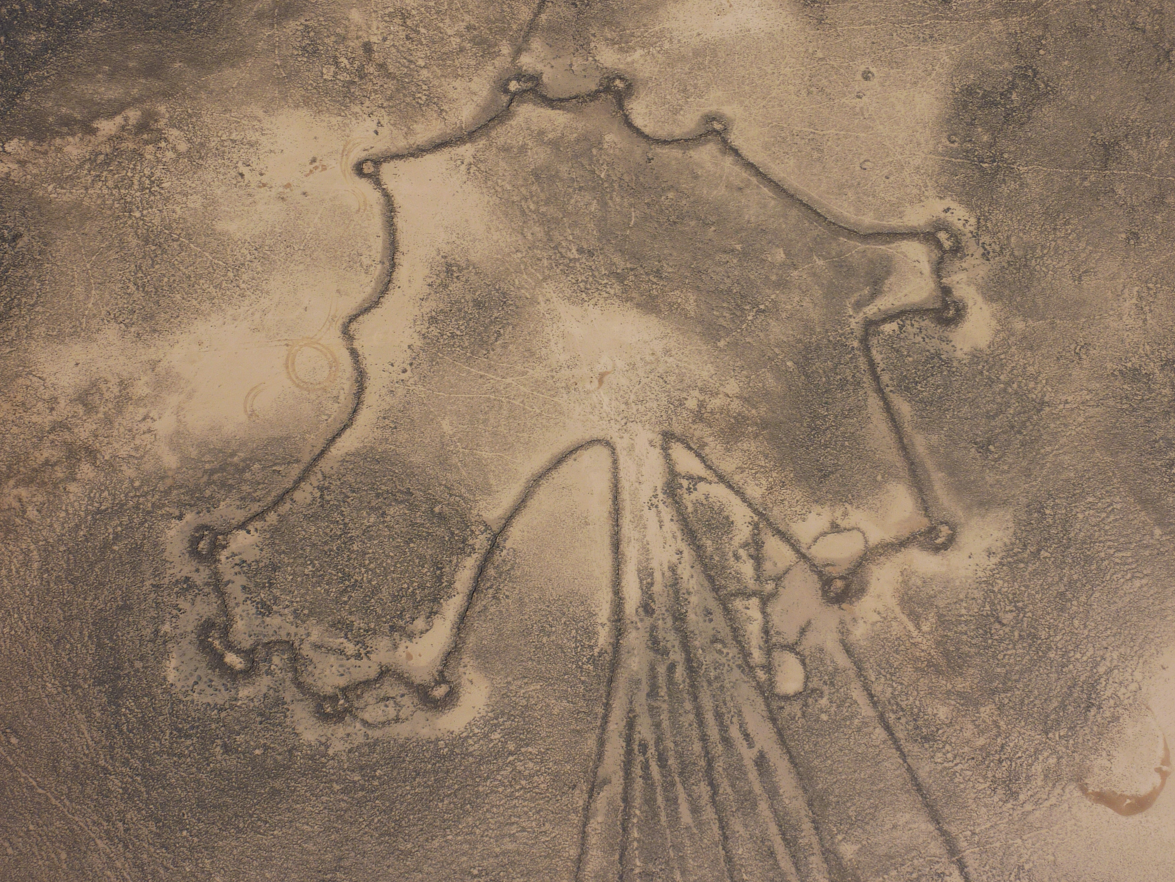
The kites have received slightly more archaeological attention than the wheel-like structures, but they too remain poorly understood. Their distribution alone, spanning across much of West Asia and North Africa, is staggering and begs for further research.
“What's interesting about the kites is that their distribution goes from Armenia in the north all the way down to Yemen in the south. That is thousands of miles, and there are literally thousands of them,” he added. “We think they're even as far west as Libya, and they also stretch quite far east into Jordan and probably into Iraq as well.”
We literally have no idea what they are.
Robert Bewley
Then there are the "big circles." Walking through the Jordanian desert, you might stumble across a line of ragged rocks on the ground and think nothing of it. But seen from the air, those rocks resolve into enormous rings of stone, some measuring 400 to 500 meters in diameter, often slightly irregular in shape.
“We literally have no idea what they are – and there are a dozen, maybe 15 of them. Some people think they might be compounds where animals were kept along the Hajj route from Damascus to Medina, a place where travelers would gather," said Bewley. "But there's no evidence inside them, so we've got to do more research on that."
Modern markings in the ancient desert
These landscapes hold 12,000 years of human history, from the first nomadic hunter-gatherers to the Neolithic, through the rise of the Islamic Age, all the way to the age of machines.
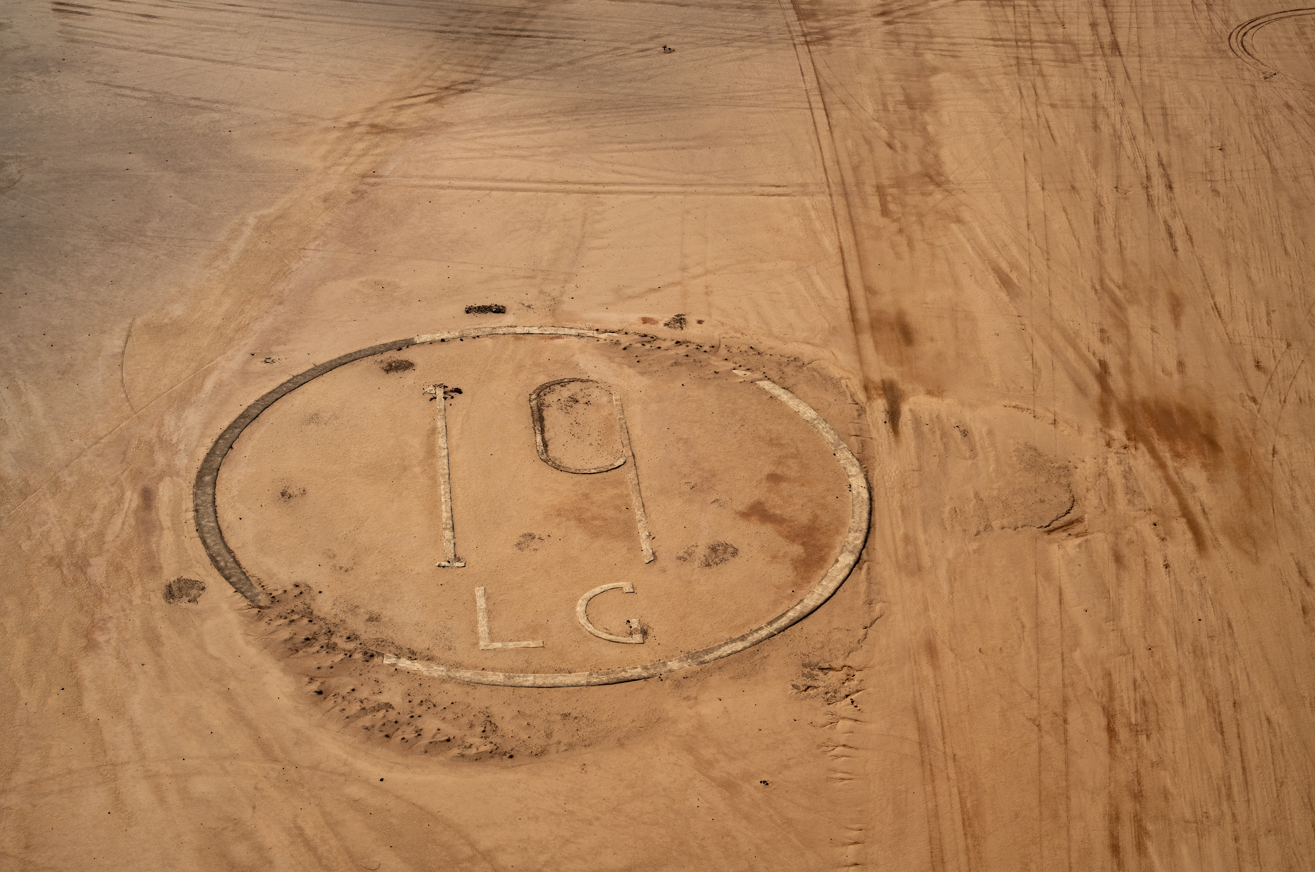
Even the relatively recent past leaves its mark. Scattered across the terrain are large ground markings once used to help pilots navigate the featureless desert. In the early-to-mid 20th century, the British and other “Western” powers laid out a vast network of these waypoints as part of their transcontinental airmail route, pointing pilots toward the next stop. Many are still visible today. Airstrips and landing zones in remote areas were similarly marked with large numbers and symbols designed to be read from high altitudes.
"When you're flying over parts of the desert in the 1920s, there are no navigational aids. So they literally plowed a furrow across the desert and put landing markers on it," said Bewley.
The origins of the AAJ project and APAAME
The Aerial Archaeology in Jordan (AAJ) project has been running since 1997 as a sister project of the Aerial Photographic Archive for Archaeology in the Middle East (APAAME), a wider initiative established in 1978 by David Kennedy.
It all started with Kennedy’s efforts to study Rome's eastern frontier, the Empire's high-water mark, where its reach extended as far as it could and imperial ambition finally met its limits. While researching his book Rome's Desert Frontier from The Air, co-written with aerial archaeologist Derek Riley, he began building a collection of historic aerial photographs of the West Asian region.
These were the seeds of what would become APAAME, which now consists of over 187,000 photographs and several hundred maps of a dozen countries, many of which can be viewed online in their Flickr digital archive.
We thought it would be a three-year project. Well, the project is now in its 30th year.
Robert Bewley
In 1997, a well-connected air attaché introduced Kennedy to a prominent member of the Jordanian Royal Court and Air Force. The prince and the attaché arranged a flight over Jordan, giving Kennedy sweeping views of the country’s landscapes and rich history. The experience was inspirational. But Kennedy, primarily a field archaeologist, knew he needed someone with proven expertise in aerial photography. He emailed Bewley, a prehistorian who had experience in the Middle East and an interest in aviation, to ask if he'd like to get involved.
"The opportunity to do what I did in Britain, but in Jordan – I said yes, of course," Bewley recalled.
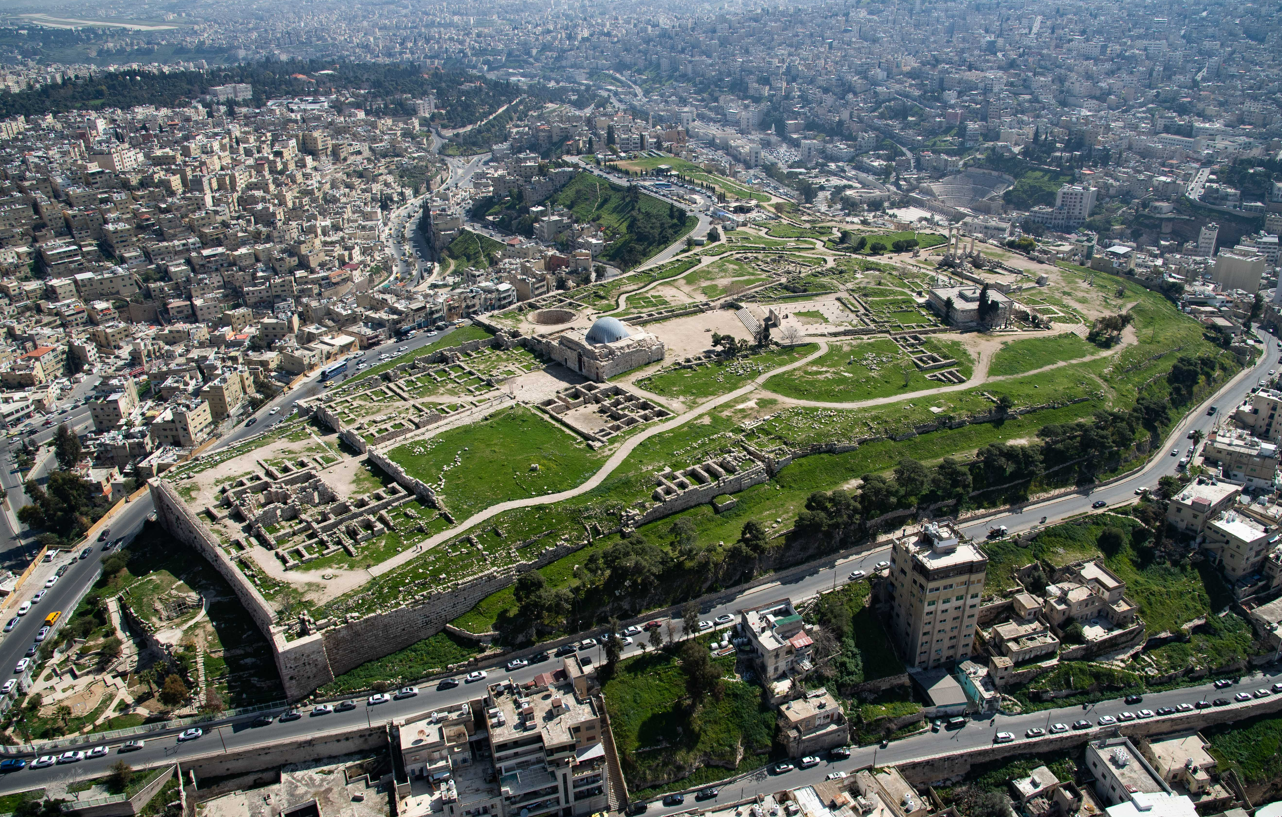
The team was given access to helicopters and permission to fly all over Jordan with the express intention to promote the “fantastic archaeology” of Jordan beyond Petra and Jerash, the two most famous sites.
AAJ was formed as an offshoot of APAAME in 1997 by Kennedy and Bewley, but it's now led by Bewley and Jordanian archaeologist Firas Bqain, following Kennedy's retirement.
"We thought it would be a three-year project," said Bewley. "Well, the project is now in its 30th year."
What's next?
Bewley's next goal is to hand over the reins: base the AAJ project in Jordan, led by Jordanians, for Jordanians. That ambition is only possible, he said, because of the unique openness of the country itself.
"Instead of the old system of foreigners coming in and flying, it's about Jordanians documenting their own heritage," said Bewley.
“Jordan is a remarkable country in the sense that it's the only one in that part of the world that allows aerial surveys to happen. Most other countries are suspicious – particularly of foreigners flying around in helicopters taking photographs – not surprisingly,” the archaeologist explained.
This is a privilege that the team seems acutely aware of, and it's a key reason they're so determined to keep the project alive in the decades ahead. If and when it stops, Bewley fears, it may not start again for a very long time.
"Once you stop a project like that, it's very hard to resurrect it," he noted.