Nature
 PUBLISHED


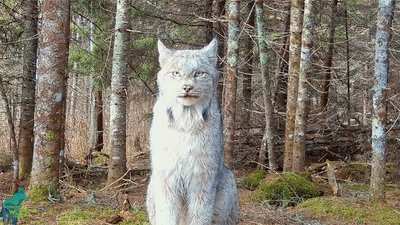


As technological capabilities grow we can use different methods to learn more about the world around us, including the secret lives of the animal kingdom. In Minnesota, USA, a sassy lynx has been recorded on a camera trap, and boy does it look good.
The Voyageurs Wolf Project studies the summer ecology of the wolves of the Greater Voyageurs Ecosystem in Minnesota. The team have placed 350 camera traps that, as well as the wolves, record a whole host of other woodland species. The team shared the footage on their Facebook page of a lynx seemingly posing for the camera on the Kabetogama Peninsula within the park.
“A lot of fortuitous things have to happen, not only for the lynx to sit there, but for the lighting to be nice, and for there to be that pretty, North Woods background. Those are the things that make it really cool,” Tom Gable of the Voyageurs Wolf Project, who reviewed the footage, told the Star Tribune.
There are four species of lynx across the world: the bobcat (Lynx rufus); the Eurasian lynx (Lynx lynx); the Iberian lynx (Lynx pardinus); and the Canada lynx (Lynx canadensis), which is the species posing in the video. Canada lynx are fierce predators feeding almost exclusively on snowshoe hares (Lepus americanus), though they will take smaller mammals and birds depending on conditions. They are smaller than their European counterparts and can be told apart from the bobcat by their tails, which look to have been dipped completely in ink.
Lynx are typically shy solitary creatures, which is why seeing them like this on a camera trap is so special. They are typically more active at night, hunting under cover of darkness with eyesight that can spot prey from over 75 meters (246 feet) away, explains the National Wildlife Federation.
Camera traps have been used to spot elusive and, in some cases, thought-to-be-extinct creatures such as clouded leopards and Attenborough's long-beaked echidna. This provides a non-invasive way for conservationists and researchers to monitor populations.