Space and Physics
 PUBLISHED


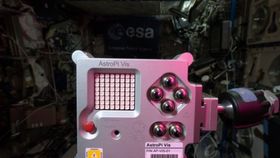


Some British school children just got a pretty awesome bit of news from space: British astronaut Major Tim Peake has used some miniature computers designed by them on the International Space Station (ISS).
Peake activated two modified Raspberry Pi computers, nicknamed Astro Pi, this week. Their applications were designed by students in schools across the U.K.
The two Astro Pis on the ISS are equipped with Sense HAT, a special add-on that contains a gyroscope, an accelerometer, a magnetometer, a thermometer, and pressure and humidity sensors. The Astro Pis can take readings from the station’s interiors, monitor the Earth’s magnetic field, and even play a game to test Peake’s reaction times. One of the Astro Pis also has a visible spectrum camera, while the second one has an infrared one.
The seven programs that made it to the space station were chosen from a competition held in U.K. schools last year. They were conceived, built and tested by the students themselves. The results of all the tools will be downlinked to Earth and used by students to analyze the mission.
Power on for @astro_pi, come in @astro_pi_vis are you alive?
— Tim Peake (@astro_timpeake) February 2, 2016
"Days don't get much bigger than a British astronaut unpacking your stuff on the ISS," Raspberry Pi founder Eben Upton told Wired. "There is something awesome about him having the Union Jack on his sleeve when he is doing it. It's absolutely fantastic and we're really looking forward now to seeing the kids programming and getting results back, and seeing what they are able to do with the data."
[H/T: Wired]