Nature
 PUBLISHED



Thirty years ago, a Thai museum employee uncovered some mysterious fossilized bones during an excavation. He gave them to Thailand’s Sirindhorn Museum, but they were never properly examined. Now, palaeontologists have studied the bones in detail, identifying two new dinosaur species in the process. Both are distant relatives of T. rex.
About five years ago, Thai palaeontologist Adun Samathi came across the fossil while working towards a doctorate at the University of Bonn. He brought casts of the bones back to Germany and analyzed them along with his supervisor Professor Martin Sander.
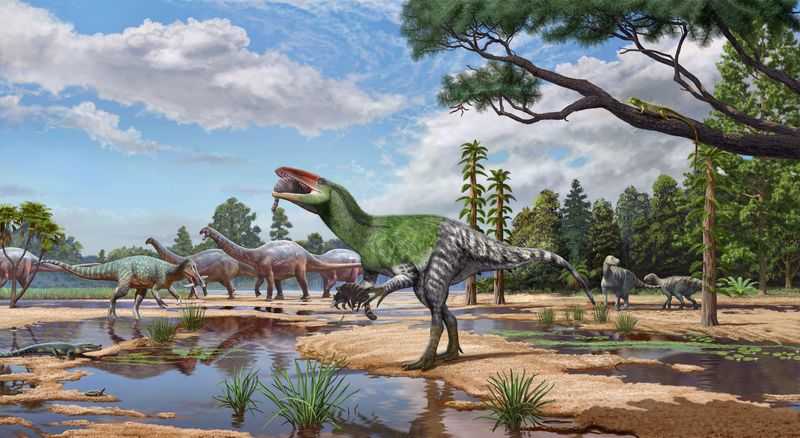
Publishing their findings in Acta Palaeontologica Polonica, the duo identified a brand-new species of megaraptor, or “giant thief”. Megaraptors are a genus of theropod dinosaurs that roamed the Earth 93 to 86 million years ago, during the Late Cretaceous. This group of dinos were predatory carnivores related to T. rex, but they had chunkier arms equipped with long claws and were smaller with more delicate heads than their colossal cousins. A leggy beast, the new species was likely a good sprinter, its body stretching about 6 meters (20 feet) in length – roughly the size of an Asian elephant.
"We were able to assign the bones to a novel megaraptor, which we baptized Phuwiangvenator yaemniyomi," Samathi said in a statement. The name is a nod to the location of the find, the Phuwiang district, and the discoverer of the first Thai dinosaur fossil, Sudham Yaemniyom.

The majority of megaraptors have so far been uncovered in South America and Australia, so this new find hints at the spread of this group of dinosaurs through the continents.
"We have compared the Thai fossils with the finds there," said Samathi. "Various characteristics of Phuwiangvenator indicate that it is an early representative of this group. We take this as an indication that the megaraptors originated in Southeast Asia and then spread to other regions."
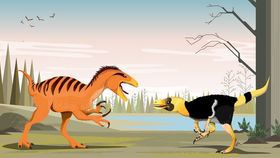
In addition to this megaraptor, Samathi spotted another new species in the collection of bones. Named Vayuraptor nongbualamphuensis, the researchers know little about this species’ ancestry due to a lack of physical evidence. However, they believe it was probably related to both Phuwiangvenator and T. rex. What we do know is that it was smaller, measuring just 4.5 meters (15 feet) in length.
"Perhaps the situation can be compared with that of African big cats," said Samathi. "If Phuwiangvenator were a lion, Vayuraptor would be a cheetah."