Humans
 PUBLISHED
 1
1




A new theory has arisen surrounding the cause of death of the Egyptian pharaoh Tutankhamun. Speculation around the Boy King’s demise has previously suggested that a life-threatening condition topped off with a malaria infection may have been to blame, but a scientist has floated the bold idea that alcohol may have had a part to play.
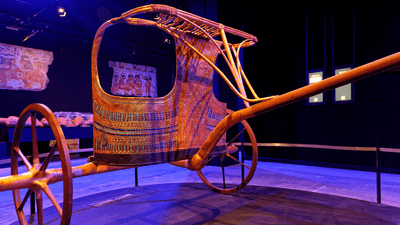
Speaking to BBC Science Focus during the Cheltenham Science Festival, biomedical Egyptologist Sofia Aziz proposed that Tutankhamun may have been in a chariot crash after driving under the influence. Why? Because his tomb was chock-full of booze.
“People don't think about the wine,” said Aziz. It’s a reference to King Tut’s wine stash in his tomb, and it was a hearty supply.
It was once thought that red was the grape of choice in Ancient Egypt, but dry residue samples taken from King Tut’s tomb became the first evidence of white wine in the region when researchers investigated back in 2006. Tutankhamun’s tomb-cum-wine-cellar exhibits a preference for dry white, according to Aziz, and there’s only one reason it was there.
“In their tombs, the Ancient Egyptians would take the things that they wanted in the afterlife.”
Might as well get a few for the road when journeying through the underworld.
Historically, Tutankhamun has been painted as a sickly king as his mummy exhibits signs of many ailments. However, could it be that instead of being the witness marks of disease, these are actually battle scars? It's not the first time his reputation has come into question, as battle-worn armor also led researchers to wonder if he was tougher in life than history has given him credit for.
“This new theory says that he's more of a warrior king – that he did ride chariots,” said Aziz. “He was like a typical teenager, drinking and probably driving the chariot too fast.”
Modern-day statistics would certainly support the idea that young age can increase a person’s likelihood of being involved in a drink-driving incident. While we shouldn't impose the norms of modern society on ancient civilizations, it’s food for thought that even the Ancient Egyptians might not have been immune to the need for speed.
However, at time of writing the theory remains just that – a theory. Not all of the pathologies identified in Tutankhamun’s mummified remains align with the idea, and there’s no hard evidence that it was a drink-induced crash that led to his death. Furthermore, some researchers argue that evidence of a club foot would’ve gotten in the way of the Boy King burning wood around the Egyptian city of Memphis.
Boy King, or Boy Racer? We may never know for certain.
[H/T: Jalopnik]