Nature
 PUBLISHED
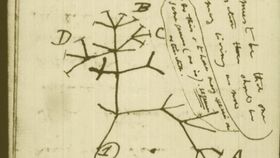


While we can never pick Charles Darwin’s brilliant brain, a collaborative project is bringing us closer to his thoughts than ever before. As of his week, to mark the 155th anniversary of the publication of his iconic book On the Origin of Species, the Darwin Manuscripts Project has made a treasure chest of Darwin’s hand-written notes available online, allowing people across the globe to trace the development of the man that changed the way we look at the world.
The project, which is a collaboration between the American Museum of Natural History (AMNH) and Cambridge University Library, was founded in 2003, and set out to digitize and transcribe a collection of Darwin’s writings. So far, more than 16,000 high resolution images of the naturalist’s notes, scientific writings and sketches have been made publicly available, but the project is only halfway through.
The documents hitherto released cover 25 years of Darwin’s life, “in which Darwin became convinced of evolution; discovered natural selection; developed explanations of adaptation, speciation, and a branching tree of life; and wrote the Origin,” according to the AMNH site.
You can even see a drawing by one of Darwin’s children, a scene of carrot and aubergine cavalry, which was sketched on the back of a page of the On the Origin of Species manuscript. You can also see his first use of “natural selection” as a scientific term, among many other things.
By June 2015, the archive will host more than 30,000 documents authored by Darwin between 1835 and 1882. The next release will cover the notes of his eight post-Origin books. The ultimate goal of the project, the AMNH explains, is to provide “access to the primary evidence for the birth and maturation of Darwin’s attempts to explore and explain the natural world.”