Health and Medicine
 PUBLISHED





The sun can have a catastrophic effect on skin, having the potential to damage our cells, which can lead to certain cancers. Fortunately, we as a species were smart enough to come up with creams capable of blocking out the worst of the harmful radiation, but how effective are they? According to one 92-year-old’s face and neck, extremely.
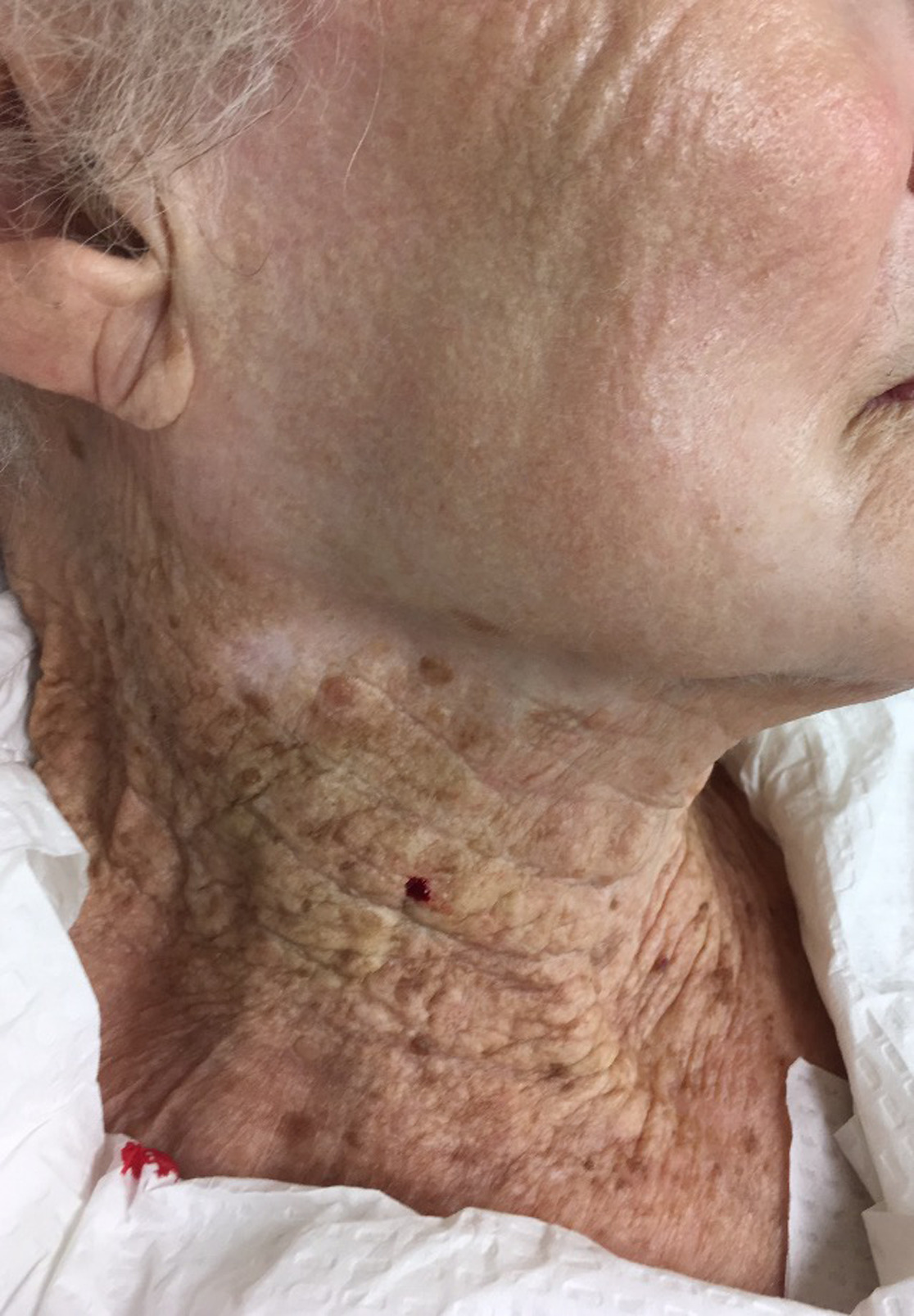
The image (below) was first published in 2011 in the Journal of the European Academy of Dermatology and Venereology. It shows the face and neck of a 92-year-old woman who reportedly used UV-protective moisturizer on her face but not her neck. The result is a striking difference in visible UV damage.
Sun exposure can have an aging effect on our skin because ultraviolet (UV) rays are capable of penetrating its layers and damaging our cells. Looking old because you are old is known as chronological aging, but looking older as a result of sun exposure is called photoaging.
Skin is almost unique in being an organ that is directly affected by exposure to the environment, including solar UV irradiation. The result can be that areas of our body more consistently exposed to the elements (face, neck, arms and hands) will look older compared to areas that are usually covered, like the trunk.
As well as making the skin look older, sun exposure can cause damage to the DNA in skin cells, which can accumulate over time, increasing the risk of genetic mutations occurring, which can give rise to cancer. This is why when it comes to the sun, cancer and aging go hand in hand.
In the commentary, published in 2021, author Dr Christian Posch, a specialist in skin cancer research, argues that the parallels between aging and cancer risk demonstrate that if we treat the signs of aging we can, arguably, also reduce the risk of disease
“While it is unlikely that we can (or even should) aim at defeating human ageing for various reasons, modifiers of ageing will still be able to change both healthspan (the time we live without disease) and lifespan,” writes Posch. “After all, who would not agree to an additional 20–40 healthy years?”
“Such advancements will be realized by a significant reduction of age-related diseases including the prevention of cancers. Why? Because there is substantial overlap between the hallmarks of cancer and the hallmarks of ageing. Thus, addressing biological changes of ageing will also address prerequisites of cancerogenesis.”
Skin that looks older often results from the kind of cell damage which puts a person at an increased risk of developing cancer, so be it through diet, lifestyle, or – yes – simple sunscreen, preventing aging may be akin to a preventative measure against skin cancers.
While Posch acknowledges that this won’t ever eliminate cancer risk, it’s a worthy area for consideration, and a good argument for extending your sunscreen application to below the neckline.
Excuse us while we go bathe in sun cream.
An earlier version of this article was published in September 2022.