Nature
 PUBLISHED


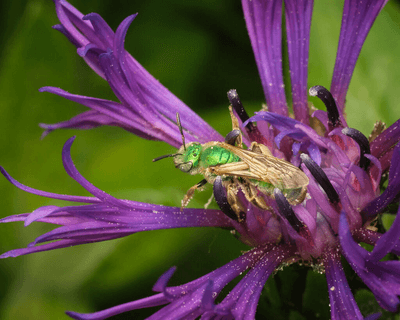


Lots of animals are able to change and control the way they appear. They might put on a fancy display, flash some brightly colored feathers, or mesmerize their prey with a range of snazzy patterns. These changes are controlled – but in sweat bees, it's recently been discovered that they are changing color in a process not under their control.
Sweat bees (Agapostemon subtilior) have been found to passively change color in response to high humidity. Typically these bees are a deep blue-green color, but the research team found that at high humidity the bees shifted to be a pale coppery green and then back again when the humidity dropped.
To explore just what was happening, the team conducted a series of experiments on preserved specimens of bees. They compared fresh collected samples with an older museum collection to understand whether the age of the bees would have an effect on their colors as well as the changing humidity.
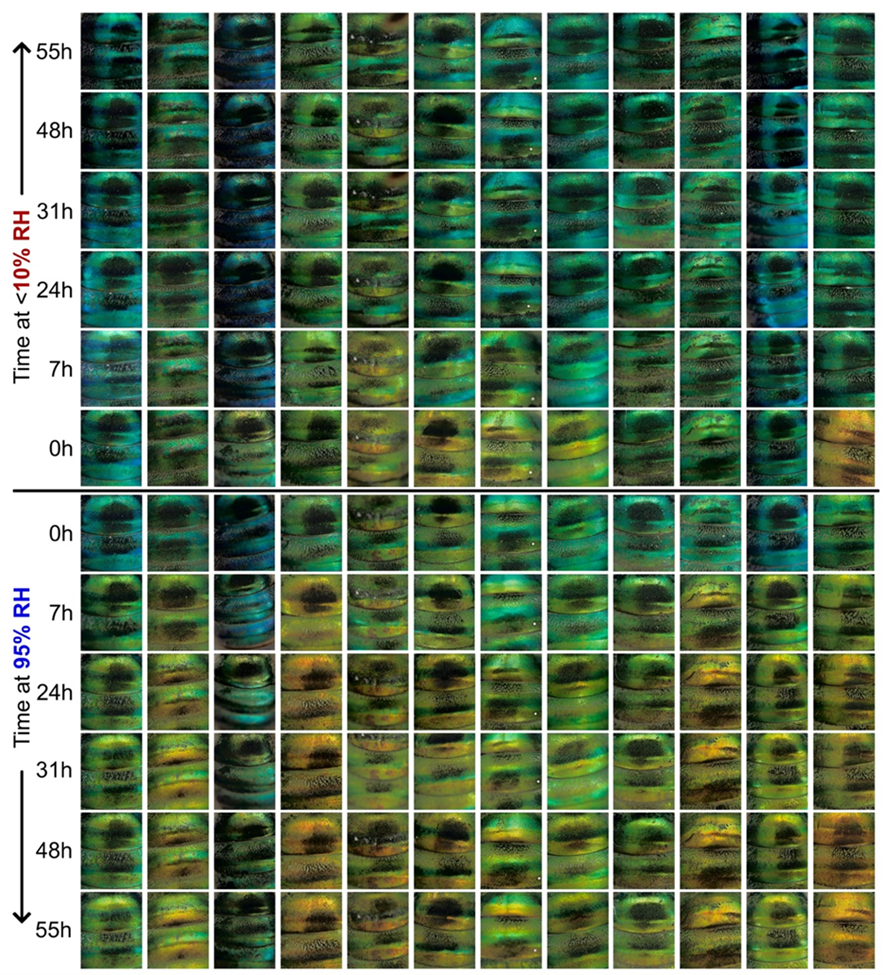
All of the specimens were exposed to both a high-humidity treatment and a low-humidity treatment with continuous monitoring for 55 hours. To measure changes in the cuticle color, the bees were photographed before the experiment started and then periodically throughout the experiment at five different times.
The researchers found that the biggest change occurred within the first 24 hours, when the color changed from medium green at normal humidity to orange-green at high humidity. In low-humidity conditions, the cuticles of the bees appeared more blue-green. The older specimens experienced a greater color change at high humidity compared to the newer specimens, but at low humidity the change was the same between the older and younger bee specimens.
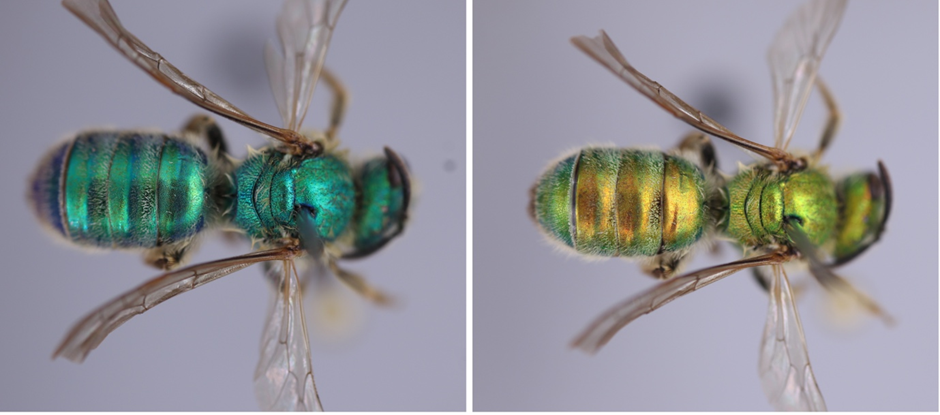
“The change seems to happen gradually over time, as more moisture is absorbed by the bee’s exoskeleton. Within 24 hours, the colour can change radically,” lead author Madeleine Ostwald, from Queen Mary University of London, told IFLScience.
The team also wanted to look at the color of living bees and to do this they involved some citizen scientists using the iNaturalist app. The images from iNaturalist showed adult female bees throughout the West Coast of the USA and into Mexico.
“This study was only possible thanks to the contributions of hundreds of citizen scientists, who submitted photos of these bees through iNaturalist. This is what allowed us to see how these bees really look in the wild all across the West Coast,” said Ostwald.
We can infer from the iNaturalist citizen science photos of living bees that there is real colour variation in the wild, and that this variation tends to track what we’d expect based on the lab experiments.
Madeleine Ostwald
Despite differences in camera equipment and ambient lighting, the team ended up with over 1,000 citizen science images of the bees across their range to explore the color change in living individuals.
“We believe living bees change colour in a similar way to the museum specimens. This is difficult to observe directly because live bees of this species don’t do particularly well in the lab, and the colour change isn’t instant. However, we can infer from the iNaturalist citizen science photos of living bees that there is real colour variation in the wild, and that this variation tends to track what we’d expect based on the lab experiments,” Ostwald told IFLScience.
These variations were similar to what the team had seen in the lab – more humid environments resulted in redder-green bees. The result suggests that the cuticle of the bee is changing at a structural level with changing humidity levels, causing the colors to shift. In the older museum bees, the natural degradation of the cuticle could have allowed more moisture to permeate, showing more of an effect. This leads the researchers to be cautious when comparing preserved specimens to living individuals.
While the implications of this change are not yet understood for these bees, color is important for heat loss, signaling and camouflage. These shifts could therefore become problematic in a warming world, though more research is needed to understand the implications.
“Colour plays so many different roles in animal biology (predator avoidance, mate choice, communication, temperature regulation) that it is certainly possible that these changes could have downstream effects on behaviour or physiology,” said Ostwald. “The change appears to be a passive physical response rather than something the bee is actively controlling. Whether the colour change happens to benefit the bee in any way is still an open question that we’d love to explore,” said Ostwald.
The study is published in the journal Biology Letters.