Humans
 PUBLISHED



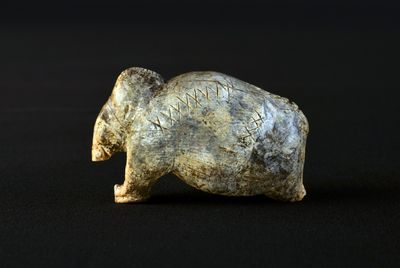


Carvings left on Palaeolithic tools and figurines by European hunter-gatherers 43,000 years ago were far from random markings; instead they conveyed specific meanings as part of an intentional system of signs. Developed tens of thousands of years before the advent of writing, this prehistoric script shares remarkable similarities with the earliest form of proto-cuneiform, which was invented in Mesopotamia by the Sumerians around 3500 BCE.
Using computational techniques, researchers examined more than 3,000 signs etched into 260 separate objects belonging to the Aurignacian culture, which lasted from 43,000 to 34,000 years ago and is associated with the very first modern humans to reach Central Europe. Many of these relics come from the Swabian Alps in Germany, and include figurines of humans, mammoths and lions, as well as stone tools.
Repeating patterns of crosses, lines, dots and notches were found on a large proportion of the artifacts, and while researchers can’t decipher the exact meanings of these symbols, they did notice patterns that provide some clues. For instance, study author Christian Bentz from Saarland University told IFLScience that “crosses are found on animal figurines, especially mammoths and horses, but they're not found on humans, so somehow the crosses are associated with animals and not with humans.”
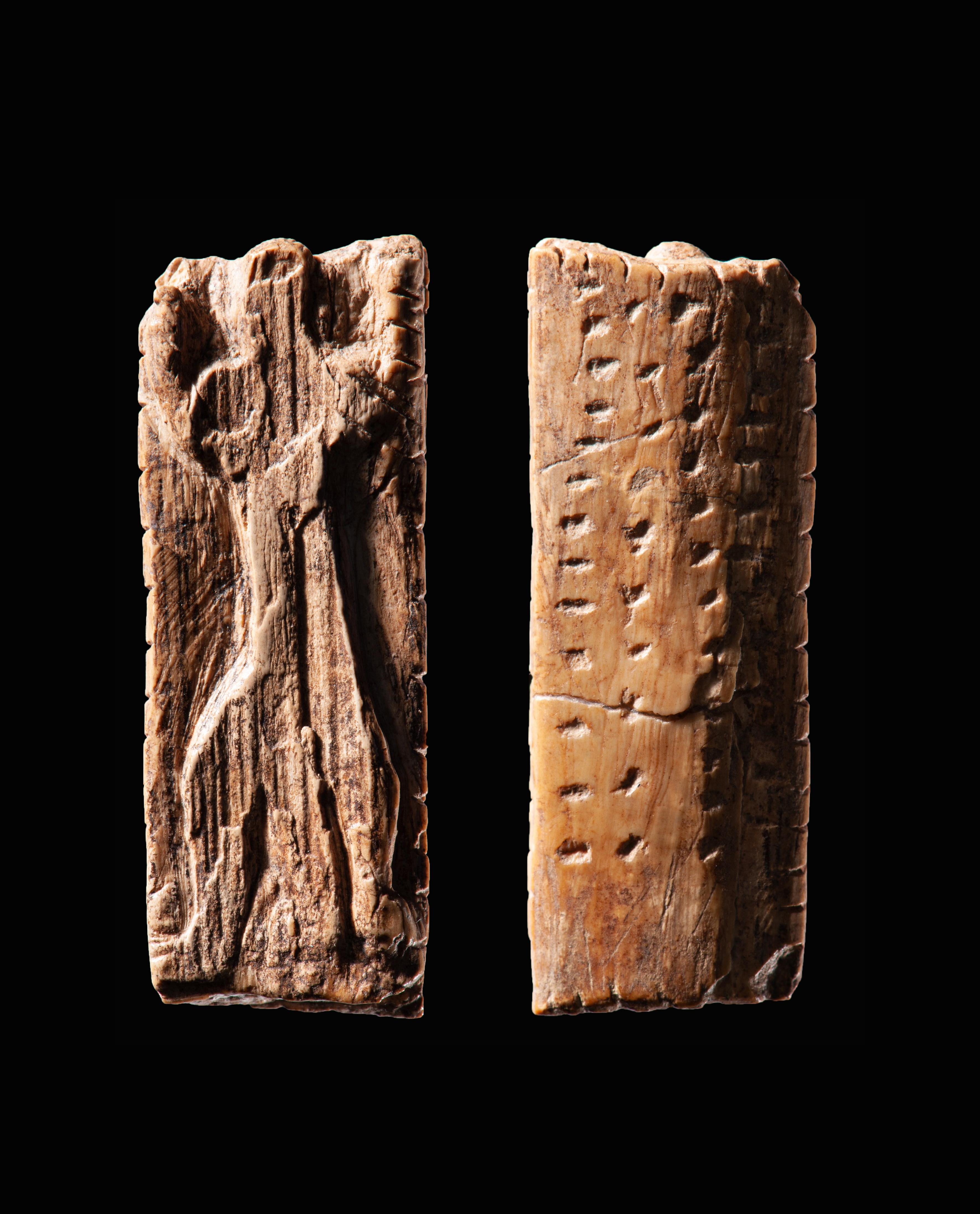
“On the other hand, we see dots being associated with humans and lions, but not with other animals and not with tools.” This co-occurrence is encapsulated by a mammoth ivory figurine called the Adorant, which depicts a lion-human hybrid and features a series of dots.
“The meaning of these dots may have been related to the attributes of the lion, and maybe these were applied to humans as well,” explains study author Ewa Dutkiewicz from the Museum of Prehistory and Early History in Berlin.
By analyzing the rate of repetitions and the predictability of the order of signs, the researchers were able to determine the “information density” of this Aurignacian system of markings. Overall, they conclude that the arrangement isn't comparable to any recognized form of written language, but that it is strikingly similar to proto-cuneiform.
For instance, the information density of these signs “basically perfectly overlapped with the very earliest proto-cuneiform,” says Bentz. “At first I thought this must have been a mistake, because there are 40,000 years between [these two systems]. But when you check the data and when you look at the sequences and the material, you realize that structurally speaking, they are essentially the same,” he explains.
Amazingly, this highly conventional system of signs appears to have been used for a period of almost 10,000 years before vanishing, only to be re-developed by the Sumerians many millennia later and eventually developing into complex written language.
According to Bentz, the inventors of this Palaeolithic script “have proven that they could have bootstrapped a genuine writing system from it if their social context had required them to.”
“But they didn't develop writing, and that’s probably due to the fact that they didn't need to as hunter-gatherers. But they were able to do it, I would argue, based on this result,” he says.
The study has been published in the Proceedings of the National Academy of Sciences.