Space and Physics
 PUBLISHED


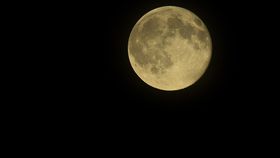


This year the summer solstice is even more special for everyone who loves the night sky. A bright full Moon will appear tonight, the first time since 1967 that a full Moon coincides with the summer solstice in the Northern Hemisphere, the longest day of the year.
The June Moon is traditionally called the Strawberry Moon by the Native American Algonquian tribes not for its color, but because it coincides with when strawberries are ripe for the picking.
“By landing exactly on the solstice, this full Moon doesn’t just rise as the Sun sets but is opposite the Sun in all other ways too,” writes Bob Berman in The Old Farmer’s Almanac.
“The Sun gets super high so this Moon must be super-low. Even at its loftiest at 1am, it’s downright wimpy-low. This forces its light through thicker air, which also tends to be humid this time of year, and the combination typically makes it amber colored.”
If the weather is not on your side to view the Moon, or you’re curious to learn more about it, then the Slooh Observatory has got you covered. It's going to have a live broadcast with experts in astronomy, anthropology, and astrophotography taking part.
The show will touch on the importance of the solstice across different cultures around the world, as well as providing advice on how to best photograph the Moon tonight.
The live broadcast starts at 8:00 pm EDT (5:00 pm PDT, 1:00 am BST tomorrow), and you can watch it below.
Head to Slooh.com to join in with this live broadcast, snap and share your own photos during the event, chat with audience members, interact with the hosts, and personally control Slooh's telescopes.