Space and Physics
 PUBLISHED
 2
2



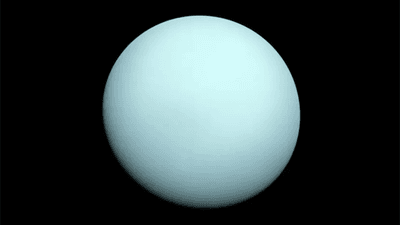


Thousands of hours of supercomputer simulations have been used to investigate an unstable period in our Solar System's past that may have led the planets to migrate to their present positions – and potentially yeeted a fifth giant planet out of the Solar System entirely.
Human lives are short as it is, but they become astronomically tiny when compared with events in the cosmos, such as the formation of our Solar System. When we began to study it, we operated under the assumption that everything was always the way it is now. Earth (then thought to be the center of the Solar System) was always where it was, and the planets, stars, and Sun must rotate around it in the same way that they always have done, forever.
As we studied the cosmos, we began to realize that the planets weren't eternal but instead formed billions of years ago in a protoplanetary disk. Models were developed to describe how this happened, with the goal of accounting for where all the planets are currently placed, explaining how they got there along with several features and quirks of our cosmic backyard, such as Trojan asteroids that share Jupiter's orbit and irregular moons in the outer Solar System.
While scientists have come up with plenty of nice models, they may not have as much explanatory power as the Nice model, first developed in 2005, in Nice, France. This proposed that in the Solar System's past, the giants planets – Jupiter, Saturn, Neptune, and Uranus – weren't found where they are now but were thrown into their positions due to instability in their original orbits.
In this model, Uranus and Neptune were far closer to the Sun at birth but were flung to their current positions by Jupiter and Saturn, which fell into a 2:1 resonance, with Jupiter orbiting the Sun twice for every one orbit of Saturn.
"The instability’s global consequences, and its ability to reproduce many specific qualities of the solar system’s small body populations, the orbits of the planets themselves, and other geophysical constraints in numerical simulations are well documented," the authors of a new paper – which has yet to be peer reviewed – explain.
For example, older models, which had the planets in the same positions they are today, couldn't account for the eccentricities in the orbits of Saturn and Jupiter, nor the irregular moons of Neptune and Jupiter. These unstable moons, the focus of the new paper, can be modeled a little bit better if you account for instabilities in the early Solar System. The idea goes that as the giant planets experienced close encounters and scattered planetesimals in the region had their orbits altered in a way that eventually led to capture.
In the new preprint, the team looked into the early years of the Solar System to see what scenarios would plausibly account for the moons of Jupiter and Uranus. Included in these options were further models positing that there was an extra ice giant in the Solar System that was ejected during the instability. Of the 122 "plausible" scenarios tested, not many left the moons looking as they do today.
"We find that the survival probability for the Jovian and Uranian moon systems are both less than 15%," the team explains. "Moreover, we only identify one case where both Uranus and Jupiter’s large satellites consistently survive the same instability."
The results are a little bit of a problem. While the Nice model appears to account for a lot of features of the Solar System, these instabilities appear to be a bit of a moon-killer, with few plausible scenarios in which Uranus and Jupiter's moons survive to look the way they do today.
"Interestingly, Jupiter’s moons are most likely to survive in instabilities initialized with two smaller extra ice giants, and cases with one larger additional planet provide more favorable conditions for Uranian system survival," the team writes, adding that if Uranus encounters any ice giants at close distances in these models, then the destruction of its satellite system is basically guaranteed.
The main problem appears to be that models accounting for Jupiter's moons leave Uranus without them, and vice versa. While the team suggests that the Nice model could do with revisions, they favor a few other scenarios that could account for this problem. In one, Uranus's satellites destabilized twice in the planet's past; one time left the planet with its tilt, and the other was during the predicted instability event. In another scenario, Uranus is the result of an unlikely but plausible period of instability in which it had no close encounters with other giant planets at all.
"While it is certainly possible that all four primordial regular satellite systems in the outer solar system were unaffected by planetary encounters, our results strongly suggest that this is not the case," the team concludes. "Thus, our results should serve as motivation for future investigation of the consequences of potential dynamical instabilities ensuing in the giant planet moon systems as a result of the Nice Model instability."
The study is posted to preprint server arXiv.