


 Humans
 PUBLISHED


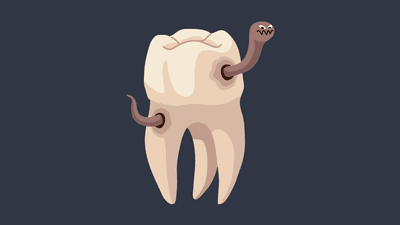


Having a mouth full of exposed "bones" has its uses, but there are also considerable downsides: gnawing, throbbing, stabbing. Toothache puts on quite a show, and if it’s something you’ve experienced you’ll have sympathy for the humans of old who were convinced that discomfort was caused by tooth worms.
According to the British Museum, this idea goes at least as far back as Mesopotamia – the root of written language and therefore considered the beginning of recorded history. Cuneiform tablets tell of the tûltu, a worm sent to Earth by the gods to feed on food scraps and blood in the human mouth.
“Indeed, [the worm] is the one that became hostile! Via the door of the flesh! Via the bar of the bone!” reads one Neo-Assyrian clay tablet from Kouyunjik (Nineveh), North Iraq. “Whom shall I send to the first born-son of the mountains-Marduk, that the worm be smashed! May the worm get out through the doorpost socket like a mongoose!”
You can hear another Cuneiform text from a Babylonian tablet read aloud here. In it, we hear a worm – dissatisfied with the offer of figs and apricots – make a curious request: “Place me and let me dwell between tooth and gum so I can suck the tooth’s blood and mince up the gum!”
Hardly surprising from Mesopotamia of "sheep liver divination" fame, but the tooth worm has been haunting humans across multiple cultures, and the way it looks shifts accordingly. According to a 1999 deep-dive into the rich history of teeth worms, people in England thought they looked a bit like really small eels. Meanwhile German mouths were allegedly riddled with red, blue, and gray zanewurms.
They were said to emerge whenever a tooth went bad, perishing as soon as a crack or cavity exposed them to air. It’s a genius plot twist for a worm that doesn’t exist, as if you crack open an infected tooth, the mush and pulp within probably does look a bit like the leftovers of a dead worm.
Belief in the legend of the worm started to drop off around the Age of Enlightenment in the 16th and 17th centuries. Few in the medical community put much stock in tooth worms going forward, but still the idea endured into the modern era.
The good news? There’s no evidence to suggest that our teeth have ever been home to worms. While it’s true that cavities and tooth pain can be caused by other lifeforms (that love the sugars we eat), they’re almost always microbial. That is, except for the Gongylonema worm that can live in the human body for up to 10 years. Parasitization of the mouth is rare, but it has been reported.
We do know of bees that lay their eggs in tooth cavities, though. Even if they are technically 20,000-year-old fossils...



 2
2