Technology
 PUBLISHED
 4
4


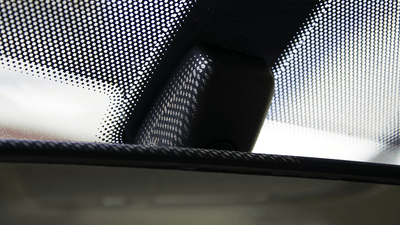


At some point on a long drive, you or a persistent child have probably wondered what the black dots at the top of your windscreen are for.
They appear to be on most vehicles but, like indicators, almost nobody knows what they are for. You might guess that the black "frit" stretching across the windscreen is decorative, or to keep a little light out. But in fact the strip is there to keep the windscreen in place and allow you to see properly, but probably not in the way you'd expect.
Before the 1950s and 60s, windscreens were held in place with a metal trim, before manufacturers moved to using adhesives. Frits, made of a rough ceramic paint, are there to conceal this ugly adhesive; but also to help keep the windscreen in place.
“The modern windshield is a marvel of engineering, and dare we say one of the most underappreciated components of a vehicle. Part of that engineering involved how the windshield is bonded to the frame,” a blog post from North Carolina-based bodyshop DeDona Tint & Sound explains.
“While the inward facing side of the frit allows adhesive to bond to the glass, the outward facing side of the frit acts as a shield against UV radiation in order to protect the adhesive bond, which would otherwise be weakened by continual exposure to direct sunlight.”
As well as protecting the adhesive bonds from UV radiation, ultimately keeping your windshield from flying at you mid-drive, the dot gradient running away from the frit serves another important purpose. During manufacturing, an engineer with Pittsburgh Glass Works explained to Jalopnik, windscreens are bent inside a hot oven.
While inside the oven, the long black frit heats up faster than the glass of the windshield. Left alone, without the dot matrix, this would introduce distortions into the glass. But the dots leading away from the black frit help spread the temperature more evenly, helping to reduce any distortion, which wouldn't be ideal while you're driving.
The frit is also supposed to look pleasing, which is good because as it is baked onto the windshield, it is virtually impossible to scrape off.